


CYP3A5*3 and C3435T MDR1 polymorphisms in prognostication of drug-resistant epilepsy in children and adolescents
- PMID: 23984379
- PMCID: PMC3747339
- DOI: 10.1155/2013/526837
CYP3A5*3 and C3435T MDR1 polymorphisms in prognostication of drug-resistant epilepsy in children and adolescents
Abstract
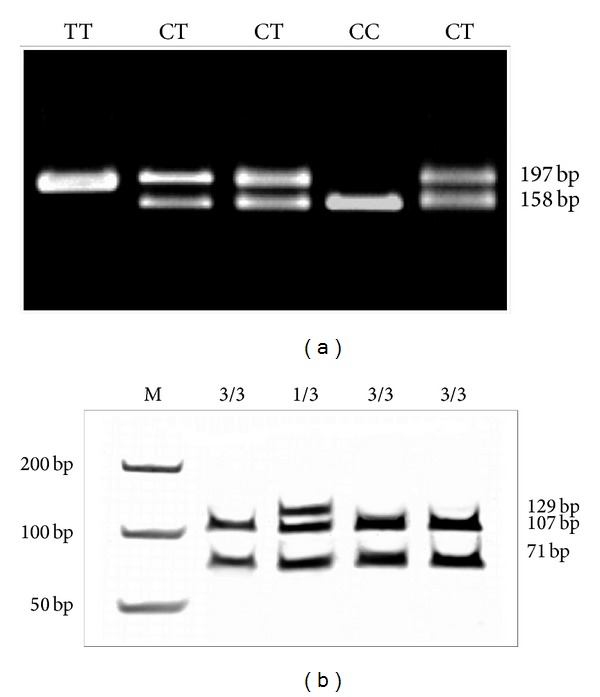
Drug-resistant epilepsies still remain one of the most profound problems of contemporary epileptology. Several mechanisms of drug resistance are possible; among them, genetic factors have a prominent place. Much importance is attached to genes, which encode enzymes that metabolize antiepileptic drugs CYP 3A, which belong to the family of cytochromes P450 and the genome of multidrug resistance, such as multidrug resistance 1 (MDR1) that expresses P-glycoprotein (P-gp), a drug transporter protein. The aim of the study was to assess the relation between polymorphism of gene CYP3A5 and polymorphism C3435T of MDR1 gene with the occurrence of focal, drug-resistant epilepsy in children and youths up to 18 years of age. The study comprised 85 patients, and their age range was from 33 months to 18 years of age, suffering from epilepsy, partly responding well to treatment, partly drug resistant. The polymorphism of both genes has been analysed using the PCR-RFLP method. The study failed to corroborate association between polymorphism CYP3A5*3 and C3435T polymorphism in MDR1 gene and pharmacoresistant epilepsy. The results of our research do not confirm the prognostic value of the polymorphisms examined in the prognostication of drug resistance in epilepsies.
Figures
References
-
- Adelöw C, Åndell E, Åmark P, et al. Newly diagnosed single unprovoked seizures and epilepsy in Stockholm, Sweden: First report from the Stockholm Incidence Registry of Epilepsy (SIRE) Epilepsia. 2009;50:1094–1101. - PubMed
-
- Begley CE, Baker GA, Beghi E, et al. Cross-country measures for monitoring epilepsy care. Epilepsia. 2007;48(5):990–1001. - PubMed
-
- Kwong KL, Sung WY, Wong SN, So KT. Early predictors of medical intractability in childhood epilepsy. Pediatric Neurology. 2003;29(1):46–52. - PubMed
-
- Regesta G, Tanganelli P. Clinical aspects and biological bases of drug-resistant epilepsies. Epilepsy Research. 1999;34(2-3):109–122. - PubMed
-
- Camfield P, Camfield C. The frequency of intractable seizures after stopping AEDs in seizure-free children with epilepsy. Neurology. 2005;64(6):973–975. - PubMed
MeSH terms
Substances
LinkOut - more resources
Full Text Sources
Other Literature Sources
Medical
Miscellaneous
