


A humanin analog decreases oxidative stress and preserves mitochondrial integrity in cardiac myoblasts
- PMID: 23985350
- PMCID: PMC3853355
- DOI: 10.1016/j.bbrc.2013.08.055
A humanin analog decreases oxidative stress and preserves mitochondrial integrity in cardiac myoblasts
Abstract
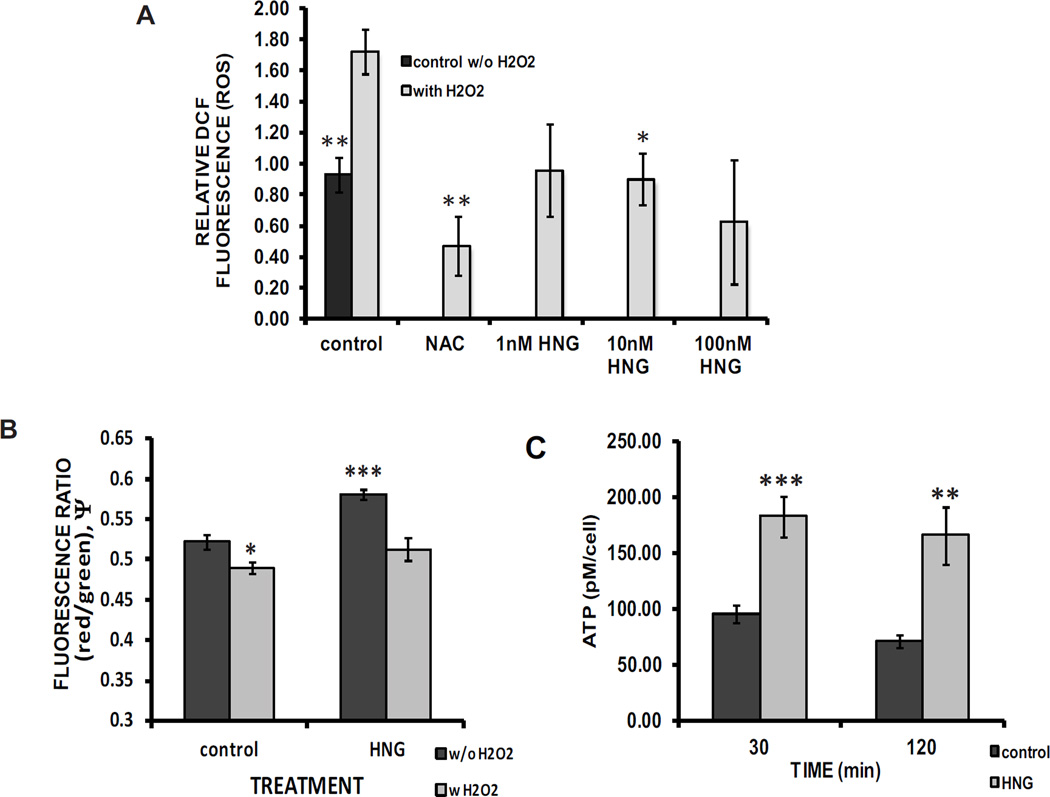
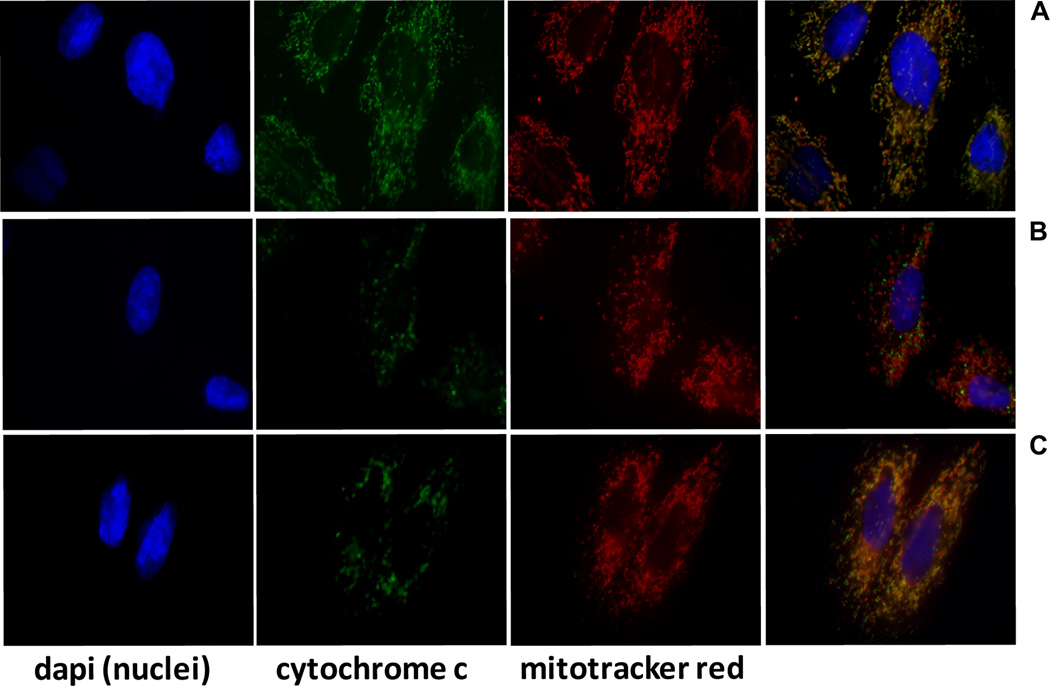
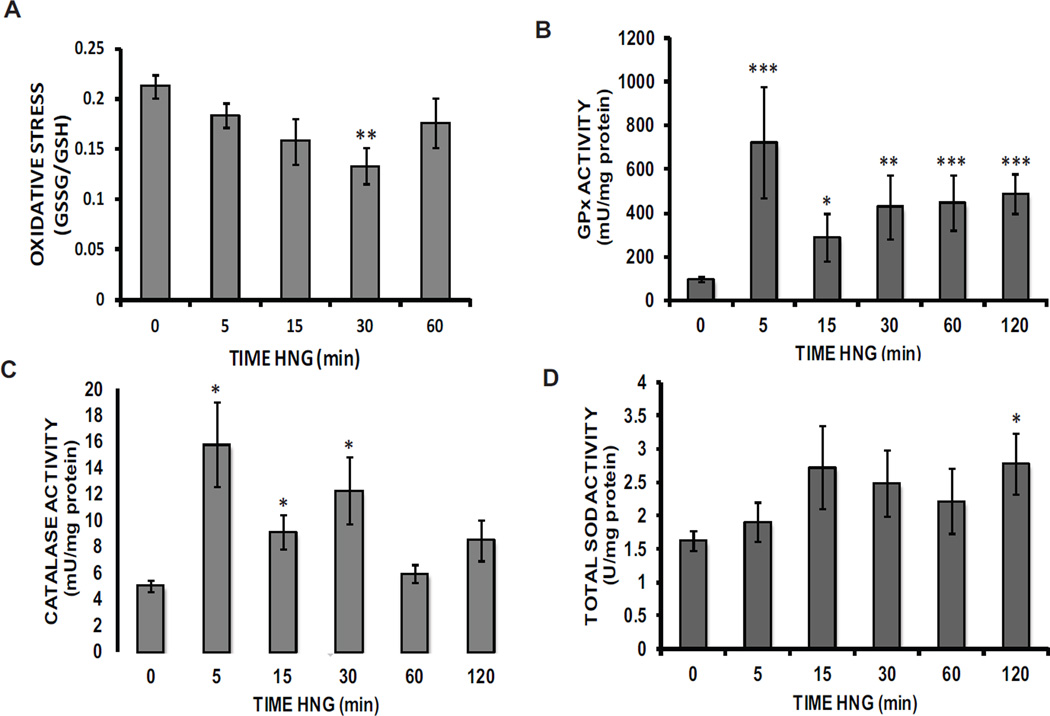
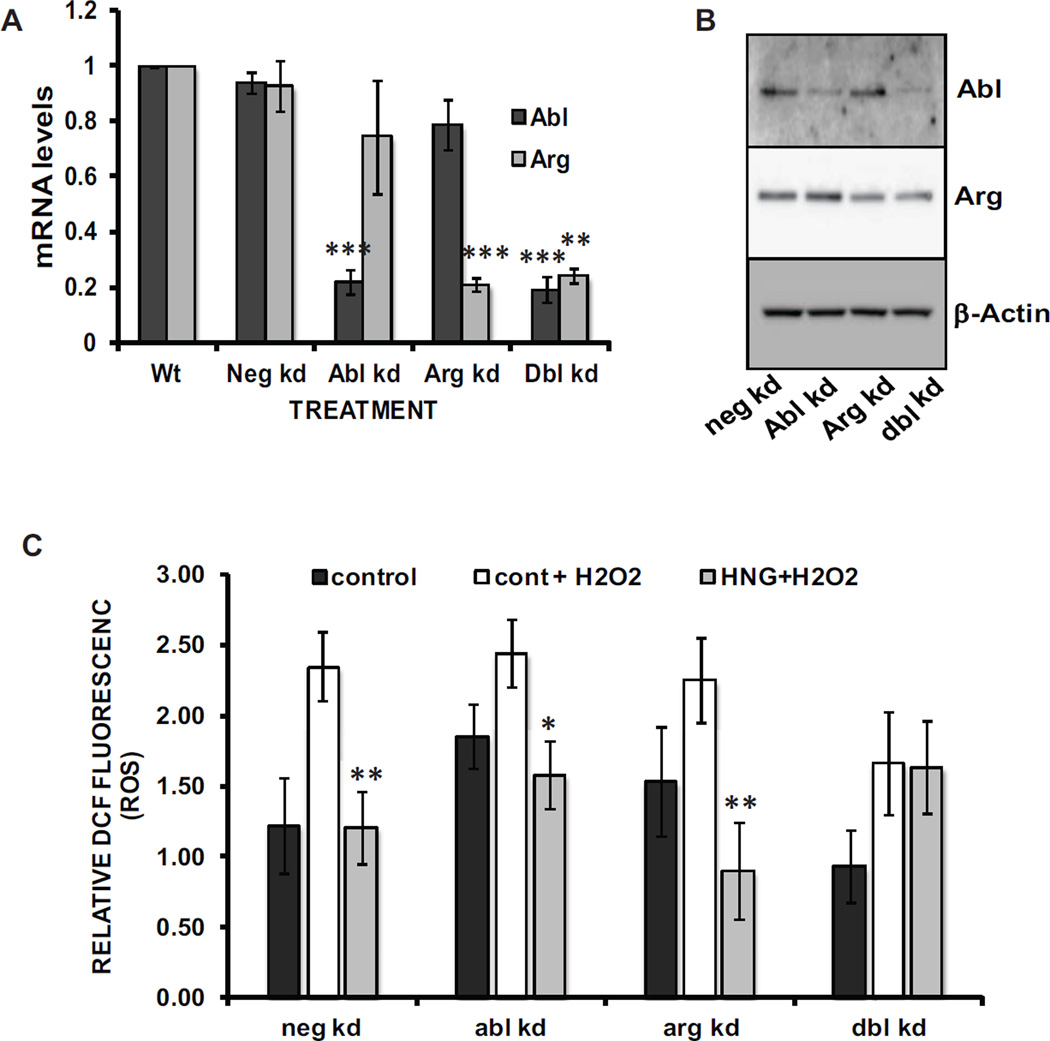
A potent analog (HNG) of the endogenous peptide humanin protects against myocardial ischemia-reperfusion (MI-R) injury in vivo, decreasing infarct size and improving cardiac function. Since oxidative stress contributes to the damage from MI-R we tested the hypotheses that: (1) HNG offers cardioprotection through activation of antioxidant defense mechanisms leading to preservation of mitochondrial structure and that, (2) the activity of either of a pair of non-receptor tyrosine kinases, c-Abl and Arg is required for this protection. Rat cardiac myoblasts (H9C2 cells) were exposed to nanomolar concentrations of HNG and to hydrogen peroxide (H2O2). Cells treated with HNG in the presence of H2O2 demonstrated reduced intracellular reactive oxygen species (ROS), preserved mitochondrial membrane potential, ATP levels and mitochondrial structure. HNG induced activation of catalase and glutathione peroxidase (GPx) within 5 min and decreased the ratio of oxidized to reduced glutathione within 30 min. siRNA knockdown of both Abl and Arg, but neither alone, abolished the HNG-mediated reduction of ROS in myoblasts exposed to H2O2. These findings demonstrate an HNG-mediated, Abl- and Arg-dependent, rapid and sustained activation of critical cellular defense systems and attenuation of oxidative stress, providing mechanistic insights into the observed HNG-mediated cardioprotection in vivo.
Keywords: Abelson murine leukemia viral mammalian homolog; Abl-related gene product; Arg; GPx; HN; HN in which the serine 14 is replaced by glycine; HNG; Humanin; MI–R; MMP; Mitochondria; Myocardial ischemia–reperfusion; Oxidative stress; ROS; SOD; c-Abl; glutathione peroxidase; humanin, an endogenous 24-amino acid peptide; mitochondrial membrane potential; myocardial ischemia–reperfusion; reactive oxygen species; superoxide dismutase.
Copyright © 2013 Elsevier Inc. All rights reserved.
Figures
References
-
- Lloyd-Jones D, Adams R, Carnethon M, De Simone G, Ferguson TB, Flegal K, Ford E, Furie K, Go A, Greenlund K, Haase N, Hailpern S, Ho M, Howard V, Kissela B, Kittner S, Lackland D, Lisabeth L, Marelli A, McDermott M, Meigs J, Mozaffarian D, Nichol G, O'Donnell C, Roger V, Rosamond W, Sacco R, Sorlie P, Stafford R, Steinberger J, Thom T, Wasserthiel-Smoller S, Wong N, Wylie-Rosett J, Hong Y. Heart disease and stroke statistics--2009 update: a report from the American Heart Association Statistics Committee and Stroke Statistics Subcommittee. Circulation. 2009;119:480–486. - PubMed
-
- Pfeffer MA, Braunwald E. Ventricular remodeling after myocardial infarction. Experimental observations and clinical implications. Circulation. 1990;81:1161–1172. - PubMed
-
- Kevin LG, Camara AK, Riess ML, Novalija E, Stowe DF. Ischemic preconditioning alters real-time measure of O2 radicals in intact hearts with ischemia and reperfusion. Am J Physiol Heart Circ Physiol. 2003;284:H566–H574. - PubMed
-
- Ambrosio G, Zweier JL, Duilio C, Kuppusamy P, Santoro G, Elia PP, Tritto I, Cirillo P, Condorelli M, Chiariello M, et al. Evidence that mitochondrial respiration is a source of potentially toxic oxygen free radicals in intact rabbit hearts subjected to ischemia and reflow. J Biol Chem. 1993;268:18532–18541. - PubMed
MeSH terms
Substances
Grants and funding
LinkOut - more resources
Full Text Sources
Other Literature Sources
Miscellaneous
