


German and Korean mothers' sensitivity and related parenting beliefs
- PMID: 23986740
- PMCID: PMC3753558
- DOI: 10.3389/fpsyg.2013.00561
German and Korean mothers' sensitivity and related parenting beliefs
Abstract
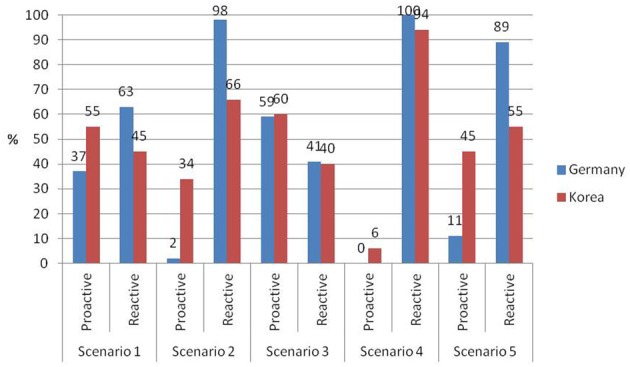
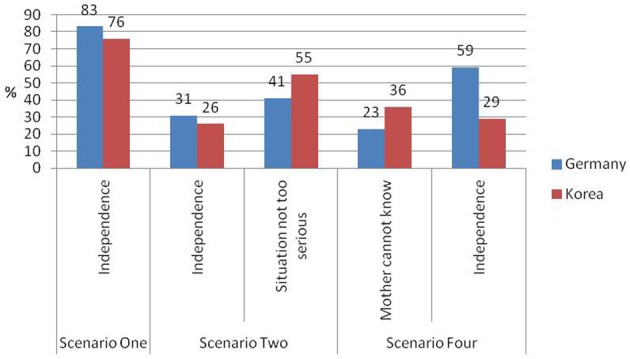
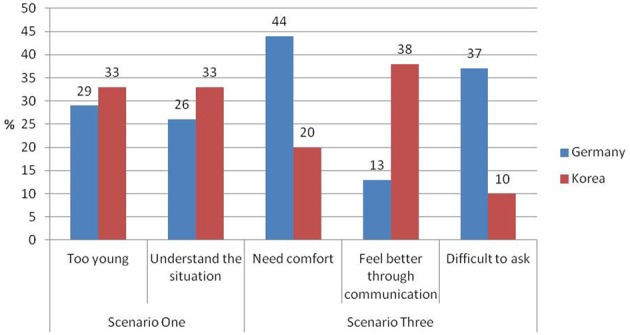
This study contributes to a differentiated understanding of maternal sensitivity in cultural and situational context. We investigated differences and similarities in German and Korean mothers' maternal sensitivity. We interviewed 92 German and 100 Korean mothers of first graders about their preference for proactive (anticipating children's needs) or reactive sensitivity (responding to children's direct cues) in different scenarios. Related parenting beliefs were assessed by asking the mothers to explain the reasons why they would prefer specific parenting behaviors. Results revealed significant cultural differences in reactive vs. proactive sensitivity preferences. Overall, German mothers were more likely to indicate that a mother should respond reactively and less likely to report that a mother should act proactively than were Korean mothers. Korean mothers gave preference to both reactive and proactive sensitivity depending on the scenario. With regard to parenting beliefs, analyses revealed that German and Korean mothers who preferred reactive sensitivity mainly explained their choices as attempts to encourage children's development of independence. In contrast, Korean and German mothers with a preference for proactive sensitivity were more likely to report that mothers would assist their children due to their immaturity in dealing with emotional distress. Results are discussed in the framework of the different meanings and functions of maternal sensitivity for socialization in different cultural contexts.
Keywords: Germany; South Korea; culture; parenting; sensitivity; socialization.
Figures
References
-
- Ainsworth M. S., Blehar M. C., Waters E., Wall S. (1978). Patterns of Attachment: A Psychological Study of the Strange Situation. Oxford, UK: Erlbaum
-
- Bornstein M. H. (1991). Approaches to parenting in culture, in Cultural Approaches to Parenting, ed Bornstein M. H. (Hillsdale, NJ: Erlbaum; ), 3–19
-
- Bornstein M. H., Cheah C. S. L. (2006). The place of “culture and parenting” in an ecological contextual perspective on developmental science, in Parental Beliefs, Parenting, and Child Development in Cross–Cultural Perspective, eds Rubin K., Chung O. B. (New York, NY: Psychology Press; ), 3–33
LinkOut - more resources
Full Text Sources
Other Literature Sources
