


Mucinous and signet-ring cell colorectal cancers differ from classical adenocarcinomas in tumor biology and prognosis
- PMID: 23989057
- PMCID: PMC3888475
- DOI: 10.1097/SLA.0b013e3182a69f7e
Mucinous and signet-ring cell colorectal cancers differ from classical adenocarcinomas in tumor biology and prognosis
Abstract
Objectives: To define the prognostic value of different histological subtypes of colorectal cancer.
Background: Most colorectal cancers are classical adenocarcinomas (AC). Less frequent subtypes include mucinous adenocarcinomas (MAC) and signet-ring cell carcinomas (SC). In contrast to established prognostic factors such as TNM and grading, the histological subtype has no therapeutical consequences so far, although it may reflect different biological behavior.
Methods: Between 1982 and 2012, a total of 3479 consecutive patients underwent surgery for primary colorectal cancer (AC, MAC, or SC). Clinical, histopathological, and survival data were analyzed.
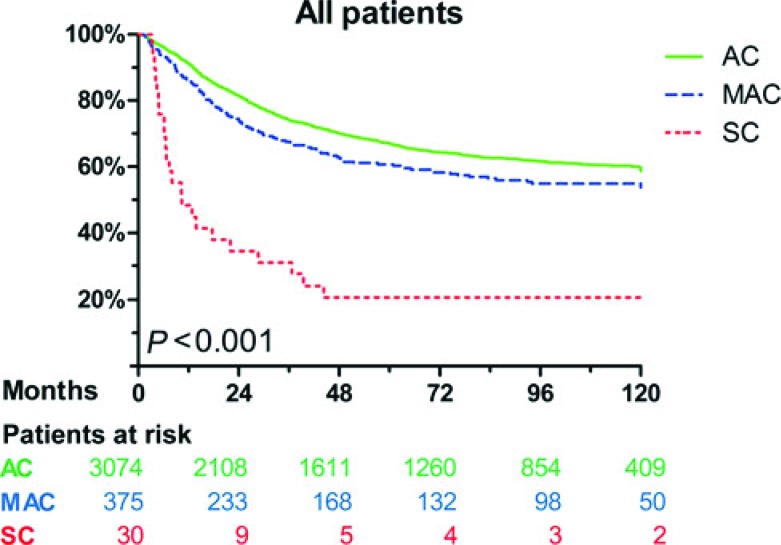
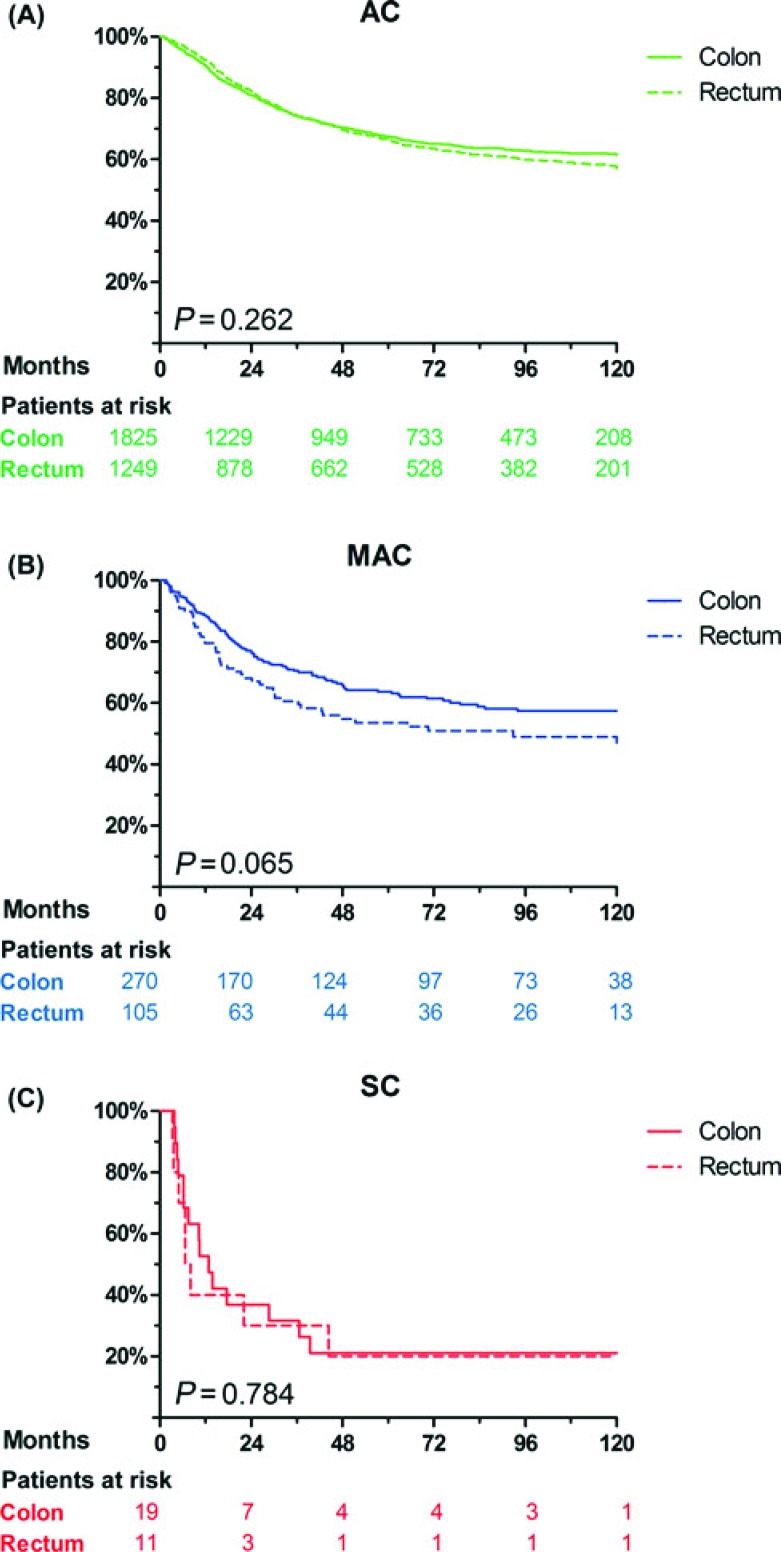
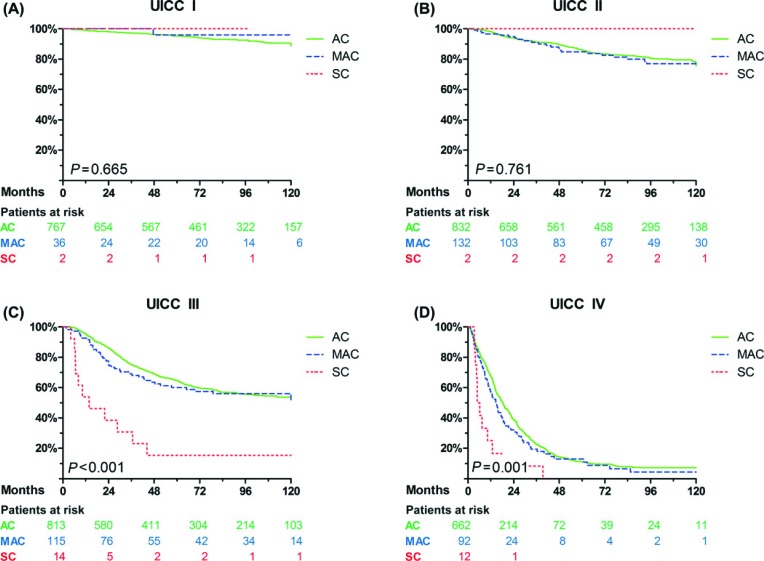
Results: Of all 3479 patients, histological subtype was AC in 3074 cases (88%), MAC in 375 cases (11%), and SC in 30 cases (0.9%). MAC (51%, P < 0.001) and SC (50%, P = 0.029) occurred more frequently in right-sided tumors than AC (28%). Compared with AC, tumor stages and histological grading were higher in MAC and SC (P < 0.001 for each). Rates of angioinvasion were lower in MAC than in AC (5% vs 9%, P = 0.011). Rates of lymphatic invasion were higher in SC than in AC (67% vs 25%, P < 0.001). Five-year cause-specific survival was 67 ± 1% for AC, 61 ± 3% for MAC, and 21 ± 8% for SC (P < 0.001 for difference between the groups). In multivariable analysis, survival did not differ significantly between AC and MAC after correction for tumor stage. However, SC remained an independent prognostic factor associated with worse survival (hazard ratio = 2.5, 95% confidence interval = 1.6-3.8, P < 0.001).
Conclusions: MAC and SC are histological subtypes of colorectal cancer with different characteristics than classical AC. Both are diagnosed in more advanced tumor stages, but the dismal prognosis of SC seems to be caused by its intrinsic tumor biology.
Figures
References
-
- Morson BC, Sobin LH. Histological Typing of Intestinal Tumours (International Histological Classification of Tumours, No. 15). 1st ed Geneva, Switzerland: World Health Organization; 1976
-
- Bosman FT, Carneiro F, Hruban RH, et al. WHO Classification of Tumours of the Digestive System. 4th ed Geneva, Switzerland: World Health Organization, International Agency for Research on Cancer; 2010
-
- Verhulst J, Ferdinande L, Demetter P, et al. Mucinous subtype as prognostic factor in colorectal cancer: a systematic review and meta-analysis. J Clin Pathol. 2012;65:381–388 - PubMed
-
- Chew MH, Yeo SA, Ng ZP, et al. Critical analysis of mucin and signet ring cell as prognostic factors in an Asian population of 2,764 sporadic colorectal cancers. Int J Colorectal Dis. 2010;25:1221–1229 - PubMed
-
- Borger ME, Gosens MJ, Jeuken JW, et al. Signet ring cell differentiation in mucinous colorectal carcinoma. J Pathol. 2007;212:278–286 - PubMed
Publication types
MeSH terms
LinkOut - more resources
Full Text Sources
Other Literature Sources
Medical
