


Tumour cell lysate-loaded dendritic cell vaccine induces biochemical and memory immune response in castration-resistant prostate cancer patients
- PMID: 23989944
- PMCID: PMC3777003
- DOI: 10.1038/bjc.2013.494
Tumour cell lysate-loaded dendritic cell vaccine induces biochemical and memory immune response in castration-resistant prostate cancer patients
Abstract
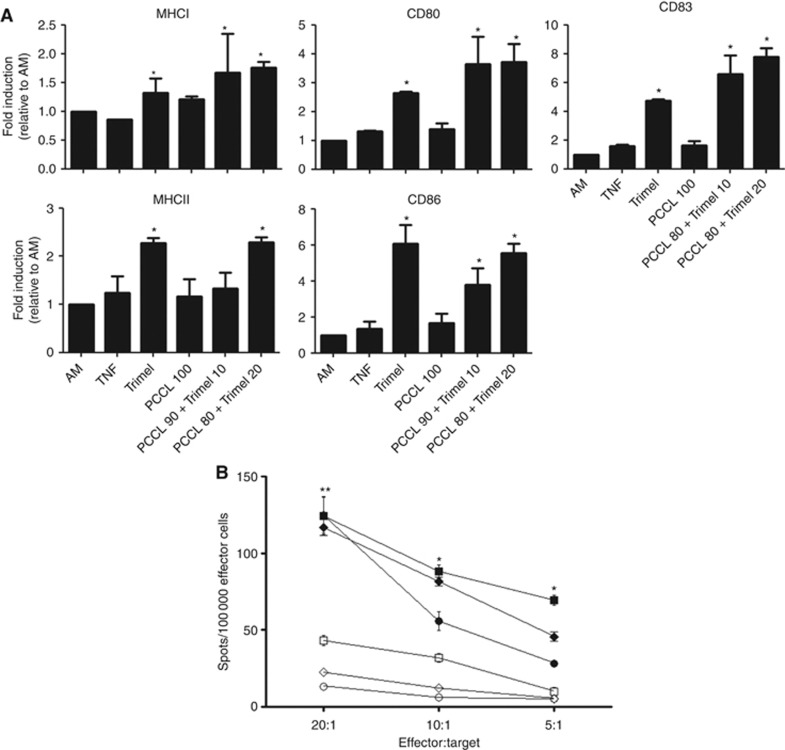
Background: Recently, we produced a tumour antigen-presenting cells (TAPCells) vaccine using a melanoma cell lysate, called TRIMEL, as an antigen source and an activation factor. Tumour antigen-presenting cells induced immunological responses and increased melanoma patient survival. Herein, we investigated the effect of TAPCells loaded with prostate cancer cell lysates (PCCL) as an antigen source, and TRIMEL as a dendritic cell (DC) activation factor; which were co-injected with the Concholepas concholepas haemocyanin (CCH) as an adjuvant on castration-resistant prostate cancer (CRPC) patients.
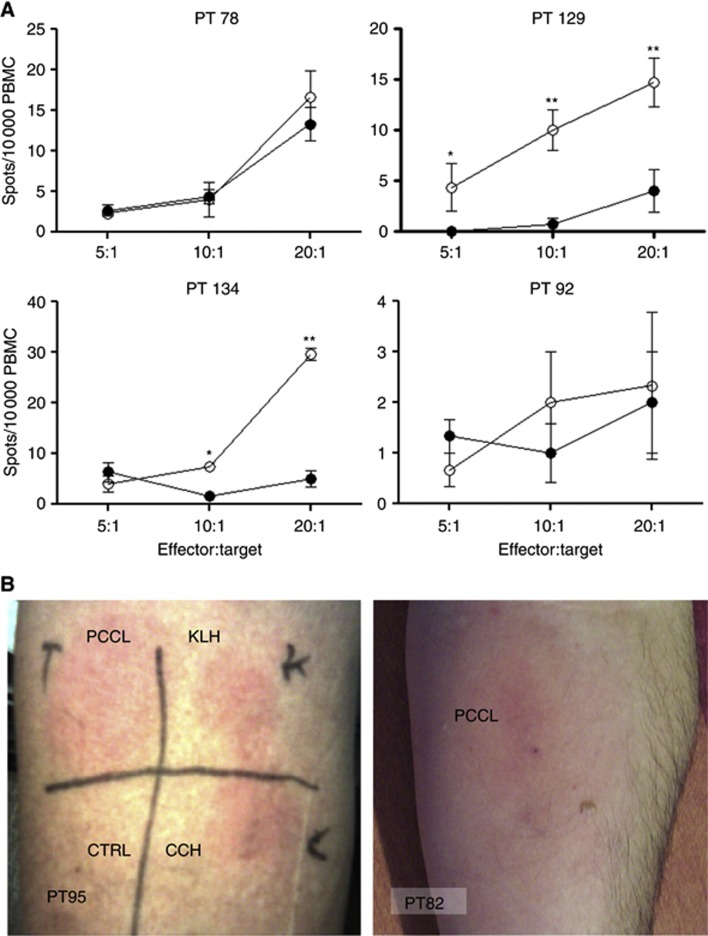
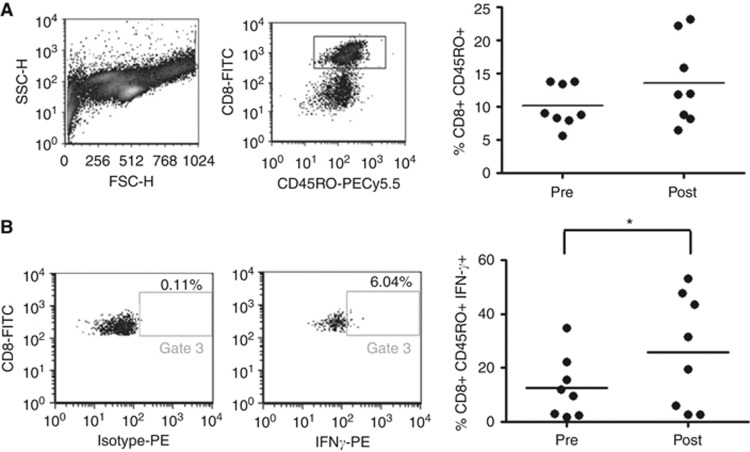
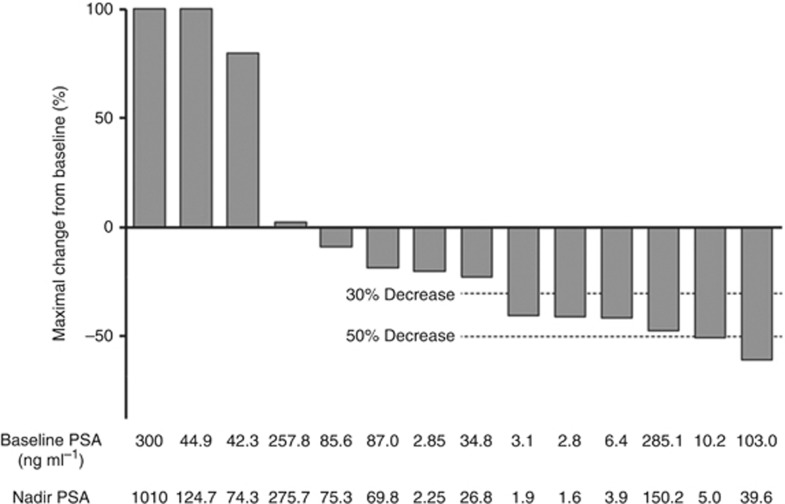
Methods: The lysate mix capacity, for inducing T-cell activation, was analysed by flow cytometry and Elispot. Delayed-type hypersensitivity (DTH) reaction against PCCL, frequency of CD8(+) memory T cells (Tm) in blood and prostate-specific antigen (PSA) levels in serum were measured in treated patients.
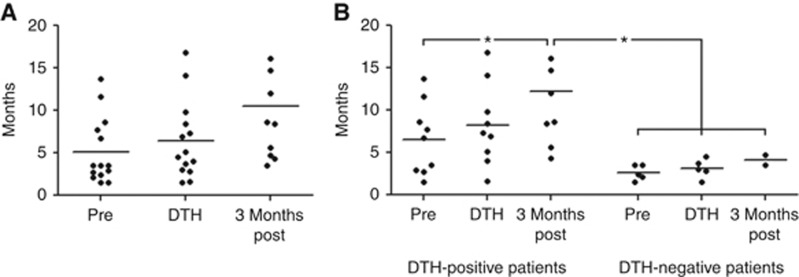
Results: The lysate mix induced functional mature DCs that were capable of activating PCCL-specific T cells. No relevant adverse reactions were observed. Six out of 14 patients showed a significant decrease in levels of PSA. DTH(+) patients showed a prolonged PSA doubling-time after treatment. Expansion of functional central and effector CD8(+) Tm were detected.
Conclusion: Treatment of CRPC patients with lysate-loaded TAPCells and CCH as an adjuvant is safe: generating biochemical and memory immune responses. However, the limited number of cases requires confirmation in a phase II clinical trial.
Figures
References
-
- Aguilera R, Saffie C, Tittarelli A, González FE, Ramírez M, Reyes D, Pereda C, Hevia D, García T, Salazar L, Ferreira A, Hermoso M, Mendoza-Naranjo A, Ferrada C, Garrido P, López MN, Salazar-Onfray F. Heat-shock induction of tumor-derived danger signals mediates rapid monocyte differentiation into clinically effective dendritic cells. Clin Cancer Res. 2011;17:2474–2483. - PubMed
-
- Arancibia S, Del Campo M, Nova E, Salazar F, Becker MI. Enhanced structural stability of Concholepas hemocyanin increases its immunogenicity and maintains its non-specific immunostimulatory effects. Eur J Immunol. 2012;42:688–699. - PubMed
-
- Banchereau J, Paczesny S, Blanco P, Bennett L, Pascual V, Fay J, Palucka AK. Dendritic cells: controllers of the immune system and a new promise for immunotherapy. Ann NY Acad Sci. 2003;987:180–187. - PubMed
-
- Chiang CL, Kandalaft LE, Coukos G. Adjuvants for enhancing the immunogenicity of whole tumor cell vaccines. Int Rev Immunol. 2011;30:150–182. - PubMed
Publication types
MeSH terms
Substances
LinkOut - more resources
Full Text Sources
Other Literature Sources
Research Materials
Miscellaneous
