


Unintended consequences of invasive predator control in an Australian forest: overabundant wallabies and vegetation change
- PMID: 23990879
- PMCID: PMC3749205
- DOI: 10.1371/journal.pone.0069087
Unintended consequences of invasive predator control in an Australian forest: overabundant wallabies and vegetation change
Abstract
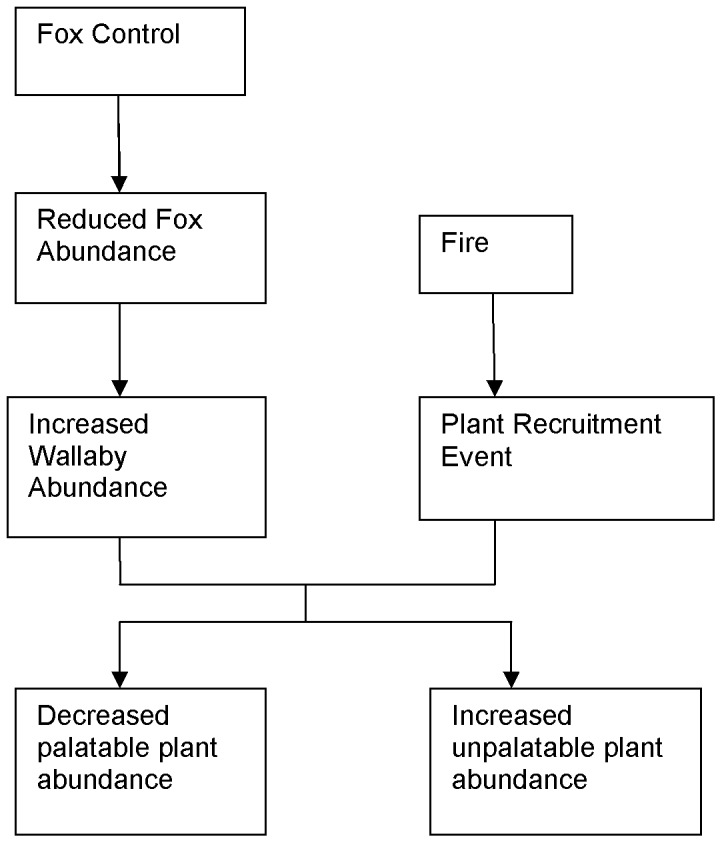
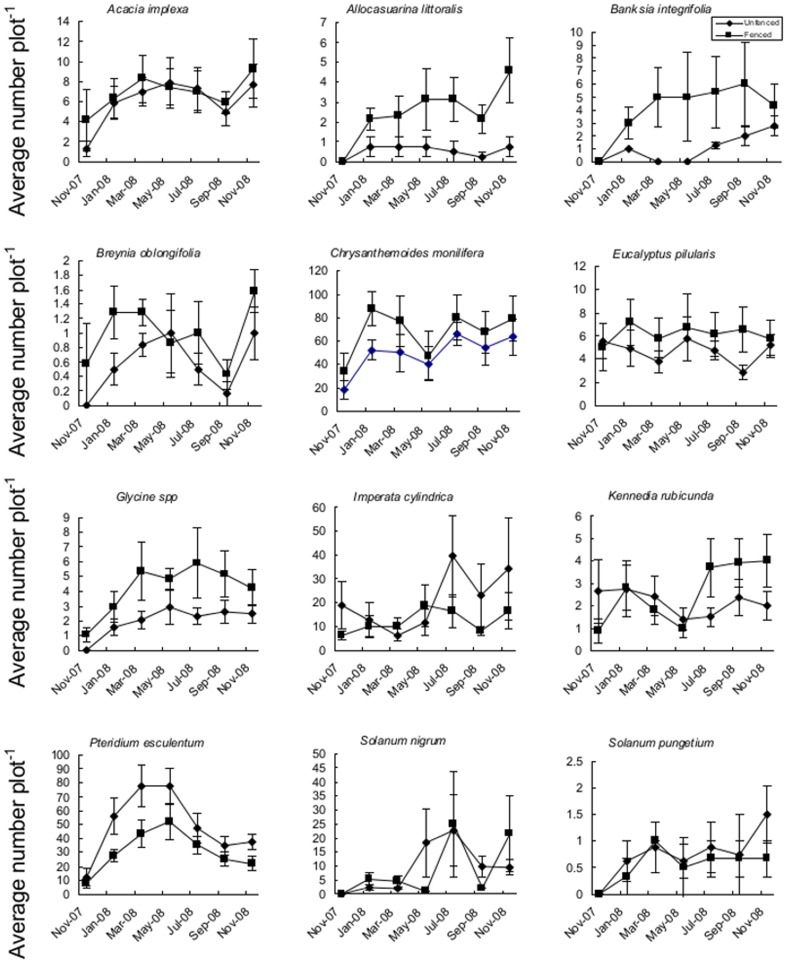
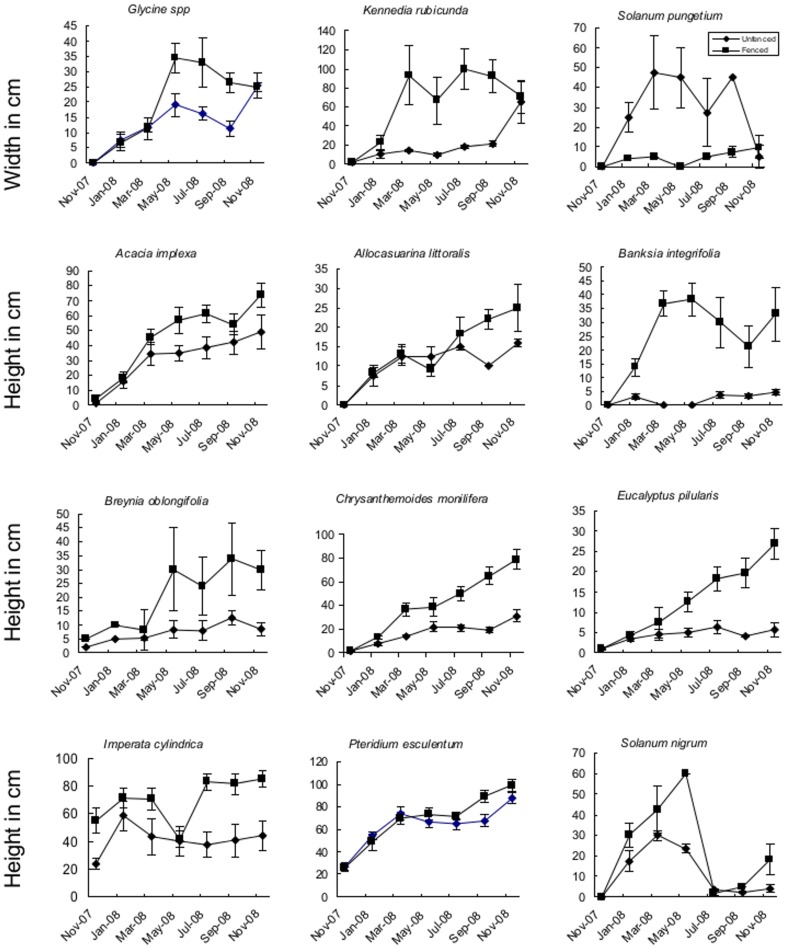
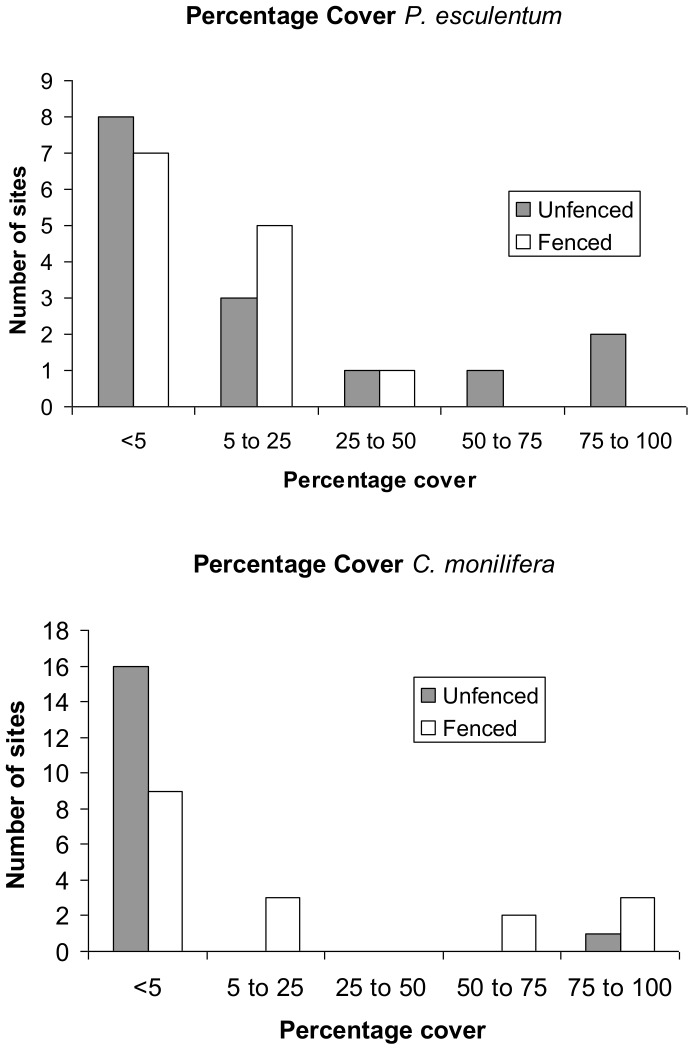
Over-abundance of native herbivores is a problem in many forests worldwide. The abundance of native macropod wallabies is extremely high at Booderee National Park (BNP) in south-eastern Australia. This has occurred because of the reduction of exotic predators through an intensive baiting program, coupled with the absence of other predators. The high density of wallabies at BNP may be inhibiting the recruitment of many plant species following fire-induced recruitment events. We experimentally examined the post-fire response of a range of plant species to browsing by wallabies in a forest heavily infested with the invasive species, bitou bush Chrysanthemoides monilifera. We recorded the abundance and size of a range of plant species in 18 unfenced (browsed) and 16 fenced (unbrowsed) plots. We found the abundance and size of bitou bush was suppressed in browsed plots compared to unbrowsed plots. Regenerating seedlings of the canopy or middle storey tree species Eucalyptus pilularis, Acacia implexa, Allocasuarina littoralis, Breynia oblongifolia and Banksia integrifolia were either smaller or fewer in number in grazed plots than treatment plots as were the vines Kennedia rubicunda, Glycine tabacina and Glycine clandestina. In contrast, the understorey fern, Pteridium esculentum increased in abundance in the browsed plots relative to unbrowsed plots probably because of reduced competition with more palatable angiosperms. Twelve months after plots were installed the community structure of the browsed and unbrowsed plots was significantly different (P = 0.023, Global R = 0.091). The relative abundance of C. monilifera and P. esculentum contributed most to the differences. We discuss the possible development of a low diversity bracken fern parkland in Booderee National Park through a trophic cascade, similar to that caused by overabundant deer in the northern hemisphere. We also discuss its implications for broad scale fox control in southern Australian forests.
Conflict of interest statement
Figures
References
-
- Paine RT, Vadas RL (1969) The effect of grazing by sea urchins, Strongylocentrotus spp., on benthic algal populations. Limnol Oceanogr 14: 710–719.
-
- Waller DM, Alverson WS (1997) The White-Tailed Deer: A Keystone Herbivore. Wildl Soc Bul 25: 217–226.
-
- Coulson G (1998) Management of overabundant macropods - are there conservation benefits? In: Austin A, Cowan P editors. Managing Marsupial Abundance for Conservation Benefits. Issues in Marsupial Conservation and Management, Occasional Papers of the Marsupial CRC No. 1, Sydney, 37–48.
-
- Ripple WJ, Larsen EJ, Renkin RA, Smith DW (2001) Trophic cascades among wolves, elk and aspen on Yellowstone National Park's northern range. Biol Cons 102: 227–234.
-
- Balfour D, Dublin HT, Fennessy J, Gibson D, Niskanen L, et al. (2007) Review of Options for Managing the Impacts of Locally Overabundant African Elephants. Gland, Switzerland, IUCN, 80.
Publication types
MeSH terms
LinkOut - more resources
Full Text Sources
Other Literature Sources
