


Bisphosphonates in the adjuvant setting of breast cancer therapy--effect on survival: a systematic review and meta-analysis
- PMID: 23990894
- PMCID: PMC3753308
- DOI: 10.1371/journal.pone.0070044
Bisphosphonates in the adjuvant setting of breast cancer therapy--effect on survival: a systematic review and meta-analysis
Abstract
Background: The role of bisphosphonates (BP) in early breast cancer (BC) has been considered controversial. We performed a meta-analysis of all randomized controlled trials (RCTs) that appraised the effects of BP on survival in early BC.
Methods: RCTs were identified by searching the Cochrane Library, MEDLINE databases and conference proceedings. Hazard ratios (HRs) of overall survival (OS), disease-free survival (DFS) and relative risks of adverse events were estimated and pooled.
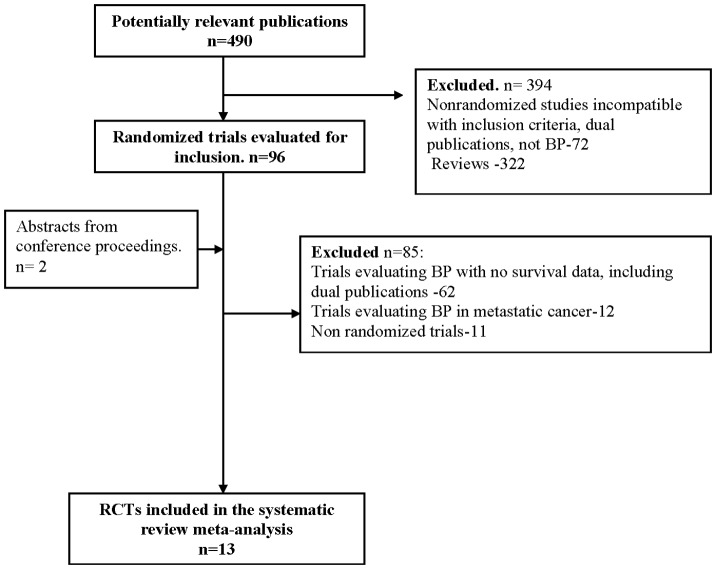
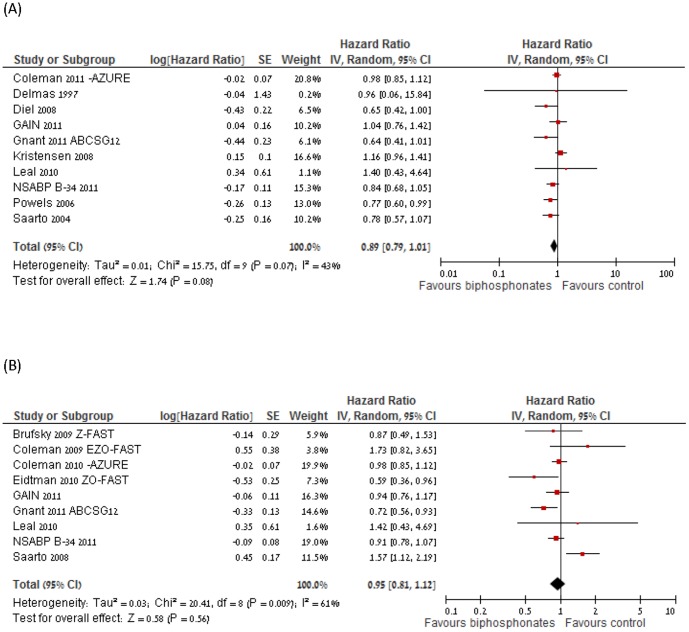
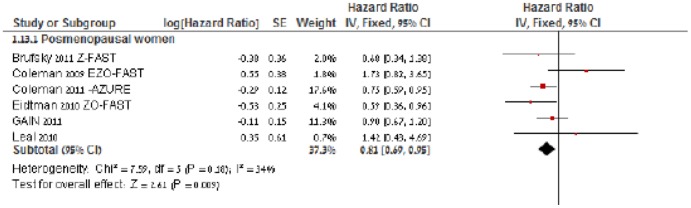
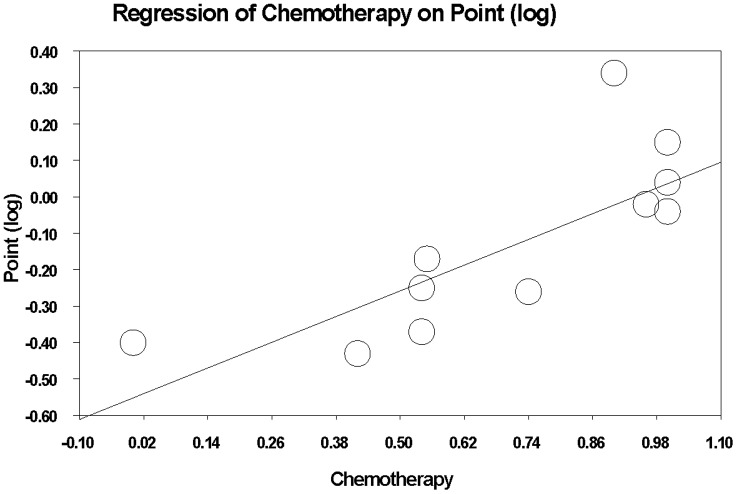
Results: Thirteen trials met the inclusion criteria, evaluating a total of 15,762 patients. Meta-analysis of ten trials which reported OS revealed no statistically significant benefit in OS for BP (HR 0.89, 95% CI = 0.79 to 1.01). Meta-analysis of nine trials which reported the DFS revealed no benefit in DFS (HR 0.95 (0.81-1.12)). Meta-analysis upon menopausal status showed a statistically significant better DFS in the BP-treated patients (HR 0.81(0.69-0.95)). In meta-regression, chemotherapy was negatively associated with HR of survival.
Conclusions: Our meta-analysis indicates a positive effect for adjuvant BP on survival only in postmenopausal patients. Meta-regression demonstrated a negative association between chemotherapy use BP effect on survival. Further large scale RCTs are warranted to unravel the specific subgroups that would benefit from the addition of BP in the adjuvant setting.
Conflict of interest statement
Figures
References
-
- Ferlay J, Shin HR, Bray F, Forman D, Mathers C, et al. (2010) Estimates of worldwide burden of cancer in 2008: GLOBOCAN 2008. Int J Cancer 127: 2893–2917. - PubMed
-
- Coleman RE (2006) Clinical features of metastatic bone disease and risk of skeletal morbidity. Clin Cancer Res 12: 6243s–6249s. - PubMed
-
- Boissier S, Ferreras M, Peyruchaud O, Magnetto S, Ebetino FH, et al. (2000) Bisphosphonates inhibit breast and prostate carcinoma cell invasion, an early event in the formation of bone metastases. Cancer Res 60: 2949–2954. - PubMed
-
- Gallo M, De Luca A, Lamura L, Normanno N (2011) Zoledronic acid blocks the interaction between mesenchymal stem cells and breast cancer cells: implications for adjuvant therapy of breast cancer. Ann Oncol 1: 1–7. - PubMed
Publication types
MeSH terms
Substances
LinkOut - more resources
Full Text Sources
Other Literature Sources
Medical
Miscellaneous
