


PRISM: a novel research tool to assess the prevalence of pseudobulbar affect symptoms across neurological conditions
- PMID: 23991068
- PMCID: PMC3749118
- DOI: 10.1371/journal.pone.0072232
PRISM: a novel research tool to assess the prevalence of pseudobulbar affect symptoms across neurological conditions
Abstract
Background: Pseudobulbar affect (PBA) is a neurological condition characterized by involuntary, sudden, and frequent episodes of laughing and/or crying, which can be socially disabling. Although PBA occurs secondary to many neurological conditions, with an estimated United States (US) prevalence of up to 2 million persons, it is thought to be under-recognized and undertreated. The PBA Registry Series (PRISM) was established to provide additional PBA symptom prevalence data in a large, representative US sample of patients with neurological conditions known to be associated with PBA.
Methods: Participating clinicians were asked to enroll ≥20 consenting patients with any of 6 conditions: Alzheimer's disease (AD), amyotrophic lateral sclerosis (ALS), multiple sclerosis (MS), Parkinson's disease (PD), stroke, or traumatic brain injury (TBI). Patients (or their caregivers) completed the Center for Neurologic Study-Lability Scale (CNS-LS) and an 11-point scale measuring impact of the neurological condition on the patient's quality of life (QOL). Presence of PBA symptoms was defined as a CNS-LS score ≥13. Demographic data and current use of antidepressant or antipsychotic medications were also recorded.
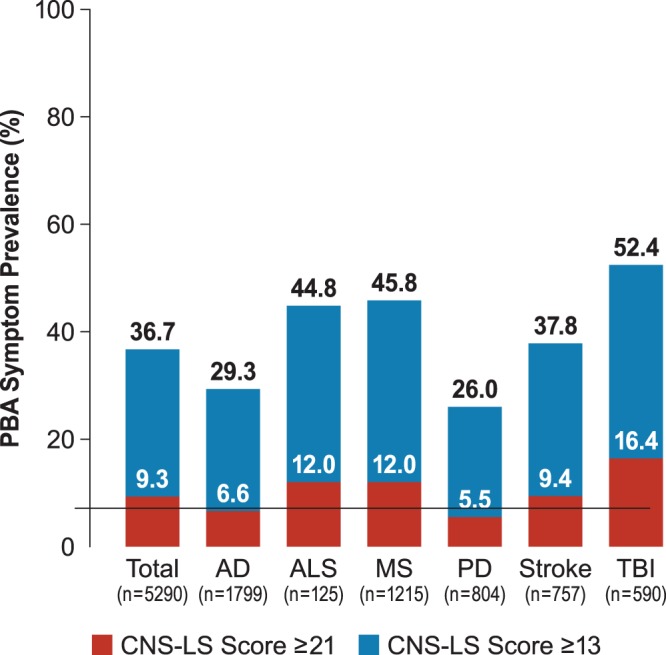
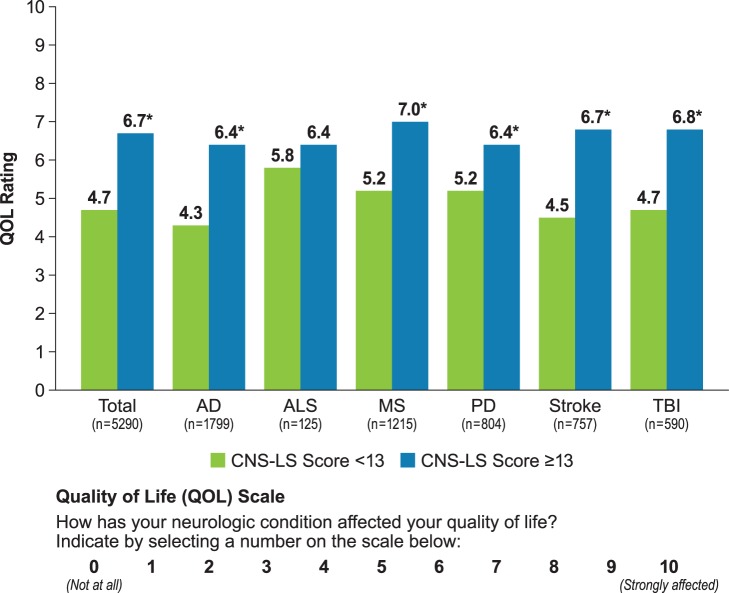
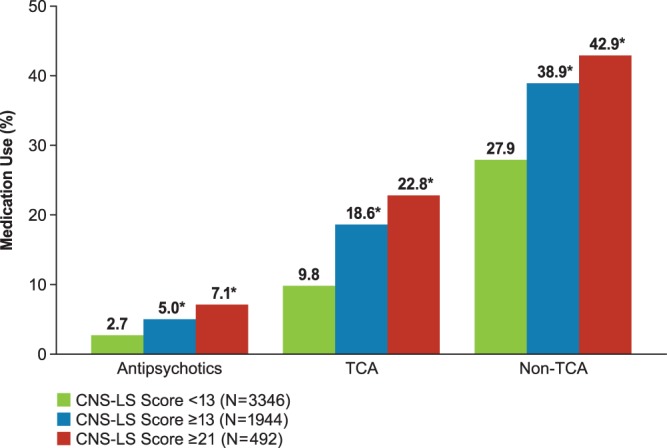
Results: PRISM enrolled 5290 patients. More than one third of patients (n = 1944; 36.7%) had a CNS-LS score ≥13, suggesting PBA symptoms. The mean (SD) score measuring impact of neurological condition on QOL was significantly higher (worse) in patients with CNS-LS ≥13 vs <13 (6.7 [2.5] vs. 4.7 [3.1], respectively; P<0.0001 two-sample t-test). A greater percentage of patients with CNS-LS ≥13 versus <13 were using antidepressant/antipsychotic medications (53.0% vs 35.4%, respectively; P<0.0001, chi-square test).
Conclusions: Data from PRISM, the largest clinic-based study to assess PBA symptom prevalence, showed that PBA symptoms were common among patients with diverse neurological conditions. Higher CNS-LS scores were associated with impaired QOL and greater use of antipsychotic/antidepressant medications. These data underscore a need for greater awareness, recognition, and diagnosis of PBA.
Conflict of interest statement
Figures
References
-
- Arciniegas DB, Topkoff J (2000) The neuropsychiatry of pathologic affect: an approach to evaluation and treatment. Semin Clin Neuropsychiatry 5: 290–306. - PubMed
-
- Schiffer R, Pope LE (2005) Review of pseudobulbar affect including a novel and potential therapy. J Neuropsychiatry Clin Neurosci 17: 447–454. - PubMed
-
- Wortzel HS, Oster TJ, Anderson CA, Arciniegas DB (2008) Pathological laughing and crying: epidemiology, pathophysiology and treatment. CNS Drugs 22: 531–545. - PubMed
-
- Cummings JL, Arciniegas DB, Brooks BR, Herndon RM, Lauterbach EC, et al. (2006) Defining and diagnosing involuntary emotional expression disorder CNS Spectr. 11: 1–7. - PubMed
-
- Parvizi J, Coburn KL, Shillcutt SD, Coffey CE, Lauterbach EC, et al. (2009) Neuroanatomy of pathological laughing and crying: a report of the American Neuropsychiatric Association Committee on Research. J Neuropsychiatry Clin Neurosci 21: 75–87. - PubMed
Publication types
MeSH terms
Substances
LinkOut - more resources
Full Text Sources
Other Literature Sources
Medical
Miscellaneous
