Risk factors of ventilator-associated pneumonia in pediatric intensive care unit: a systematic review and meta-analysis
- PMID: 23991312
- PMCID: PMC3755676
- DOI: 10.3978/j.issn.2072-1439.2013.08.31
Risk factors of ventilator-associated pneumonia in pediatric intensive care unit: a systematic review and meta-analysis
Abstract
Objective: To identify risk factors of ventilator-associated pneumonia (VAP) in pediatric intensive care unit (PICU).
Methods: PubMed, Ovid, Web of Science, the Cochrane Library and references of retrieved articles were searched without language limitation. Pooled odds ratios (ORs) and 95% confidence intervals (CIs) were calculated by using both the Mantel-Haenszel fixed-effect and the DerSimonian-Laird random-effects models.
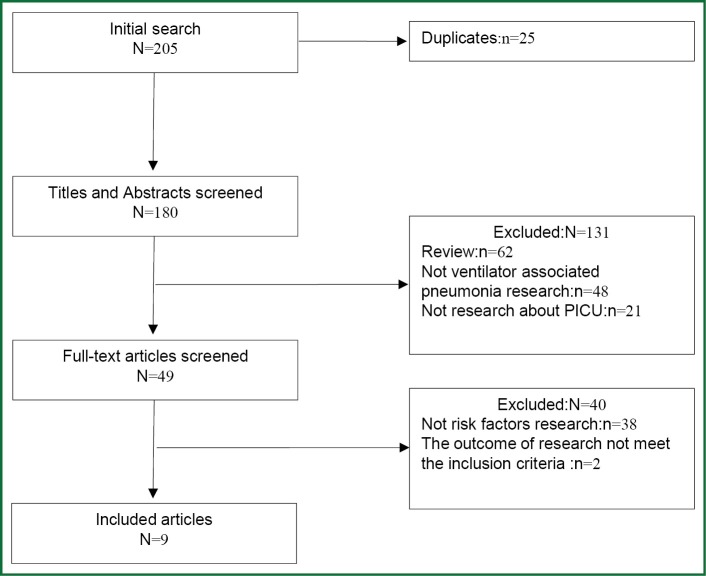
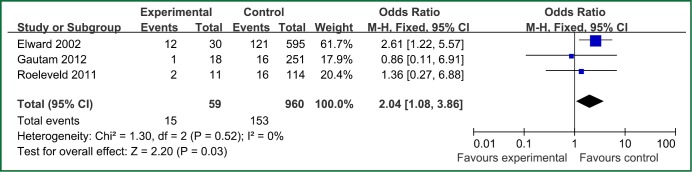
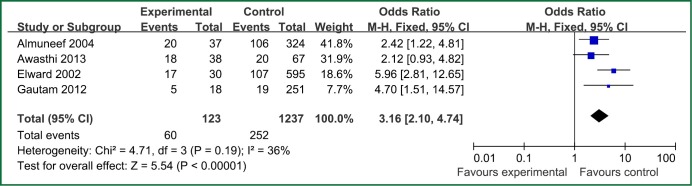
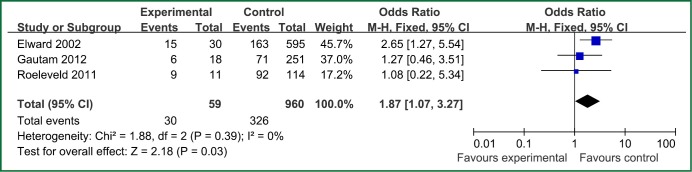
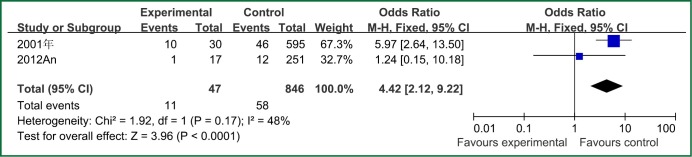
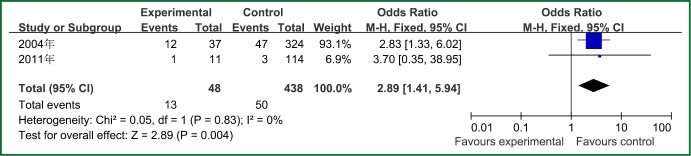
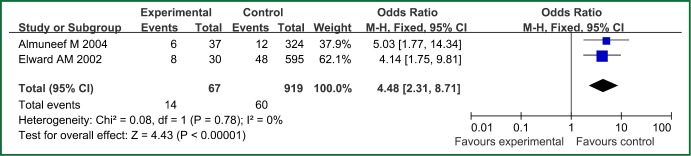
Results: Out of the 205 initially retrieved articles, 9 papers were included. All 4,564 patients were enrolled, including 213 patients with VAP and 4,351 patients without VAP. Among fourteen risk factors, six factors had statistical significances. Risk factors of VAP and its value of OR were as follows: genetic syndrome (OR =2.04; 95% CI: 1.08-3.86), steroids (OR =1.87; 95% CI: 1.07-3.27), reintubation or self-extubation (OR =3.16; 95% CI: 2.10-4.74), bloodstream infection (OR =4.42; 95% CI: 2.12-9.22), prior antibiotic therapy (OR =2.89; 95% CI: 1.41-5.94), bronchoscopy (OR =4.48; 95% CI: 2.31-8.71).
Conclusions: Special methods of preventions should be taken in the light of risk factors of VAP in PICU so as to decrease the rate.
Keywords: Risk factors; meta-analysis; pediatric intensive care unit (PICU); ventilator-associated pneumonia (VAP).
Figures
References
-
- Grohskopf LA, Sinkowitz-Cochran RL, Garrett DO, et al. A national point-prevalence survey of pediatric intensive care unit-acquired infections in the United States. J Pediatr 2002;140:432-8 - PubMed
-
- Tablan OC, Anderson LJ, Besser R, et al. Guidelines for preventing health-care--associated pneumonia, 2003: recommendations of CDC and the Healthcare Infection Control Practices Advisory Committee. MMWR Recomm Rep 2004;53:1-36 - PubMed
-
- Elward AM. Pediatric ventilator-associated pneumonia. Pediatr Infect Dis J 2003;22:445-6 - PubMed
-
- Tang CW, Liu PY, Huang YF, et al. Ventilator-associated pneumonia after pediatric cardiac surgery in southern Taiwan. J Microbiol Immunol Infect 2009;42:413-9 - PubMed
-
- Chastre J, Fagon JY. Ventilator-associated pneumonia. Am J Respir Crit Care Med 2002;165:867-903 - PubMed
LinkOut - more resources
Full Text Sources