


doi: 10.1016/s1553-7250(13)39051-5.
A toolkit to disseminate best practices in inpatient medication reconciliation: multi-center medication reconciliation quality improvement study (MARQUIS)
Affiliations
- PMID: 23991510
- PMCID: PMC11110895
- DOI: 10.1016/s1553-7250(13)39051-5
Item in Clipboard
A toolkit to disseminate best practices in inpatient medication reconciliation: multi-center medication reconciliation quality improvement study (MARQUIS)
Jt Comm J Qual Patient Saf.
2013 Aug.
No abstract available
Figures
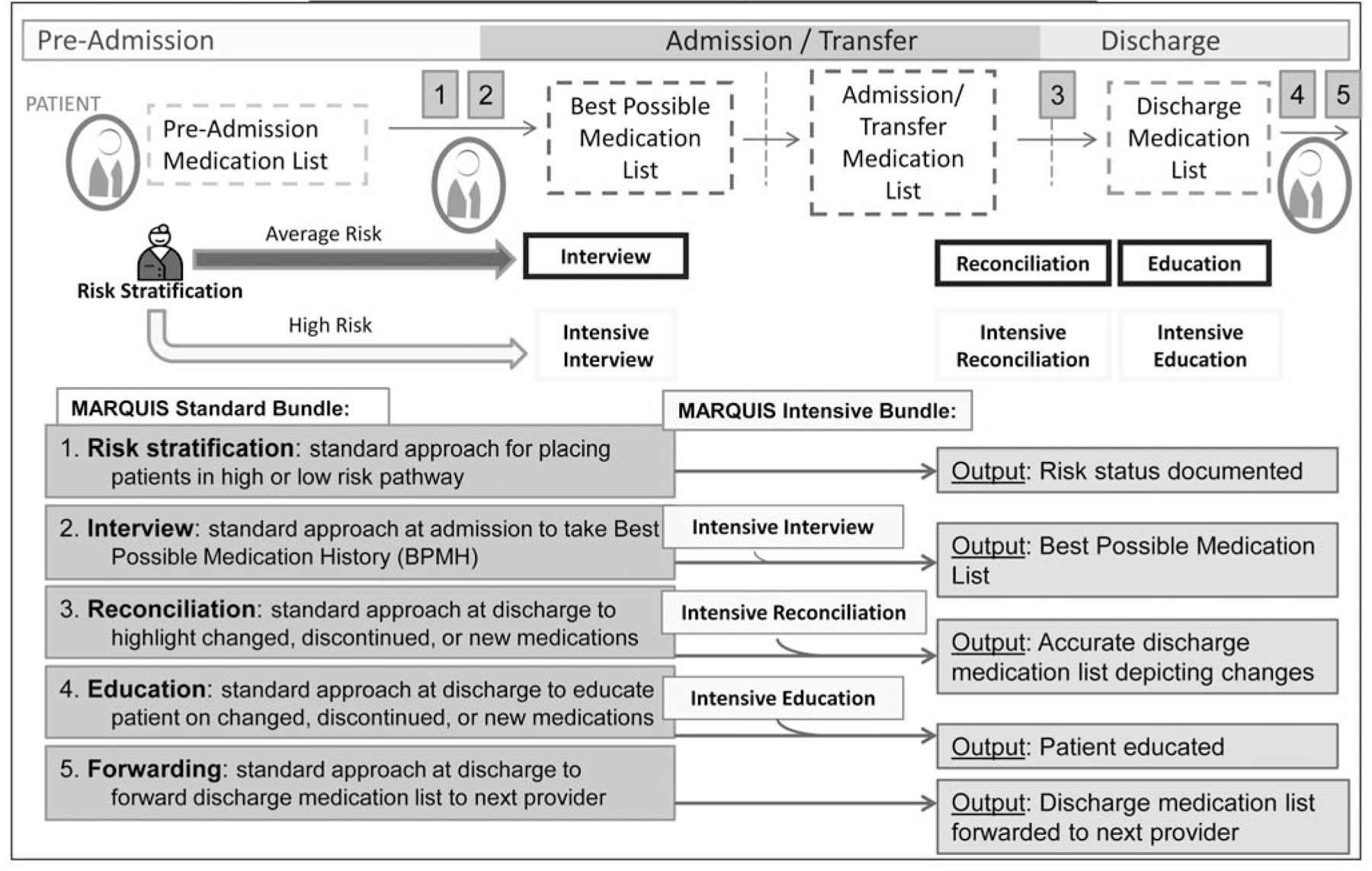
The ideal medication reconciliation process begins at time of patient admission, where patients are stratified into average- versus high-risk pathways, based on particular baseline patient characteristics. Both average- and high-risk patients then proceed through the same subsequent four steps in the medication reconciliation process that differ only in the additional dedicated time and expertise that is required for the intensive medication reconciliation bundle. These subsequent four steps are (2) Admission interview to obtain the best possible medication history (BPMH); (3) Standard approach toward discharge reconciliation of medications, where medication changes, discontinuations, and new medications are highlighted; (4) Standard approach to education of patient at time of discharge on any changed, discontinued, or new medications; and (5) Standard approach of forwarding discharge medication list to the follow-up provider(s). Notably, in the ideal medication reconciliation process, reconciliation occurs at time of admission, any transfer of service during patient hospitalization, and discharge. (Available in color in online article).
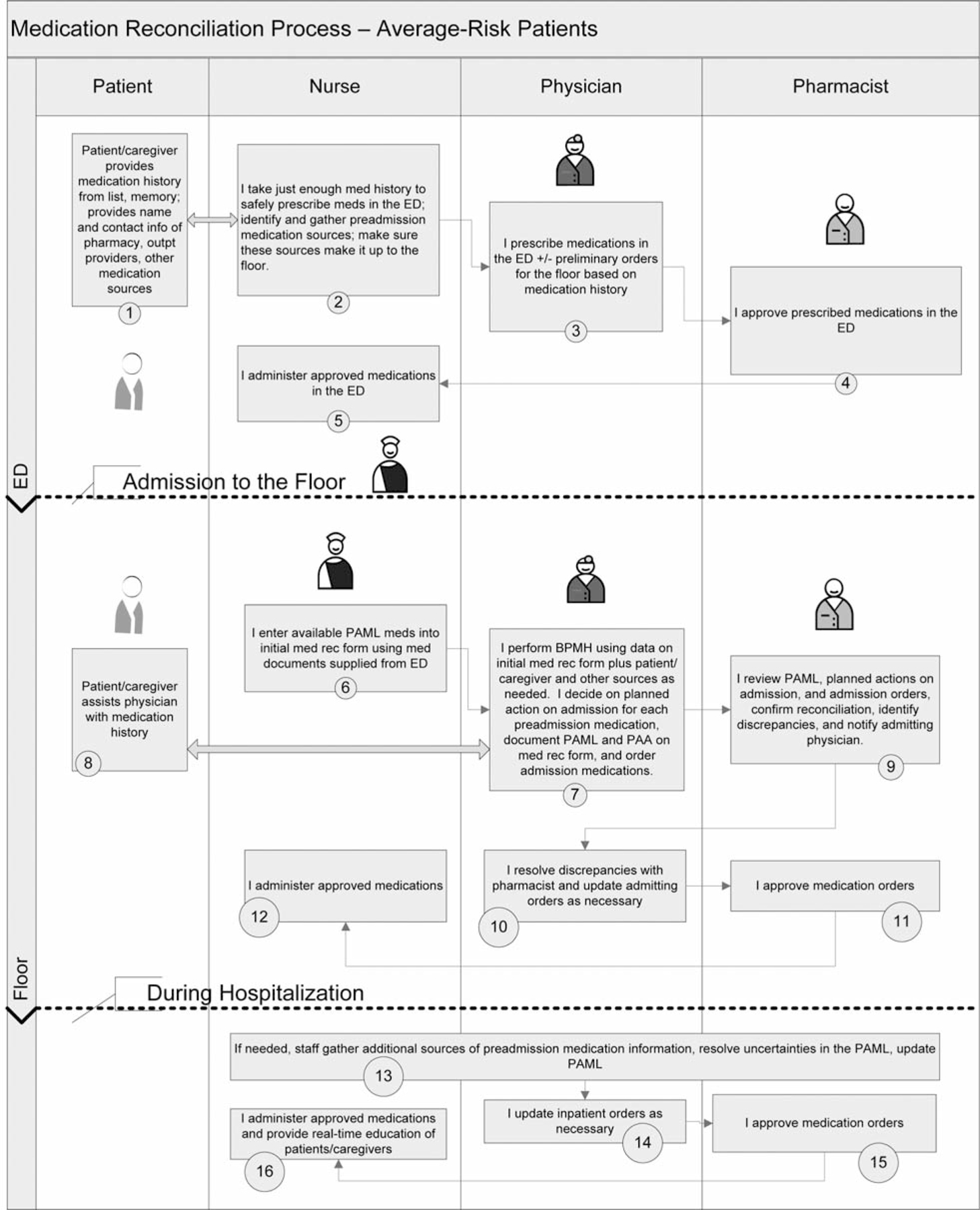
This process map/“swim lane” diagram can be customized for each site that allows QI and clinical personnel to visualize and document a shared understanding of the envisioned ideal medication reconciliation process, including everyone’s role throughout the hospitalization and discharge. ED, emergency department, PAML, preadmission medication list; BPMH, best possible medication history; PAA, planned action on admission; DML, discharge medication list. (Available in color in online article.)
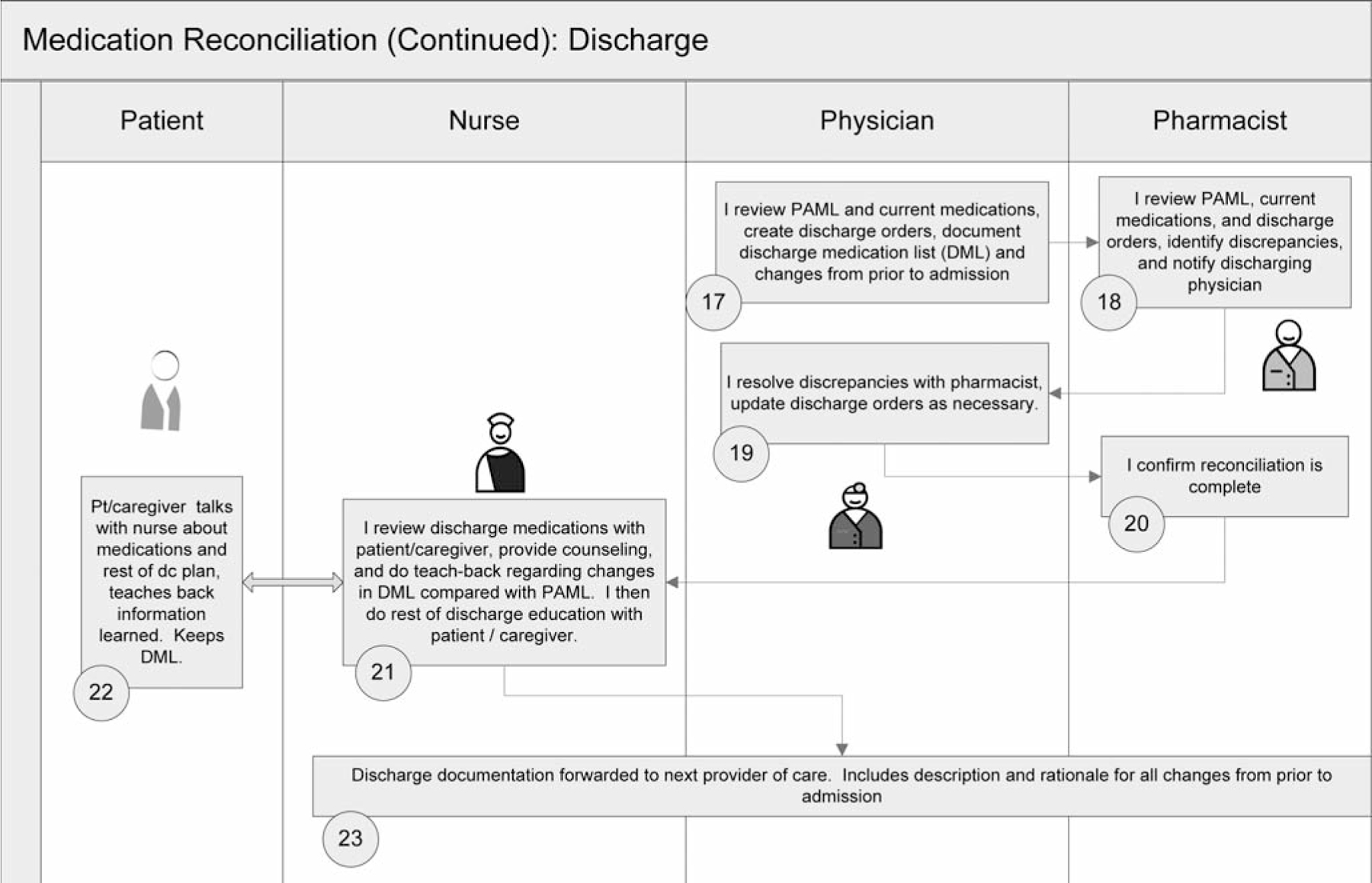
This process map/“swim lane” diagram can be customized for each site that allows QI and clinical personnel to visualize and document a shared understanding of the envisioned ideal medication reconciliation process, including everyone’s role throughout the hospitalization and discharge. ED, emergency department, PAML, preadmission medication list; BPMH, best possible medication history; PAA, planned action on admission; DML, discharge medication list. (Available in color in online article.)
References
-
- Coleman EA, et al. Posthospital medication discrepancies: Prevalence and contributing factors. Arch Intern Med 2005. Sep 12;165(16):1842–1847. - PubMed
-
- Smith JD, Coleman EA, Min SJ. A new tool for identifying discrepancies in postacute medications for community-dwelling older adults. Am J Geriatr Pharmacother 2004;2(2):141–147. - PubMed
-
- Forster AJ, et al. The incidence and severity of adverse events affecting patients after discharge from the hospital. Ann Intern Med 2003. Feb 4;138(3):161–167. - PubMed
-
- Kripalani S, et al. Promoting effective transitions of care at hospital discharge: A review of key issues for hospitalists. J Hosp Med 2007;2(5):314–323. - PubMed
Publication types
MeSH terms
Grants and funding
LinkOut - more resources
Full Text Sources
Other Literature Sources
Medical
