


Protein O-GlcNAcylation in diabetes and diabetic complications
- PMID: 23992419
- PMCID: PMC3985334
- DOI: 10.1586/14789450.2013.820536
Protein O-GlcNAcylation in diabetes and diabetic complications
Abstract
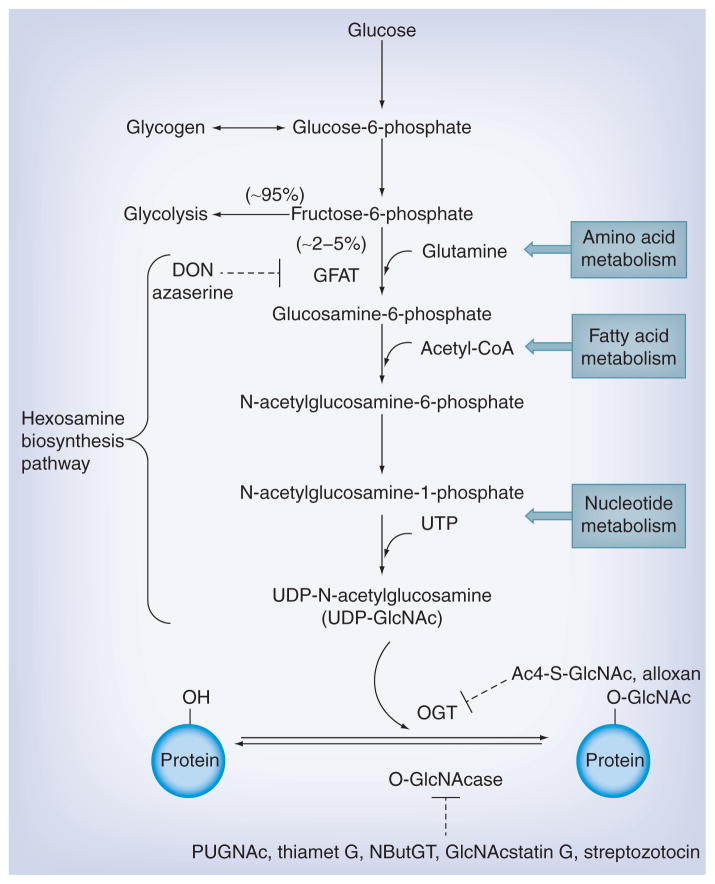
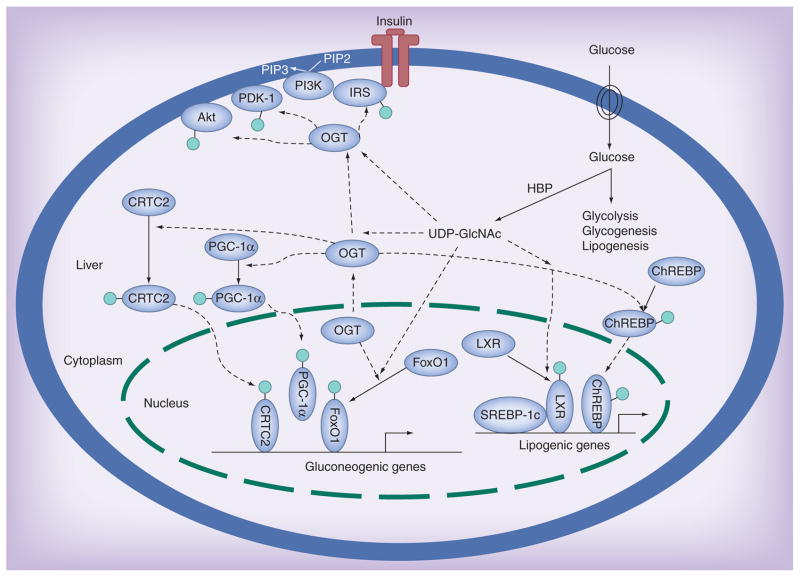
The post-translational modification of serine and threonine residues of proteins by O-linked β-N-acetylglucosamine (O-GlcNAc) is highly ubiquitous, dynamic and inducible. Protein O-GlcNAcylation serves as a key regulator of critical biological processes including transcription, translation, proteasomal degradation, signal transduction and apoptosis. Increased O-GlcNAcylation is directly linked to insulin resistance and to hyperglycemia-induced glucose toxicity, two hallmarks of diabetes and diabetic complications. In this review, we briefly summarize what is known about protein O-GlcNAcylation and nutrient metabolism, as well as discuss the commonly used tools to probe changes of O-GlcNAcylation in cultured cells and in animal models. We then focus on some key proteins modified by O-GlcNAc, which play crucial roles in the etiology and progression of diabetes and diabetic complications. Proteomic approaches are also highlighted to provide a system view of protein O-GlcNAcylation. Finally, we discuss how aberrant O-GlcNAcylation on certain proteins may be exploited to develop methods for the early diagnosis of pre-diabetes and/or diabetes.
Figures
References
-
- IDF Diabetes Atlas. 5. International Diabetes Federation; Brussels, Belgium: 2012.
-
- Whiting DR, Guariguata L, Weil C, Shaw J. IDF diabetes atlas: global estimates of the prevalence of diabetes for 2011 and 2030. Diabetes Res Clin Pract. 2011;94:311–321. - PubMed
-
- Daneman D. Type 1 diabetes. Lancet. 2006;367:847–858. - PubMed
-
- Stumvoll M, Goldstein BJ, van Haeften TW. Type 2 diabetes: principles of pathogenesis and therapy. Lancet. 2005;365:1333–1346. - PubMed
-
- DeFronzo RA. The triumvirate: (-cell muscle, liver: a collusion) responsible for NIDDM. Diabetes. 1988;37:677–687. - PubMed
Publication types
MeSH terms
Substances
Grants and funding
LinkOut - more resources
Full Text Sources
Other Literature Sources
Medical
