


A gain-of-function mutation in DHT synthesis in castration-resistant prostate cancer
- PMID: 23993097
- PMCID: PMC3931012
- DOI: 10.1016/j.cell.2013.07.029
A gain-of-function mutation in DHT synthesis in castration-resistant prostate cancer
Abstract
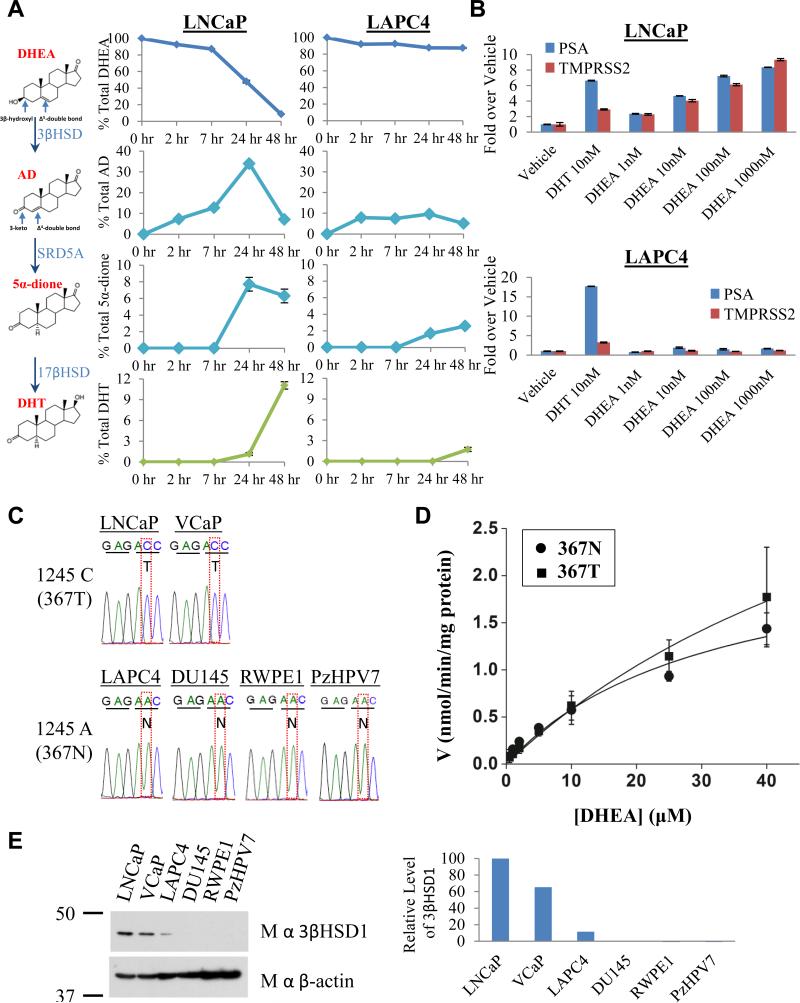
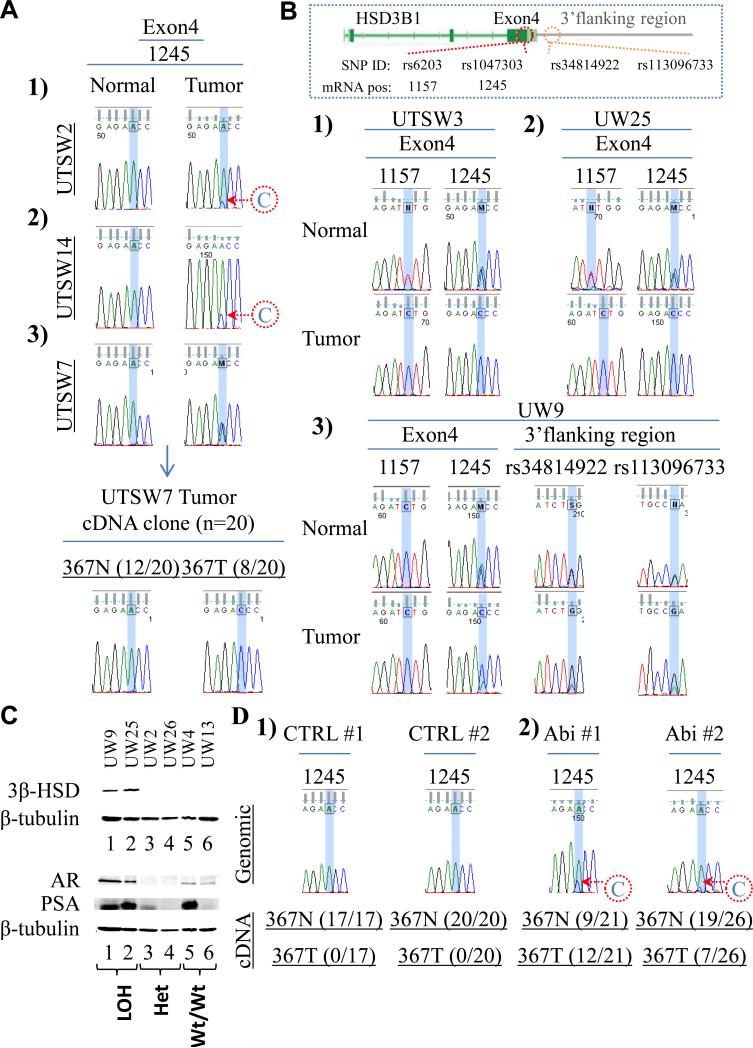
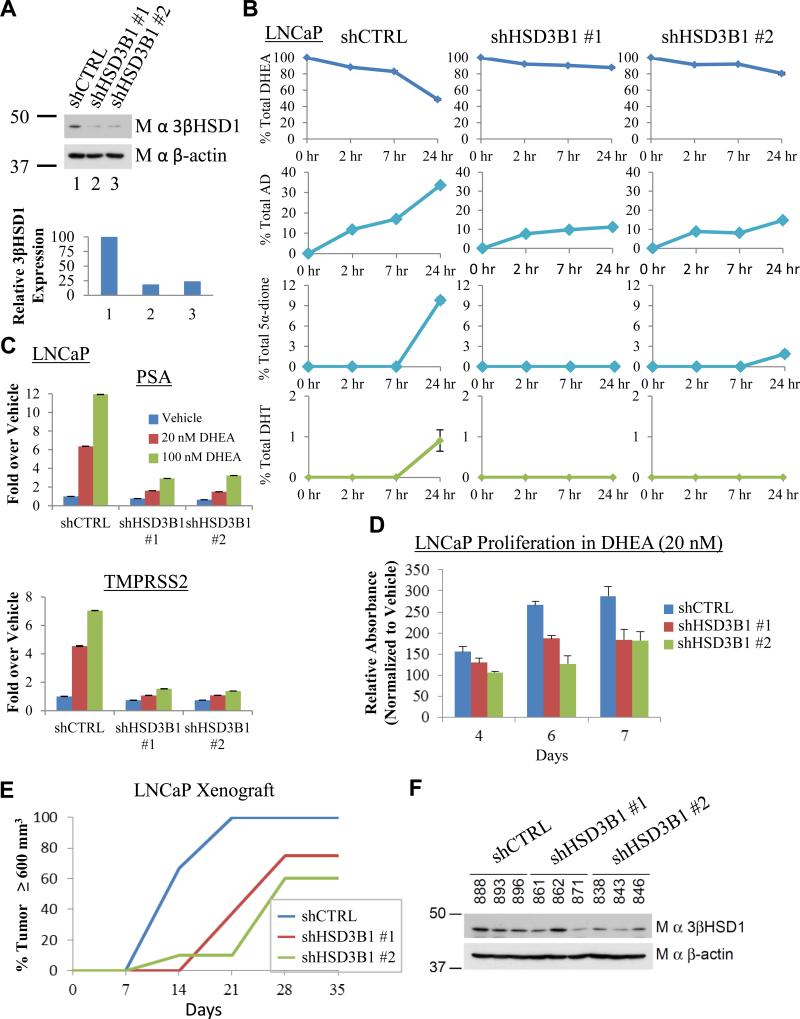
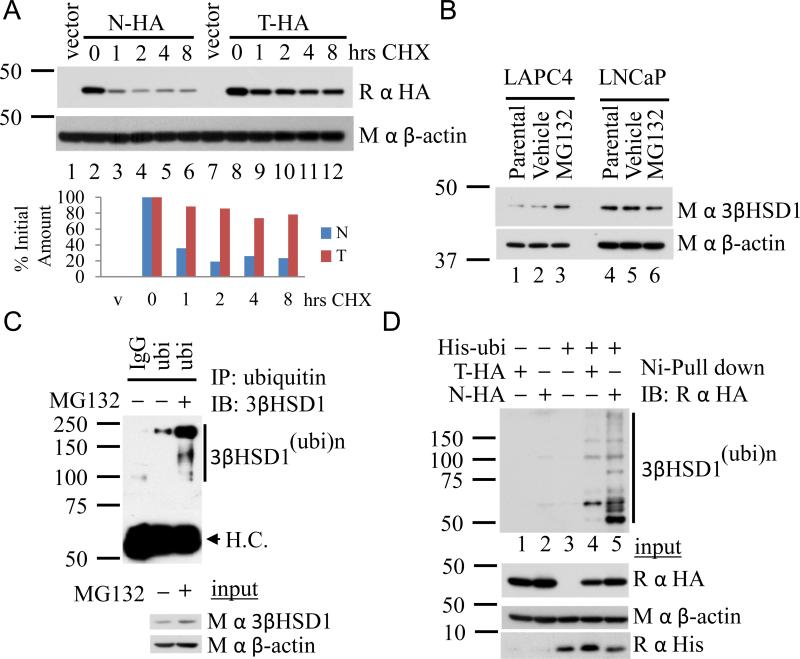
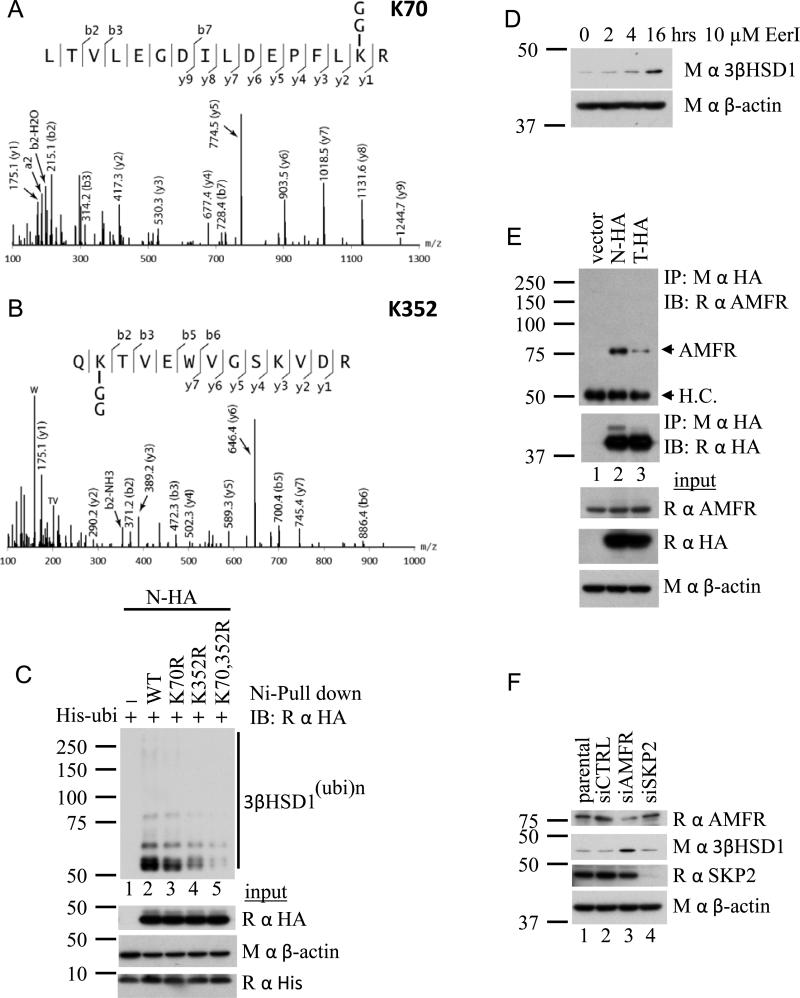
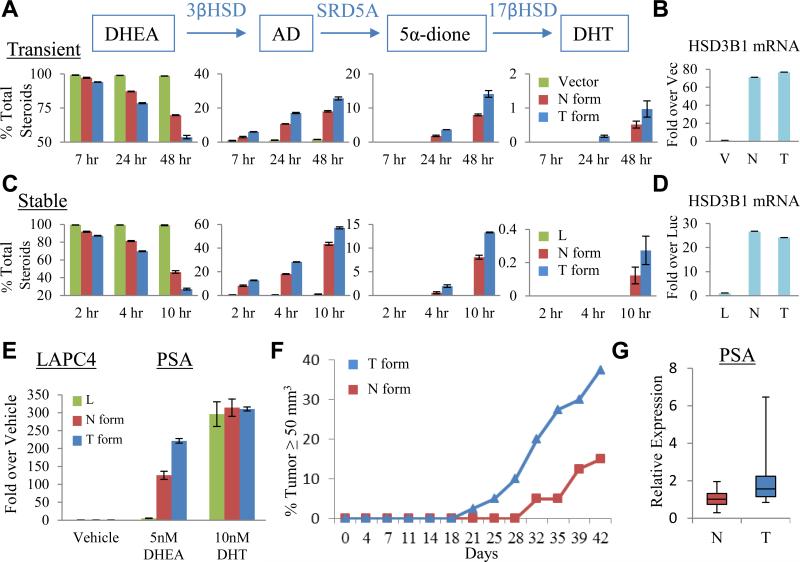
Growth of prostate cancer cells is dependent upon androgen stimulation of the androgen receptor (AR). Dihydrotestosterone (DHT), the most potent androgen, is usually synthesized in the prostate from testosterone secreted by the testis. Following chemical or surgical castration, prostate cancers usually shrink owing to testosterone deprivation. However, tumors often recur, forming castration-resistant prostate cancer (CRPC). Here, we show that CRPC sometimes expresses a gain-of-stability mutation that leads to a gain-of-function in 3β-hydroxysteroid dehydrogenase type 1 (3βHSD1), which catalyzes the initial rate-limiting step in conversion of the adrenal-derived steroid dehydroepiandrosterone to DHT. The mutation (N367T) does not affect catalytic function, but it renders the enzyme resistant to ubiquitination and degradation, leading to profound accumulation. Whereas dehydroepiandrosterone conversion to DHT is usually very limited, expression of 367T accelerates this conversion and provides the DHT necessary to activate the AR. We suggest that 3βHSD1 is a valid target for the treatment of CRPC.
Copyright © 2013 Elsevier Inc. All rights reserved.
Figures
Comment in
-
Prostate cancer: Steroid enzyme mutated in CRPC.Nat Rev Urol. 2013 Oct;10(10):555. doi: 10.1038/nrurol.2013.216. Epub 2013 Sep 17. Nat Rev Urol. 2013. PMID: 24042568 No abstract available.
-
More evidence intratumoral DHT synthesis drives castration-resistant prostate cancer.Asian J Androl. 2014 Jan-Feb;16(1):99-100. doi: 10.4103/1008-682X.122200. Asian J Androl. 2014. PMID: 24369139 Free PMC article. No abstract available.
References
-
- UCSC Genome Browser. http://genome.ucsc.edu/cgibin/hgc?hgsid=300408599&c=chr1&o=120057245&t=1....
-
- Attard G, Cooper CS, de Bono JS. Steroid hormone receptors in prostate cancer: a hard habit to break? Cancer Cell. 2009;16:458–462. - PubMed
-
- Attard G, Reid AH, Auchus RJ, Hughes BA, Cassidy AM, Thompson E, Oommen NB, Folkerd E, Dowsett M, Arlt W, et al. Clinical and Biochemical Consequences of CYP17A1 Inhibition with Abiraterone Given with and without Exogenous Glucocorticoids in Castrate Men with Advanced Prostate Cancer. J Clin Endocrinol Metab. 2012;97:507–516. - PubMed
-
- Barrie SE, Potter GA, Goddard PM, Haynes BP, Dowsett M, Jarman M. Pharmacology of novel steroidal inhibitors of cytochrome P450(17) alpha (17 alpha-hydroxylase/C17-20 lyase). J Steroid Biochem Mol Biol. 1994;50:267–273. - PubMed
-
- Chang BL, Zheng SL, Hawkins GA, Isaacs SD, Wiley KE, Turner A, Carpten JD, Bleecker ER, Walsh PC, Trent JM, et al. Joint effect of HSD3B1 and HSD3B2 genes is associated with hereditary and sporadic prostate cancer susceptibility. Cancer Res. 2002;62:1784–1789. - PubMed
Publication types
MeSH terms
Substances
Grants and funding
- R01 CA168899/CA/NCI NIH HHS/United States
- P50 CA097186/CA/NCI NIH HHS/United States
- P50CA097186/CA/NCI NIH HHS/United States
- 1R01CA172382-01/CA/NCI NIH HHS/United States
- P01 CA085859/CA/NCI NIH HHS/United States
- L30 CA135719/CA/NCI NIH HHS/United States
- P01-CA85859/CA/NCI NIH HHS/United States
- PC093509/PC/NCI NIH HHS/United States
- P01 CA163227/CA/NCI NIH HHS/United States
- HHMI/Howard Hughes Medical Institute/United States
- 1R01CA168899/CA/NCI NIH HHS/United States
- R01 CA172382/CA/NCI NIH HHS/United States
- P01-CA163227/CA/NCI NIH HHS/United States
LinkOut - more resources
Full Text Sources
Other Literature Sources
Medical
Research Materials
