


Effect of Photofrin-mediated photocytotoxicity on a panel of human pancreatic cancer cells
- PMID: 23993850
- PMCID: PMC4176883
- DOI: 10.1016/j.pdpdt.2012.11.001
Effect of Photofrin-mediated photocytotoxicity on a panel of human pancreatic cancer cells
Abstract
Background and objective: Pancreatic cancer is a leading cause of cancer-related deaths in men and women. Early clinical studies suggest that photodynamic therapy (PDT) might be a useful modality in the management of this deadly disease. In this study, the photocytotoxicity of Photofrin-mediated PDT on different human pancreatic cancer cells (BxPc-3, HPAF-II, Mia PaCa-2, MPanc-96, PANC-1 and PL-45) was examined.
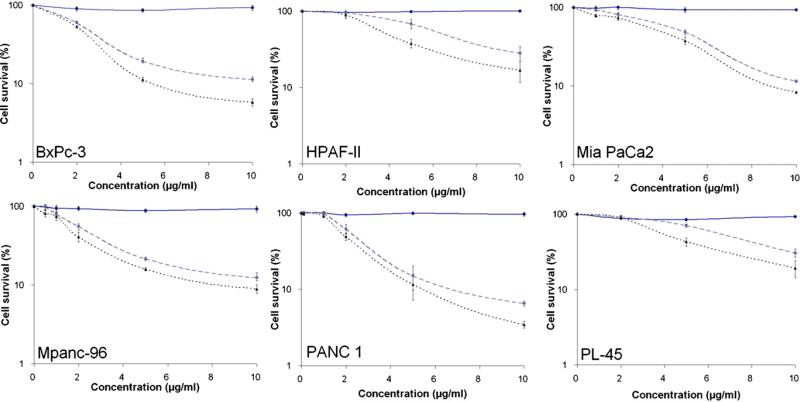
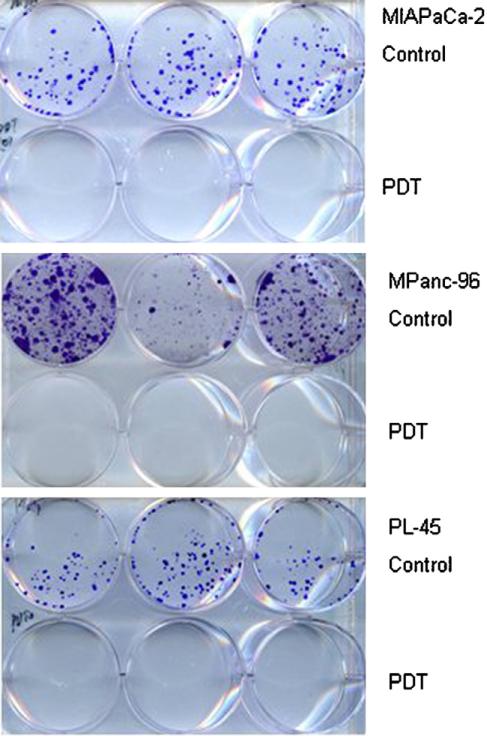
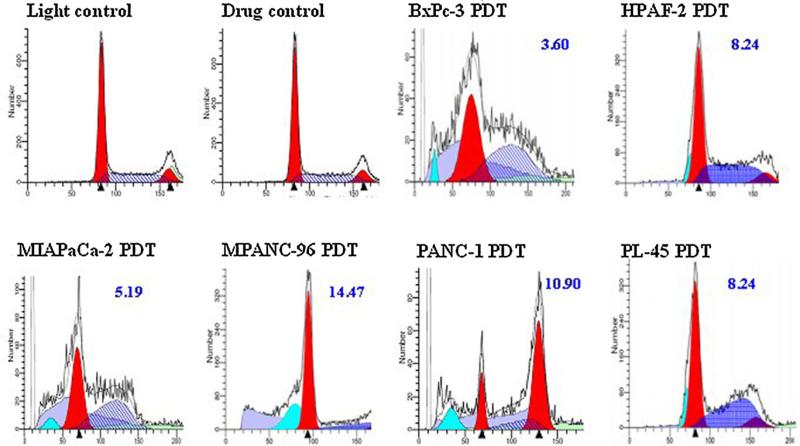
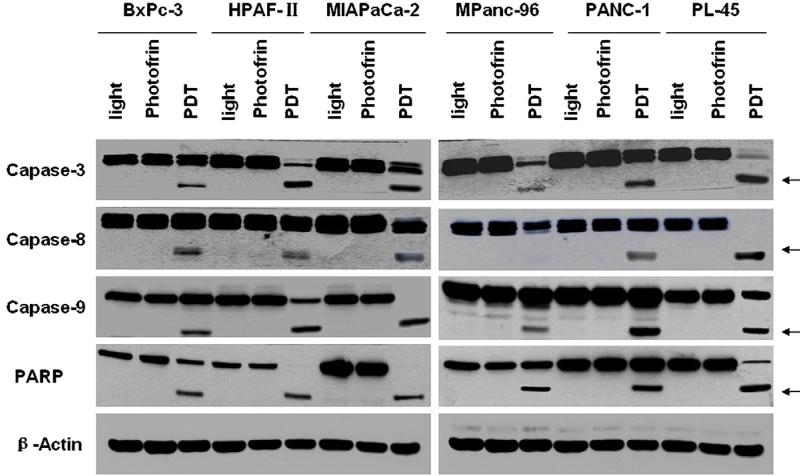
Materials and methods: After co-incubating cancer cells with Photofrin (0-10 μg/ml) for 4h, the cells were irradiated with 0-6J/cm(2) of 630 nm light. The effect of Photofrin PDT on the survival of cells were examined using tetrazolium-based colorimetric assay and clonogenic assay. PDT-induced apoptosis was analyzed by flow cytometry. Expressions of apoptosis-related proteins were determined by western blot analysis.
Results: Photofrin PDT strongly inhibited the survival of pancreatic cancer cells. A small portion of cells (<15%) underwent apoptosis 24h after PDT at LD50. Cleavage of caspase-3, caspase-8, caspase-9 and PARP after PDT were also confirmed. BxPc-3, Mia PaCa-2, MPanc-96, and PANC-1 cells were more sensitive and HPAF-II and PL-45 cells less sensitive.
Conclusion: Photofrin PDT can induce apoptosis and inhibit survival of human pancreatic cancer cells.
Keywords: Apoptosis; Pancreatic cancer cells; Photodynamic therapy; Photofrin.
Copyright © 2013. Published by Elsevier B.V.
Figures
References
-
- Kleeff J, Michalski C, Friess H, Büchler MW. Pancreatic cancer: from bench to 5-year survival. Pancreas. 2006;33:111–8. - PubMed
-
- Costello E, Neoptolemos JP. Pancreatic cancer in 2010: new insights for early intervention and detection. Nature Reviews Gastroenterology and Hepatology. 2011;8:71–3. - PubMed
-
- Moesta KT, Schlag P, Douglass HJ, Mang TS. Evaluating the role of photodynamic therapy in the management of pancreatic cancer. Lasers in Surgery and Medicine. 1995;16:84–92. - PubMed
-
- Ayaru L, Bown SG, Pereira SP. Photodynamic therapy for pancreatic carcinoma: experimental and clinical studies. Photodiagnosis and Photodynamic Therapy. 2004;1:145–55. - PubMed
Publication types
MeSH terms
Substances
Grants and funding
LinkOut - more resources
Full Text Sources
Other Literature Sources
Medical
Research Materials
