


Reproductive health choices for young adults with sickle cell disease or trait: randomized controlled trial immediate posttest effects
- PMID: 23995469
- PMCID: PMC3805179
- DOI: 10.1097/NNR.0b013e3182a0316b
Reproductive health choices for young adults with sickle cell disease or trait: randomized controlled trial immediate posttest effects
Abstract
Background: People with sickle cell disease (SCD) or sickle cell trait (SCT) may not have information about genetic inheritance needed for making informed reproductive health decisions. CHOICES is a Web-based, multimedia educational intervention that provides information about reproductive options and consequences to help those with SCD or SCT identify and implement an informed parenting plan. Efficacy of CHOICES compared with usual care must be evaluated.
Objective: The purpose was to compare immediate posttest effects of CHOICES versus an attention-control usual care intervention (e-Book) on SCD-/SCT-related reproductive health knowledge, intention, and behavior.
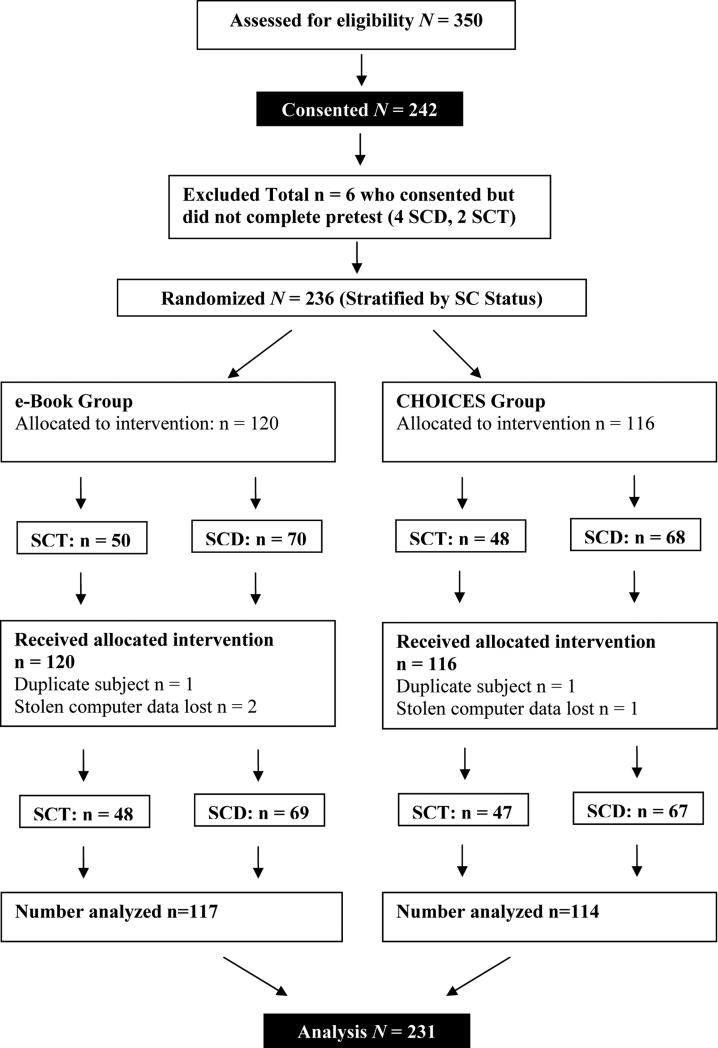
Methods: In a randomized controlled study, we recruited subjects with SCD/SCT from clinics, community settings, and online networks with data collected at sites convenient to the 234 subjects with SCD (n = 136) or SCT (n = 98). Their ages ranged from 18 to 35 years; 65% were women, and 94% were African American. Subjects completed a measure of sickle cell reproductive knowledge, intention, and behavior before and immediately after the intervention.
Results: Compared with the e-Book group, the CHOICES group had significantly higher average knowledge scores and probability of reporting a parenting plan to avoid SCD or SCD and SCT when pretest scores were controlled. Effects on intention and planned behavior were not significant. The CHOICES group showed significant change in their intention and planned behavior, whereas the e-Book group did not show significant change in their intention, but their planned behavior differed significantly.
Discussion: Initial efficacy findings are encouraging but warrant planned booster sessions and outcome follow-ups to determine sustained intervention efficacy on reproductive health knowledge, intention, and actual behavior of persons with SCD/SCT.
Figures
References
-
- Acharya K, Lang CW, Ross LF. A pilot study to explore knowledge, attitudes, and beliefs about sickle cell trait and disease. Journal of the National Medical Association. 2009;101:1163–1172. - PubMed
-
- Ajzen I, Fishbein M. Predicting behavior from intentions. In: Ajzen I, Fishbein M, editors. Understanding attitudes and predicting social behavior. Prentice-Hall; Englewood Cliffs, NJ: 1980. pp. 46–52.
-
- Asgharian A, Anie KA, Berger M. Women with sickle cell trait: Reproductive decision-making. Journal of Reproductive and Infant Psychology. 2003;21:23–34.
-
- Baker SA, Morrison DM, Carter WB, Verdon MS. Using the theory of reasoned action (TRA) to understand the decision to use condoms in an STD clinic population. Health Education Quarterly. 1996;23:528–542. - PubMed
-
- Beyer JE, Simmons LE. Home treatment of pain for children and adolescents with sickle cell disease. Pain Management Nursing. 2004;5:126–135. - PubMed
Publication types
MeSH terms
Grants and funding
LinkOut - more resources
Full Text Sources
Other Literature Sources
Medical
