


A statin-dependent QTL for GATM expression is associated with statin-induced myopathy
- PMID: 23995691
- PMCID: PMC3933266
- DOI: 10.1038/nature12508
A statin-dependent QTL for GATM expression is associated with statin-induced myopathy
Abstract
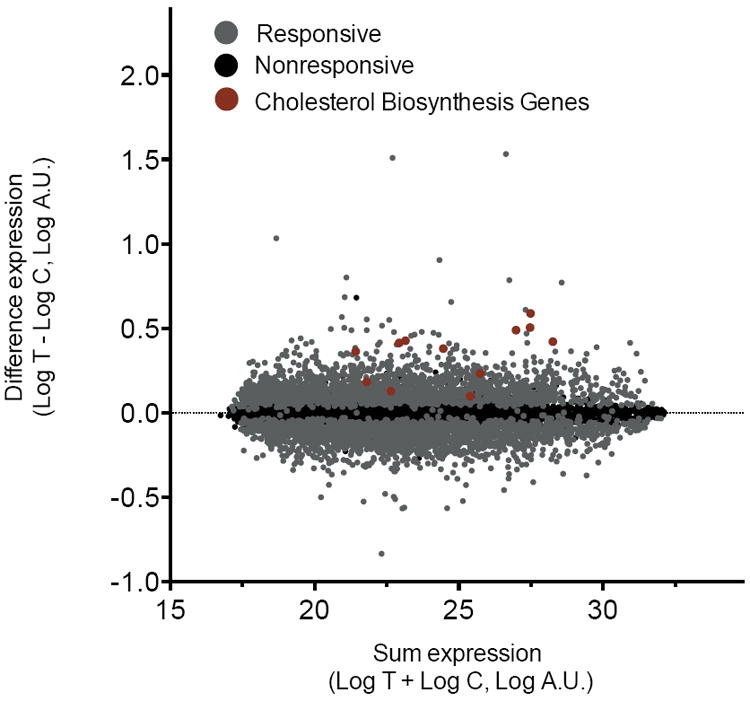
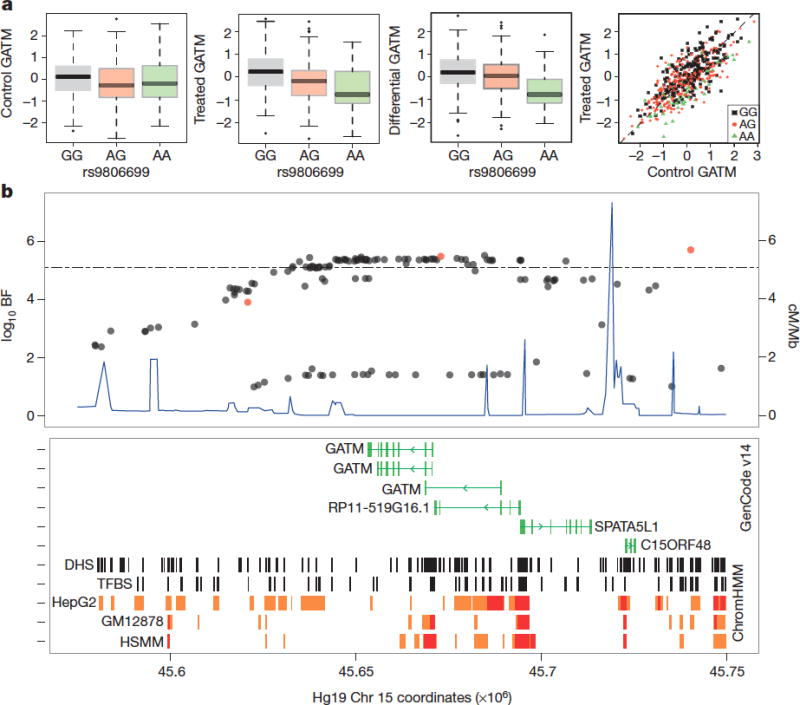
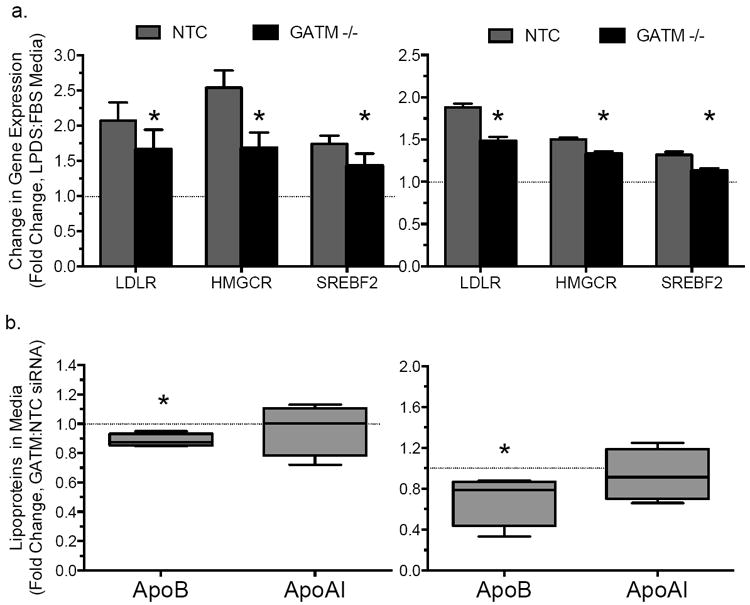
Statins are prescribed widely to lower plasma low-density lipoprotein (LDL) concentrations and cardiovascular disease risk and have been shown to have beneficial effects in a broad range of patients. However, statins are associated with an increased risk, albeit small, of clinical myopathy and type 2 diabetes. Despite evidence for substantial genetic influence on LDL concentrations, pharmacogenomic trials have failed to identify genetic variations with large effects on either statin efficacy or toxicity, and have produced little information regarding mechanisms that modulate statin response. Here we identify a downstream target of statin treatment by screening for the effects of in vitro statin exposure on genetic associations with gene expression levels in lymphoblastoid cell lines derived from 480 participants of a clinical trial of simvastatin treatment. This analysis identified six expression quantitative trait loci (eQTLs) that interacted with simvastatin exposure, including rs9806699, a cis-eQTL for the gene glycine amidinotransferase (GATM) that encodes the rate-limiting enzyme in creatine synthesis. We found this locus to be associated with incidence of statin-induced myotoxicity in two separate populations (meta-analysis odds ratio = 0.60). Furthermore, we found that GATM knockdown in hepatocyte-derived cell lines attenuated transcriptional response to sterol depletion, demonstrating that GATM may act as a functional link between statin-mediated lowering of cholesterol and susceptibility to statin-induced myopathy.
Figures
Comment in
-
Does reduced creatine synthesis protect against statin myopathy?Cell Metab. 2013 Dec 3;18(6):773-4. doi: 10.1016/j.cmet.2013.11.012. Cell Metab. 2013. PMID: 24315367 Free PMC article.
-
Expression quantitative trait locus analysis identifies novel genes for statin myopathy.Circ Cardiovasc Genet. 2014 Apr;7(2):220-1. doi: 10.1161/CIRCGENETICS.114.000611. Circ Cardiovasc Genet. 2014. PMID: 24736853 No abstract available.
-
GATM locus does not replicate in rhabdomyolysis study.Nature. 2014 Sep 18;513(7518):E1-3. doi: 10.1038/nature13629. Nature. 2014. PMID: 25230668 Free PMC article. No abstract available.
-
GATM gene variants and statin myopathy risk.Nature. 2014 Sep 18;513(7518):E1. doi: 10.1038/nature13628. Nature. 2014. PMID: 25230669 No abstract available.
-
Mangravite et al. reply.Nature. 2014 Sep 18;513(7518):E3. doi: 10.1038/nature13630. Nature. 2014. PMID: 25230670 No abstract available.
References
-
- Baigent C, et al. Efficacy and safety of cholesterol-lowering treatment: prospective meta-analysis of data from 90,056 participants in 14 randomised trials of statins. Lancet. 2005;366:1267–78. - PubMed
-
- Simon J, et al. Phenotypic predictors of response to simvastatin therapy among African-Americans and Caucasians: the Cholesterol and Pharmacogenetics (CAP) Study. The American Journal of Cardiology. 2006;97:843–50. - PubMed
-
- Ridker PM, et al. Rosuvastatin to prevent vascular events in men and women with elevated C-reactive protein. The New England Journal of Medicine. 2008;359:2195–207. - PubMed
-
- Fernandez G, Spatz ES, Jablecki C, Phillips PS. Statin myopathy: a common dilemma not reflected in clinical trials. Cleveland Clinic journal of medicine. 2011;78:393–403. - PubMed
Publication types
MeSH terms
Substances
Grants and funding
- R56 HG002585/HG/NHGRI NIH HHS/United States
- BHF_/British Heart Foundation/United Kingdom
- K99 HG006265/HG/NHGRI NIH HHS/United States
- R01 HL104133/HL/NHLBI NIH HHS/United States
- UL1 TR000124/TR/NCATS NIH HHS/United States
- K99/R00HG006265/HG/NHGRI NIH HHS/United States
- U01 HL069757/HL/NHLBI NIH HHS/United States
- P30 DK063491/DK/NIDDK NIH HHS/United States
- R01 HG002585/HG/NHGRI NIH HHS/United States
- U01 HL69757/HL/NHLBI NIH HHS/United States
- HG002585/HG/NHGRI NIH HHS/United States
- MC_U137686853/MRC_/Medical Research Council/United Kingdom
- R00 HG006265/HG/NHGRI NIH HHS/United States
LinkOut - more resources
Full Text Sources
Other Literature Sources
Medical
Molecular Biology Databases
