Patterns of opiate, benzodiazepine, and antipsychotic drug dosing in older patients in a medical intensive care unit
- PMID: 23996429
- PMCID: PMC4309662
- DOI: 10.4037/ajcc2013835
Patterns of opiate, benzodiazepine, and antipsychotic drug dosing in older patients in a medical intensive care unit
Abstract
Background: Anecdotal observation suggests that older patients in medical intensive care units receive higher doses of psychoactive medications during evening shifts than day and night shifts.
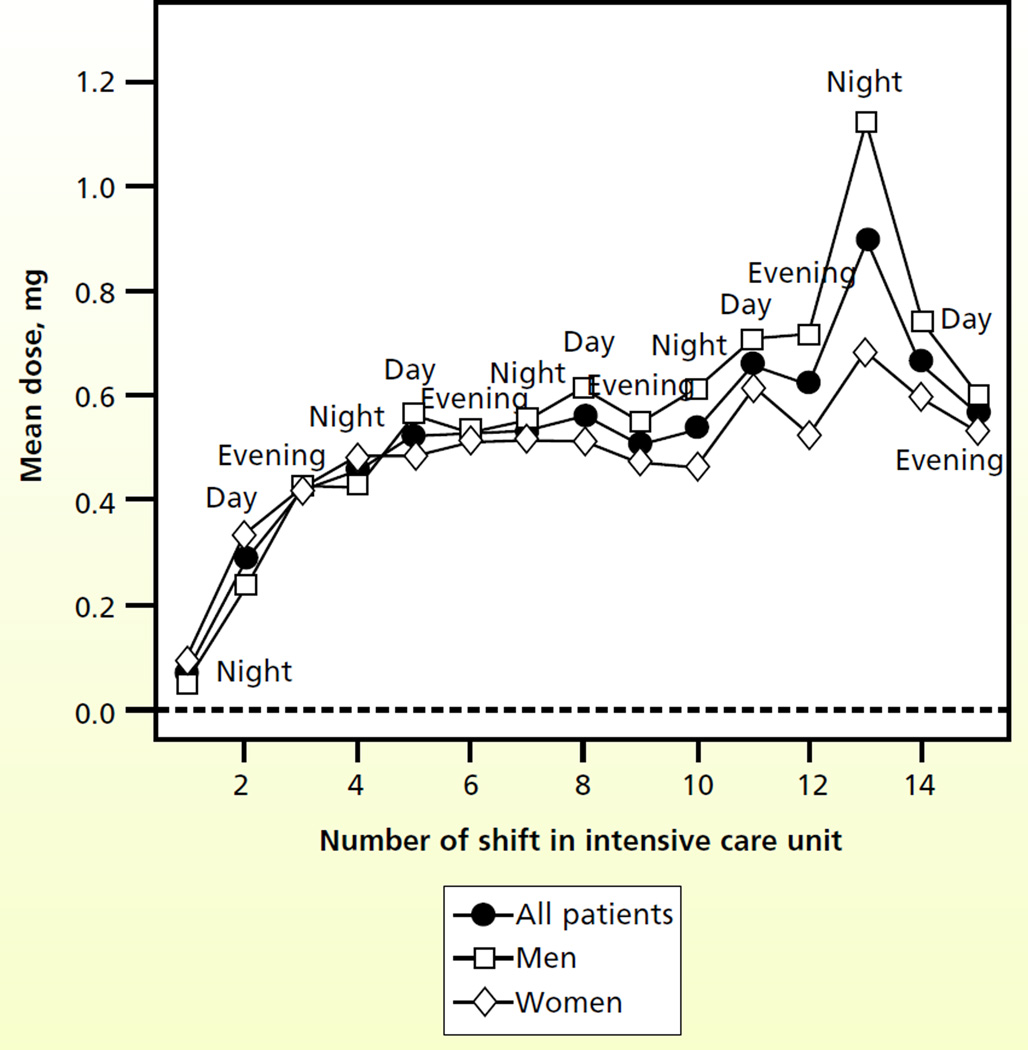
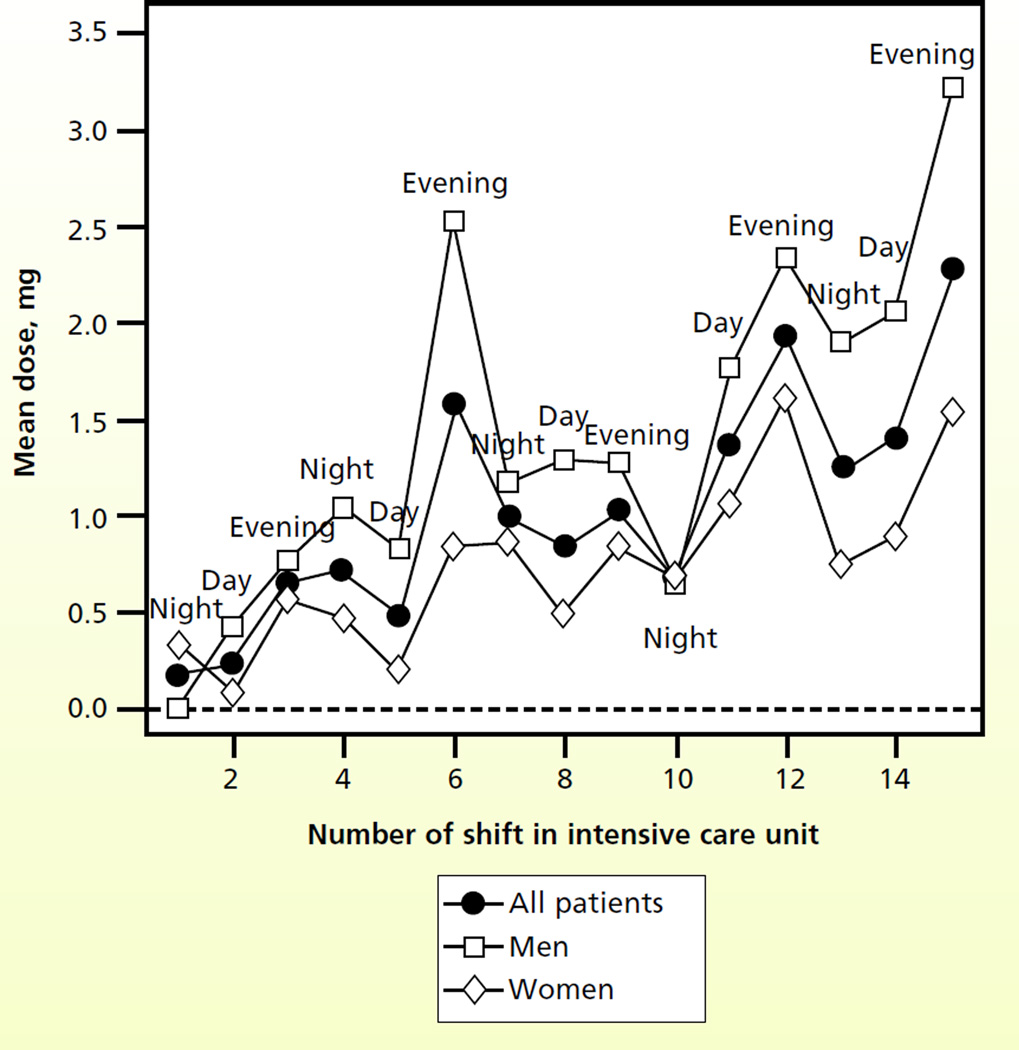
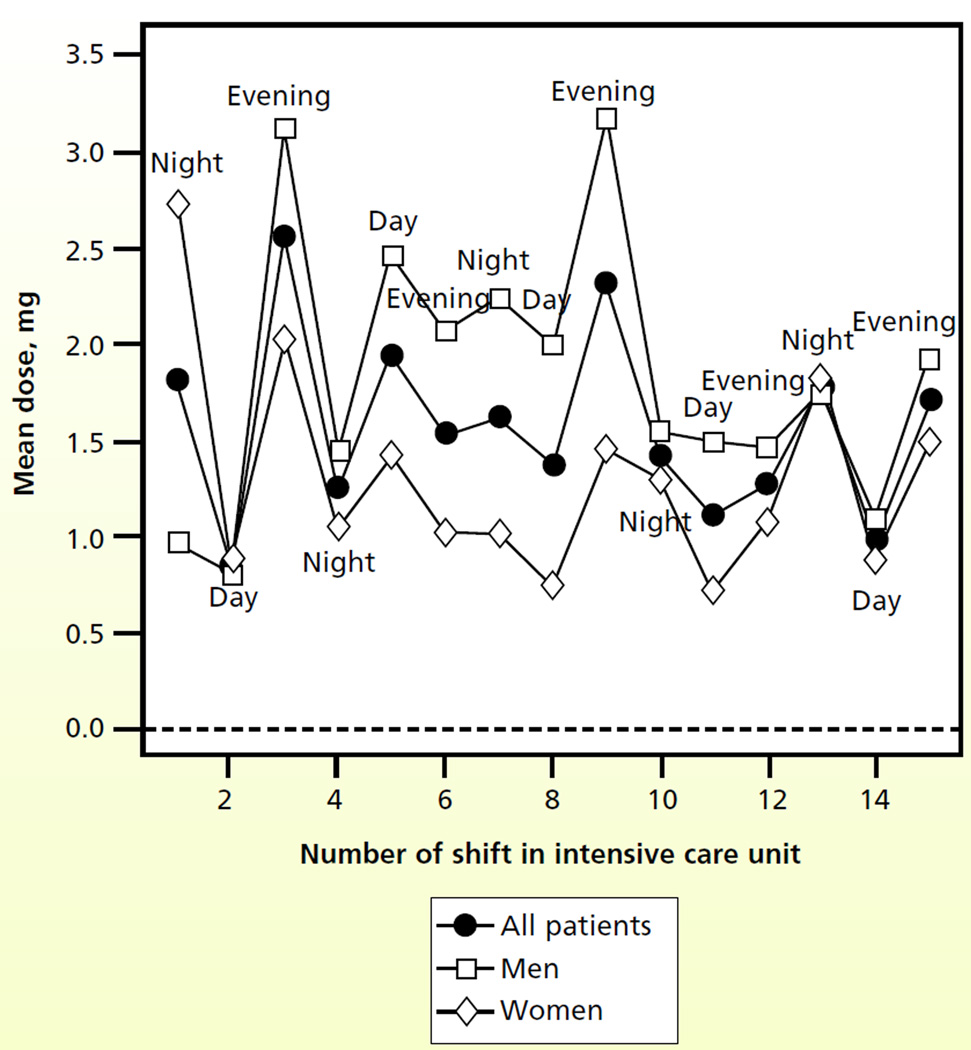
Objectives: To determine the dosing patterns and total doses of fentanyl, lorazepam, and haloperidol according to nursing shift in a cohort of older patients in a medical intensive care unit.
Methods: The sample consisted of 309 patients 60 years and older admitted to the medical intensive care unit at Yale-New Haven Hospital, New Haven, Connecticut. Data on time, dosage, and route of administration of the drugs were collected. Data were analyzed by using a Bayesian random effects Poisson model adjusted for individual heterogeneity, excess zero doses, and important clinical covariates.
Results: Mean age of the patients was 75 years; 58% received fentanyl, 55% received lorazepam, and 32% received haloperidol. Although dosing with fentanyl did not differ according to shift, doses of both lorazepam and haloperidol were higher during the evening shifts (4 pm to midnight) than during the day or night shifts. Compared with women, men received higher doses of both haloperidol and lorazepam and variability between shifts was greater.
Conclusions: In this longitudinal, observational sample of older patients, data indicated a positive association between dose levels of lorazepam and haloperidol during the evening nursing shifts relative to other shifts. Further investigation is needed to determine potential causes and to evaluate the impact on outcomes of sleep deprivation and delirium.
Figures
References
-
- Stevens RD, Nyquist PA. Coma, delirium, and cognitive dysfunction in critical illness. Crit Care Clin. 2006;22(4):787–804. - PubMed
-
- Ely EW, Shintani A, Truman B, et al. Delirium as a predictor of mortality in mechanically ventilated patients in the intensive care unit. JAMA. 2004;291(14):1753–1762. - PubMed
-
- Lin SM, Liu CY, Wang CH, et al. The impact of delirium on the survival of mechanically ventilated patients. Crit Care Med. 2004;32(11):2254–2259. - PubMed
-
- Milbrandt EB, Deppen S, Harrison PL, et al. Costs associated with delirium in mechanically ventilated patients. Crit Care Med. 2004;32(4):955–962. - PubMed
Publication types
MeSH terms
Substances
Grants and funding
LinkOut - more resources
Full Text Sources
Other Literature Sources
Medical