


Imatinib attenuates monocrotaline pulmonary hypertension and has potent vasodilator activity in pulmonary and systemic vascular beds in the rat
- PMID: 23997103
- PMCID: PMC3840242
- DOI: 10.1152/ajpheart.00329.2013
Imatinib attenuates monocrotaline pulmonary hypertension and has potent vasodilator activity in pulmonary and systemic vascular beds in the rat
Abstract
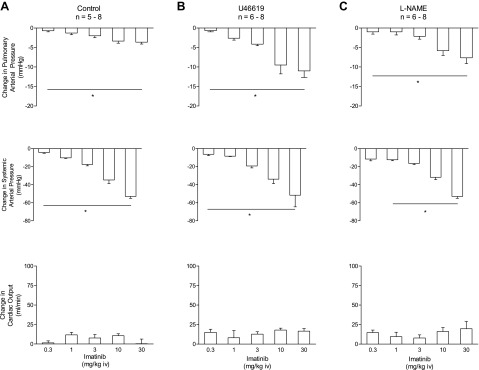
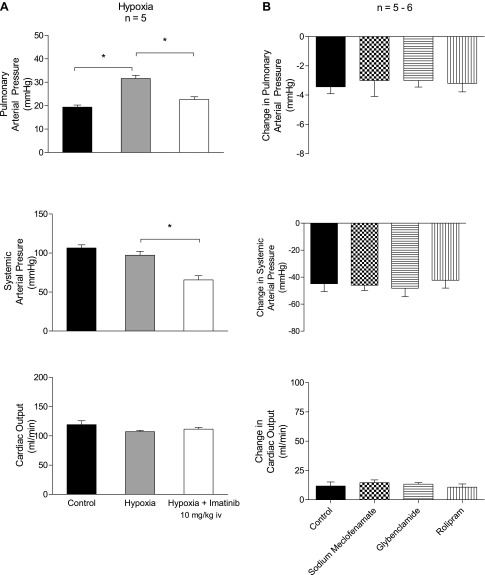
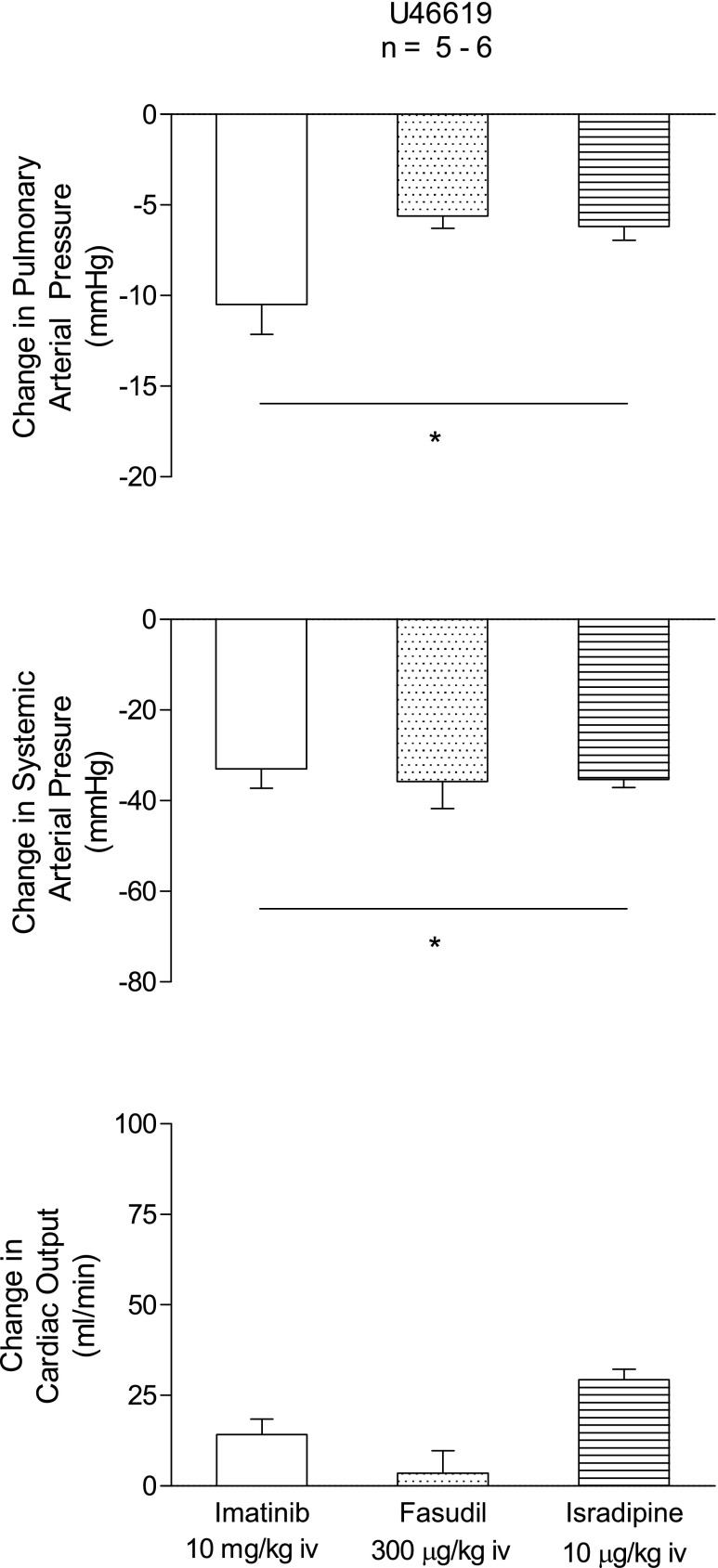
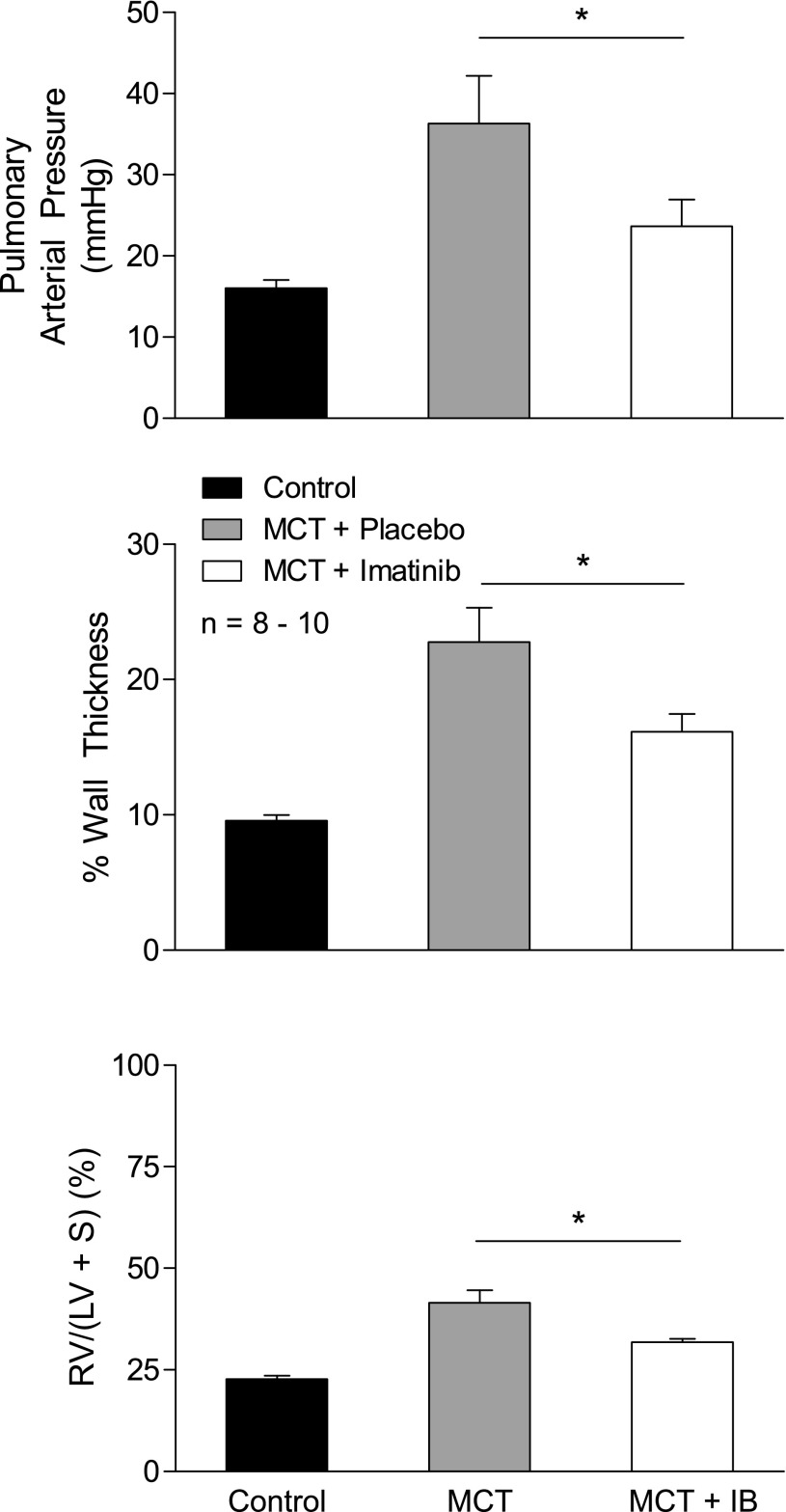
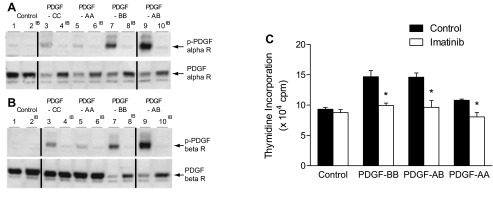
Cardiovascular responses to the tyrosine kinase inhibitor imatinib were investigated in the rat. Intravenous injections of 0.3-30 mg/kg imatinib produced small decreases in pulmonary arterial pressure, larger dose-dependent decreases in systemic arterial pressure, and no change or small increases in cardiac output, suggesting that the systemic vasodilator response is more pronounced under baseline conditions. When pulmonary arterial pressure was increased with U-46619 or N(ω)-nitro-L-arginine methyl ester (L-NAME), intravenous injections of imatinib produced larger dose-dependent decreases in pulmonary arterial pressure. Imatinib attenuated the acute hypoxic pulmonary vasoconstrictor response. Vasodilator responses to imatinib were not inhibited by meclofenamate, glybenclamide, or rolipram, suggesting that cyclooxygenase, ATP-sensitive K(+) (KATP) channels, and cAMP were not involved in mediating the response. In a 21-day prevention study, imatinib treatment (50 mg/kg ip) attenuated the increase in pulmonary arterial pressure, right ventricular hypertrophy, and small vessel remodeling induced by monocrotaline. Imatinib reduced PDGF receptor phosphorylation and PDGF-stimulated thymidine incorporation in rat pulmonary artery smooth muscle cells. These data suggest that the beneficial effect of imatinib in pulmonary hypertension may involve inhibition of PDGF tyrosine kinase receptor-mediated effects on smooth muscle cell proliferation and on vasoconstrictor tone. These results indicate that imatinib has nonselective vasodilator activity in the pulmonary and systemic vascular beds similar to the Rho kinase inhibitor fasudil and the calcium entry antagonist isradipine. The present results are consistent with the hypothesis that imatinib may inhibit a constitutively active tyrosine kinase vasoconstrictor pathway in the pulmonary and systemic vascular beds in the rat.
Keywords: PDGF; imatinib; pulmonary vascular bed; tyrosine kinase inhibitor; vasodilation.
Figures
References
-
- Badejo AM, Jr, Dhaliwal JS, Casey DB, Gallen TB, Greco AJ, Kadowitz PJ. Analysis of pulmonary vasodilator responses to the Rho-kinase inhibitor fasudil in the anesthetized rat. Am J Physiol Lung Cell Mol Physiol 295: L828–L836, 2008 - PubMed
-
- Biers SM, Reynard JM, Doore T, Brading AF. The functional effects of a c-kit tyrosine inhibitor on guinea-pig and human detrusor. BJU Int 97: 612–616, 2006 - PubMed
-
- Carroll M, Ohno-Jones S, Tamura S, Buchdunger E, Zimmermann J, Lydon NB, Gilliland DG, Druker BJ. CGP 57148, a tyrosine kinase inhibitor, inhibits the growth of cells expressing BCR-ABL, TEL-ABL, and TEL-PDGFR fusion proteins. Blood 90: 4947–4952, 1997 - PubMed
Publication types
MeSH terms
Substances
Grants and funding
LinkOut - more resources
Full Text Sources
Other Literature Sources
Medical
