


Mean tracheal sound energy during sleep is related to daytime blood pressure
- PMID: 23997370
- PMCID: PMC3738046
- DOI: 10.5665/sleep.2966
Mean tracheal sound energy during sleep is related to daytime blood pressure
Abstract
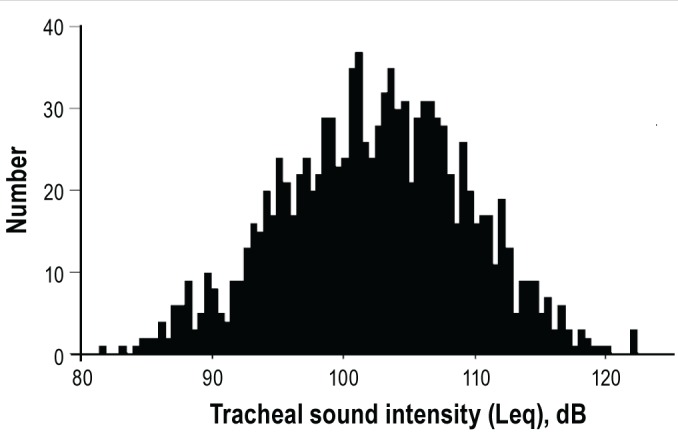
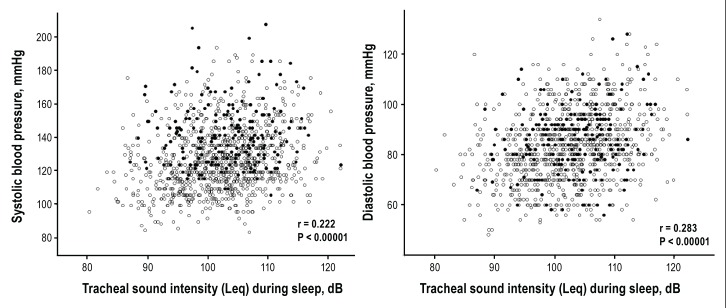
Study objectives: The pathological role of snoring independent of obstructive sleep apnea remains under debate. The authors hypothesized that snoring sound intensity, as assessed by mean tracheal sound energy (Leq) during sleep, is related to daytime blood pressure.
Design: Retrospective analysis of clinical records and polysomnography data.
Setting: Sleep laboratory at a national hospital in Japan.
Patients: Consecutive patients who underwent diagnostic polysomnography with suspicion of sleep apnea between January 2005 and December 2009 (n = 1,118).
Interventions: Not applicable.
Measurements and results: Leq was calculated from tracheal sound spectra recorded every 0.2 sec during polysomnography. Daytime high blood pressure (HBP) was defined as taking antihypertensive drugs or having a systolic blood pressure ≥ 140 mm Hg or a diastolic blood pressure ≥ 90 mmHg at the patient's first clinical visit. Patient age, sex, body mass index, apnea-hypopnea index, alcohol consumption, and smoking were considered as confounders. Leq during sleep was associated with HBP after adjusting for all confounding factors (n = 1,074, P = 0.00019). This association was demonstrated even in nonapneic nonobese patients (n = 232, P = 0.012).
Conclusions: The association between snoring intensity, as assessed by mean sound energy, and blood pressure suggests a pathological role for heavy snoring. Further study in a general population is warranted.
Keywords: Acoustics; hypertension; sleep apnea; snoring.
Figures
References
-
- Young T, Palta M, Dempsey J, Skatrud J, Weber S, Badr S. The occurrence of sleep-disordered breathing among middle-aged adults. N Engl J Med. 1993;328:1230–5. - PubMed
-
- Kim J, In K, Kim J, et al. Prevalence of sleep-disordered breathing in middle-aged Korean men and women. Am J Respir Crit Care Med. 2004;170:1108–13. - PubMed
-
- Cano-Pumarega I, Dura'n-Cantolla J, Aizpuru F, et al. Obstructive sleep apnea and systemic hypertension. Am J Respir Crit Care Med. 2011;184:1299–304. - PubMed
-
- Hu FB, Willett WC, Colditz GA, et al. Prospective study of snoring and risk of hypertension in women. Am J Epidemiol. 1999;150:806–16. - PubMed
Publication types
MeSH terms
LinkOut - more resources
Full Text Sources
Other Literature Sources
Miscellaneous
