Review
. 2013 Jul;64(2):390-8.
doi: 10.1016/j.yhbeh.2013.01.015.

Enduring influence of pubertal stressors on behavioral response to hormones in female mice

Affiliations
Review

Enduring influence of pubertal stressors on behavioral response to hormones in female mice

Jeffrey D Blaustein et al. Horm Behav. 2013 Jul.

Abstract

This article is part of a Special Issue "Puberty and Adolescence". The pubertal period is a time of change in an animal's response to stress, and it is a second period of sexual differentiation of the brain. Recently, it was discovered that particular stressors during the prolonged pubertal period of female mice result in enduring changes in behavioral responsiveness of the brain to estradiol and progesterone. Depending on the behavior, pubertal immune challenge or shipping from suppliers may decrease, eliminate, or even reverse the effects of estradiol. Pubertal immune challenge results in changes in the number of estrogen receptor-immunoreactive cells in key brain areas suggesting a cellular mechanism for this remodeling of the brain's response to hormones. A hypothesis is put forward that predicts that particular adverse experiences in girls may cause long-term alterations in the brain's response to estradiol and/or progesterone via activation of the immune system. This could lead to mood disorders or altered response to any behavior influenced by estradiol in humans.

Keywords: Anxiety; Cognitive function; Depression; Estradiol; Immune challenge; Lipopolysaccharide; Progesterone; Puberty; Sexual behavior; Stress.


Figures

Figure 1
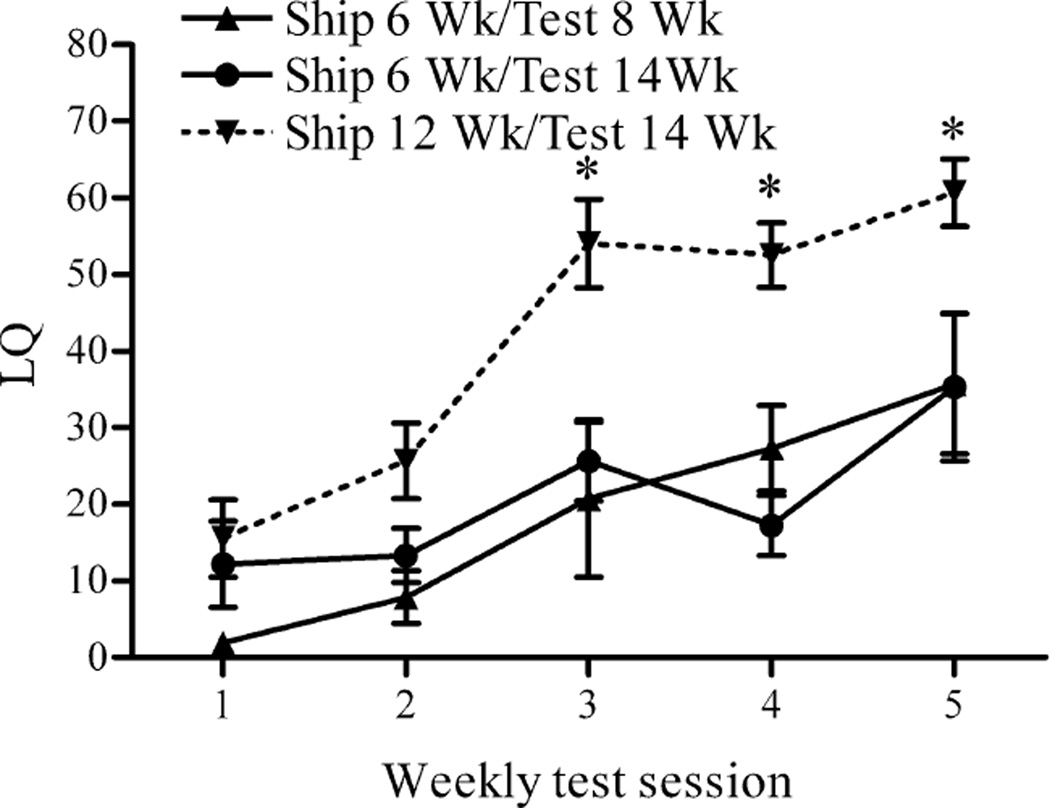
Figure 1
Lordosis quotient (LQ) (mean ± SEM) of C67Bl6 female mice shipped during the peripubertal period. Statistically significant differences in receptivity were observed between mice shipped at 6 wk and tested at 14 wk, and those shipped at 12 wk and tested at 14 wk during test sessions 3–5. (*, p < 0.05). Reprinted from (Laroche et al., 2009b) Copyright 2009, The Endocrine Society.
Figure 2
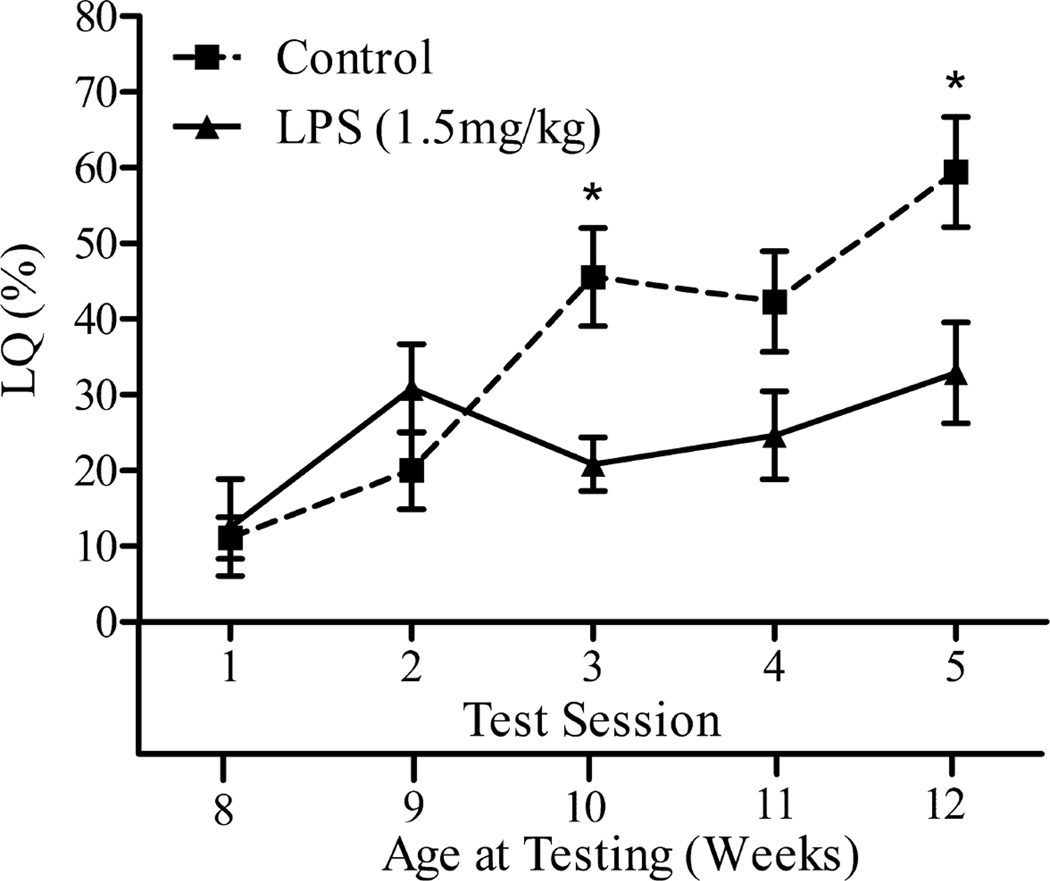
Figure 2
Lordosis quotient (LQ) (mean ± SEM) of C57Bl/6 female mice exposed to a 1.5 mg/kg dose of LPS at 6 wk old. The lower x-axis refers to the animal’s age at time of testing. (*, P < 0.05; **, P < 0.01; ***, P < 0.001; a, no significant difference among these groups). Reprinted from (Laroche et al., 2009a) Copyright 2009, The Endocrine Society.
Figure 3
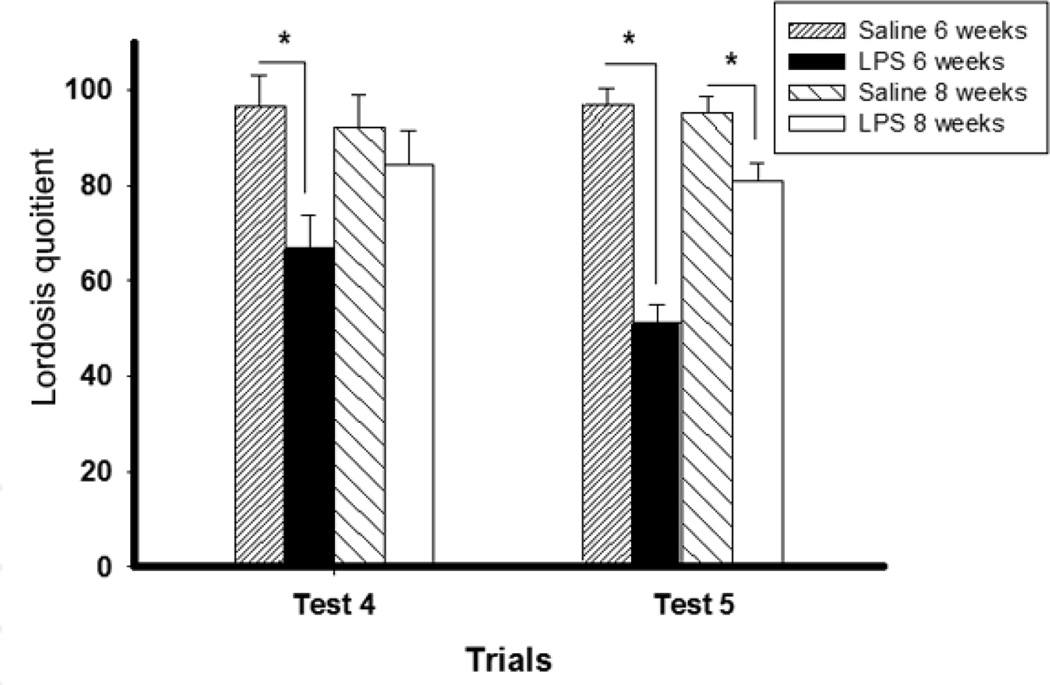
Figure 3
Lordosis quotient (mean ± SEM) of CD-1 female mice shipped at 3, 4, 6, 8 and 10 weeks old on Test 4 and Test 5. a, lordosis quotient significantly lower than females shipped at 3 weeks old (p < 0.05); b, significantly lower than females shipped at 4 weeks old (p < 0.05); c, significantly lower than females shipped at 10 weeks old (p < 0.05). Reprinted from (Ismail et al., 2011) with permission of Elsevier, Copyright 2011.
Figure 4
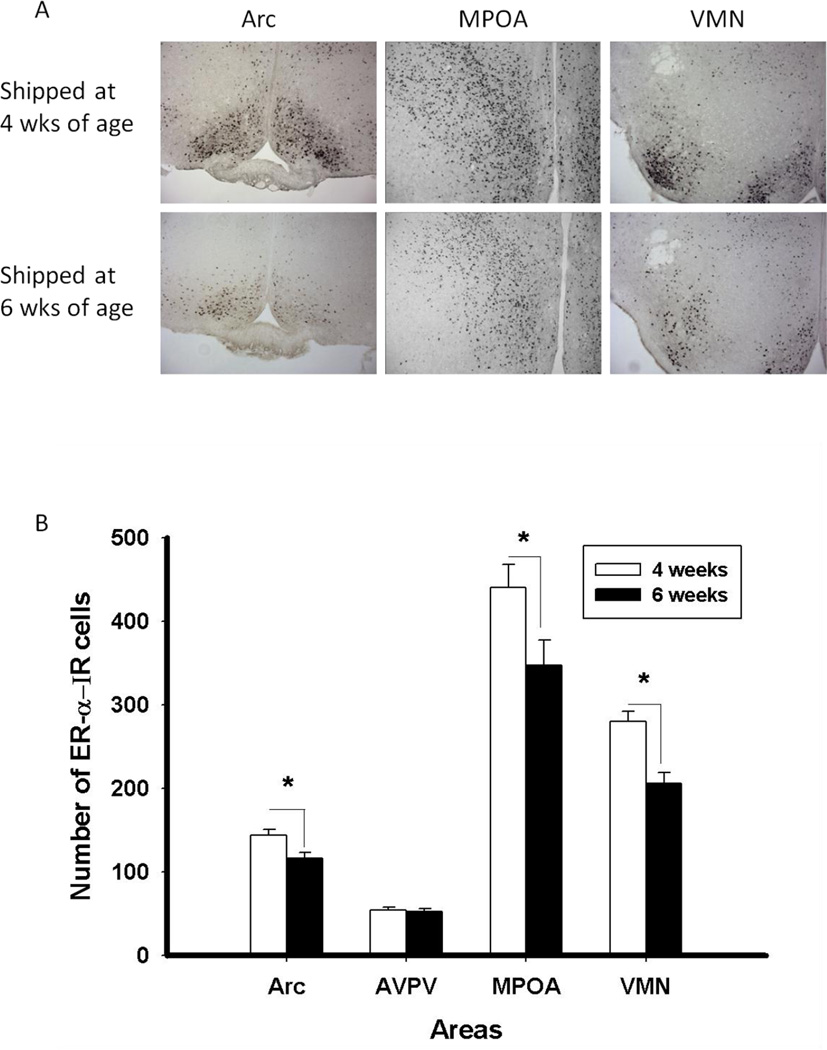
Figure 4
A) Photomicrographs and B) Number of ER-α IR (Mean ±SEM) cells in females shipped at four or six weeks old in the arcuate nucleus (Arc), anteroventral paraventricular nucleus (AVPV), medial preoptic area (MPOA) and ventromedial nucleus of the hypothalamus (VMN). (*, p < 0.05). Reprinted from (Ismail et al., 2011) with permission of Elsevier, Copyright 2011.
Figure 5
Figure 5
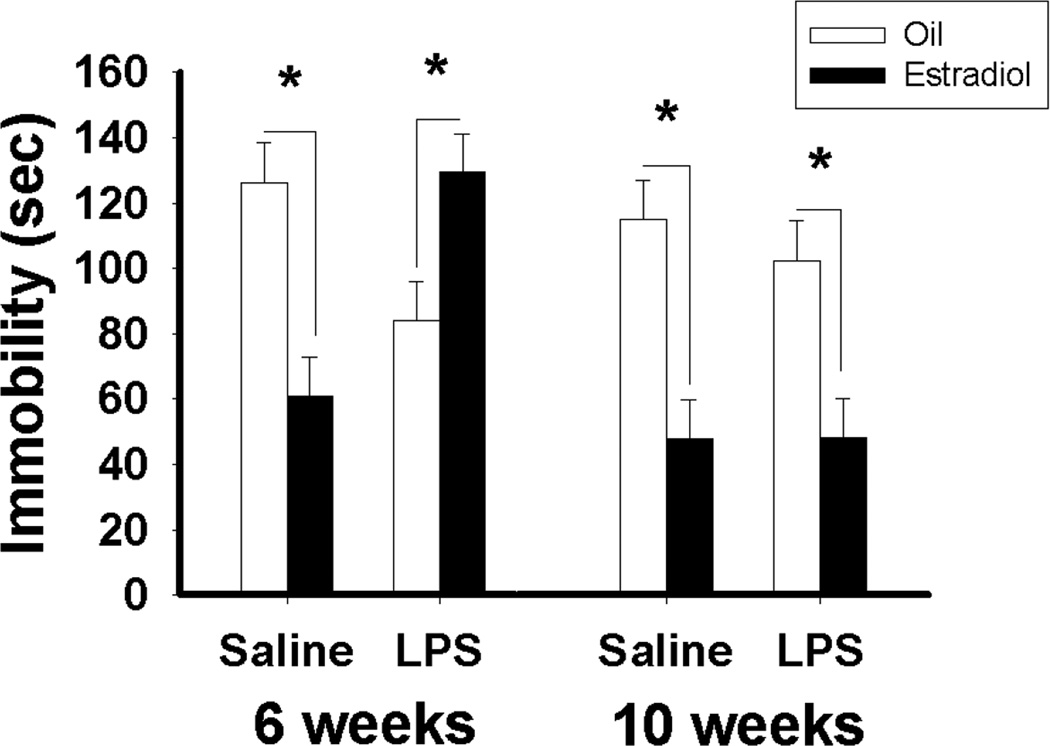
Duration of immobility (Mean ± SEM) during the tail suspension test. (*, p < 0.05). During five minutes, mice were suspended 60 cm above the ground by a piece of adhesive tape placed within 1cm from the tip of the tail. The duration of immobility (absence of any body movement) was recorded as a measure of behavioral despair. Reprinted from (Ismail et al., 2012) with permission of Elsevier, Copyright 2012.
Figure 6
Figure 6
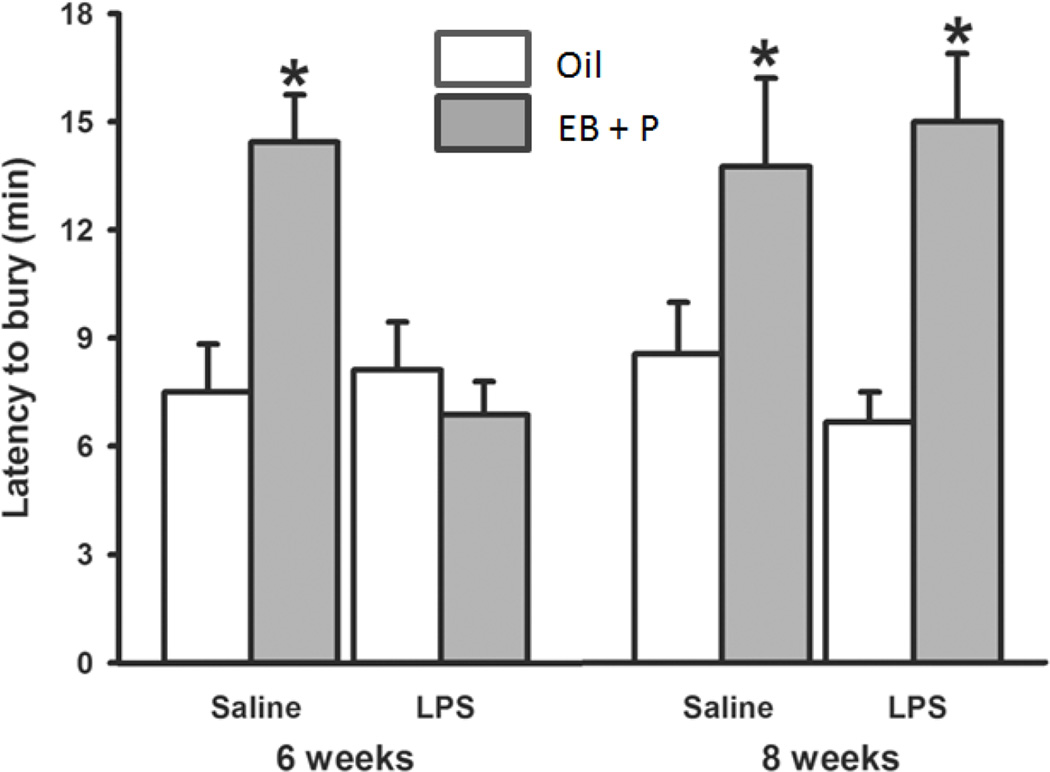
Latency to bury marbles in the marble burying test. (*, p < 0.05). Mice were placed in the center of an arena containing ten evenly spaced marbles with bedding underneath. The latency to cover three marbles at ¾ or more with bedding was assessed to examine anxiety-like behavior. Reprinted from (Olesen et al., 2011) with permission of Elsevier, Copyright 2011.
Figure 7
Figure 7
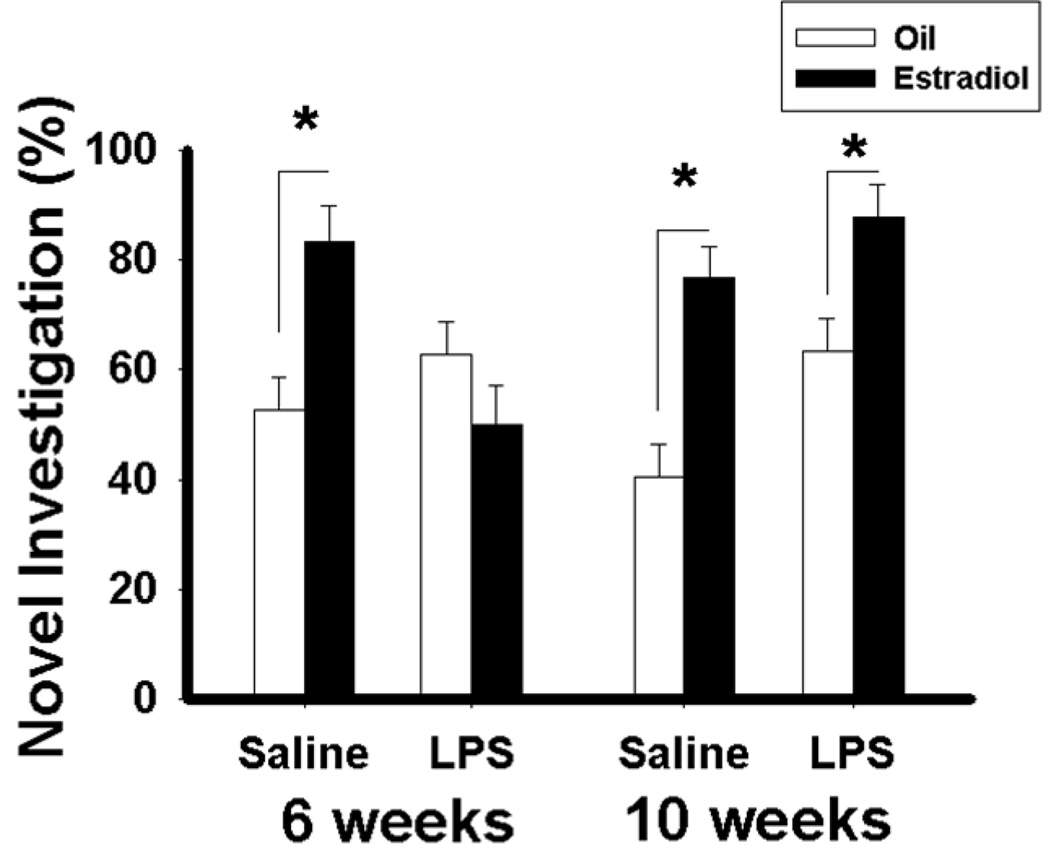
Percentage of time spent investigating the novel object (Mean ± SEM) during the object recognition test. (*, p < 0.05). Mice were placed in an open arena with two different objects placed at opposite corners of the arena for three minutes. Thirty minutes later, mice were again placed in the square arena and were presented with the original object from the previous trial and a novel object at opposite corners of the arena for three minutes. The time spent exploring each object was recorded. Increased investigation of the novel object is indicative of enhanced cognitive function. Reprinted from (Ismail and Blaustein, 2012) with permission of Elsevier, Copyright 2012.

References

    1. Amin Z, Canli T, Epperson CN. Effect of estrogen-serotonin interactions on mood and cognition. Behav. Cogn Neurosci. Rev. 2005;4:43–58. - PubMed
    1. Andersen SL. Trajectories of brain development: point of vulnerability or window of opportunity? Neurosci. Biobehav. Rev. 2003;27:3–18. - PubMed
    1. Angold A, Costello EJ. Puberty and depression. Child Adolesc. Psychiatr. Clin. N.Am. 2006;15:919–937. ix. - PubMed
    1. Anisman H. Cascading effects of stressors and inflammatory immune system activation: implications for major depressive disorder. J. Psychiatry Neurosci. 2009;34:4–20. - PMC - PubMed
    1. Avital A, Richter-Levin G. Exposure to juvenile stress exacerbates the behavioural consequences of exposure to stress in the adult rat. Int. J. Neuropsychopharmacol. 2005;8:163–173. - PubMed

Publication types