


Medication adherence and health care utilization in pediatric chronic illness: a systematic review
- PMID: 23999953
- PMCID: PMC3784296
- DOI: 10.1542/peds.2013-1451
Medication adherence and health care utilization in pediatric chronic illness: a systematic review
Abstract
Background and objective: Advanced understanding of modifiable predictors of health care use in pediatric chronic illness is critical to reducing health care costs. We examined the relationship between medication non-adherence and health care use in children and adolescents who have a chronic medical condition.
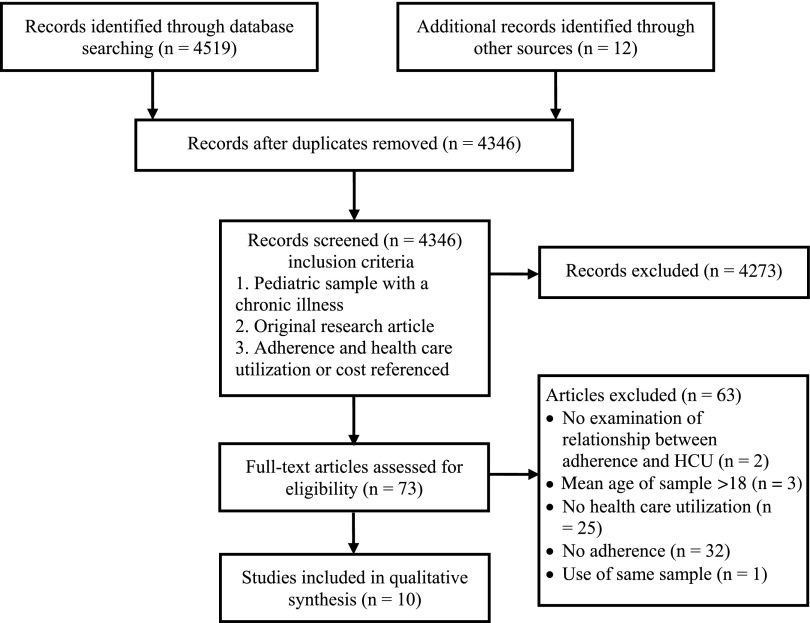
Methods: A systematic review of articles by using PubMed, PsycINFO, and CINAHL was conducted. Additional studies were identified by searching reference sections of relevant manuscripts. Studies that tested the relationship between medication non-adherence and health care use (ie, hospitalizations, emergency department visits, outpatient visits) or cost in children and adolescents (mean age ≤18 years) who have a chronic medical condition were included. Extraction of articles was completed by using predefined data fields.
Results: Ten studies met our inclusion criteria. Nine of the 10 studies reviewed (90%) demonstrated a relationship between medication non-adherence and increased health care use. The directionality of this relationship varied depending on the outcome variable of interest.
Conclusions: Medication non-adherence is related to increased health care use in children and adolescents who have a chronic medical condition and should be addressed in clinical care. Future studies should include randomized controlled trials examining the impact of adherence promotion efforts on health care use and costs.
Keywords: chronic disease; health care costs; health care quality, access, and evaluation; medication adherence.
References
-
- Martin AB, Lassman D, Washington B, Catlin A, National Health Expenditure Accounts Team . Growth in US health spending remained slow in 2010; health share of gross domestic product was unchanged from 2009. Health Aff (Millwood). 2012;31(1):208–219 - PubMed
-
- Schoenman J, Chockley N. Understanding U.S. Health Care Spending. Washington, DC: NIHCM Data Brief; 2011:1–13
-
- Haber S, McCall N, Cromwell G. Children With High Health Care Utilization and Special Health Care Needs: Draft Manuscript. Washington, DC: RTI International; 2007
-
- Emanuel EJ. Where are the health care cost savings? JAMA. 2012;307(1):39–40 - PubMed
-
- Partnership for Solutions. Chronic Conditions: Making the Case for Ongoing Care. Baltimore, MD: The Johns Hopkins University; 2002
Publication types
MeSH terms
Grants and funding
LinkOut - more resources
Full Text Sources
Other Literature Sources
Medical
Miscellaneous
