Mechanisms of androgen receptor activation in castration-resistant prostate cancer
- PMID: 24002034
- PMCID: PMC3948917
- DOI: 10.1210/en.2013-1466
Mechanisms of androgen receptor activation in castration-resistant prostate cancer
Abstract
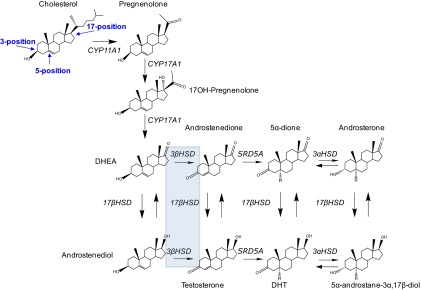
Systemic treatment of advanced prostate cancer is initiated with androgen deprivation therapy by gonadal testosterone depletion. Response durations are variable and tumors nearly always become resistant as castration-resistant prostate cancer (CRPC), which is driven, at least in part, by a continued dependence on the androgen receptor (AR). The proposed mechanisms that underlie AR function in this clinical setting are quite varied. These include intratumoral synthesis of androgens from inactive precursors, increased AR expression, AR activation through tyrosine kinase-dependent signaling, alterations in steroid receptor coactivators, and expression of a truncated AR with constitutive activity. Various pharmacologic interventions have clinically validated some of these mechanisms, such as those that require the AR ligand-binding domain. Clinical studies have failed to validate other mechanisms, and additional mechanisms have yet to be tested in patients with CRPC. Here, we review the mechanisms that elicit AR activity in CRPC, with a particular focus on recent developments.
Figures
References
-
- Tomlins SA, Rhodes DR, Perner S, et al. Recurrent fusion of TMPRSS2 and ETS transcription factor genes in prostate cancer. Science. 2005;310:644–648 - PubMed
-
- Tomlins SA, Mehra R, Rhodes DR, et al. Integrative molecular concept modeling of prostate cancer progression. Nat Genet. 2007;39:41–51 - PubMed
-
- Huggins C, Hodges CV. Studies on prostate cancer, I: the effect of estrogen and of androgen injection on serum phosphatases in metastatic carcinoma of the prostate. Cancer Res. 1941;1:293–297 - PubMed
-
- Sharifi N, Gulley JL, Dahut WL. Androgen deprivation therapy for prostate cancer. JAMA. 2005;294:238–244 - PubMed
Publication types
MeSH terms
Substances
Grants and funding
LinkOut - more resources
Full Text Sources
Other Literature Sources
Research Materials