


Descriptive epidemiology of malignant primary osteosarcoma using population-based registries, United States, 1999-2008
- PMID: 24002129
- PMCID: PMC4476493
Descriptive epidemiology of malignant primary osteosarcoma using population-based registries, United States, 1999-2008
Abstract
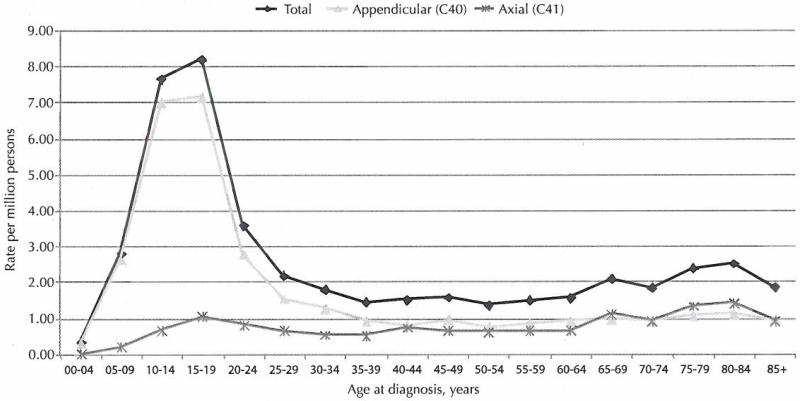
Background: Osteosarcoma is a rare bone tumor that is the most frequently diagnosed among children and adolescents, although this cancer affects people of all ages. This study aims to augment the current literature by examining the incidence of osteosarcoma by its subsites on a national level.
Methods: Data from central cancer registries in the National Program of Cancer Registries (NPCR) and Surveillance, Epidemiology, and End Results (SEER) programs for diagnosis years 1999-2008 and covering 90.1 percent of the US population were analyzed. Analyses included cases of malignant primary osteosarcomas, which were further segmented by topography, appendicular (C40) and axial (C41), to assess differences between these sites. Descriptive statistics, including estimated age-adjusted incidence rates standardized to the 2000 US standard population, were calculated using SEER*Stat 7.0.5 software.
Results: Approximately 7,104 cases of malignant primary osteosarcomas were identified during 1999-2008, of which 5,379 were appendicular and 1,725 were axial. The incidence of malignant primary osteosarcomas differed by age, gender, race, ethnicity, region, grade, and stage. These differences in incidence persisted when malignant primary osteosarcomas were categorized by topography codes.
Conclusions: These analyses provide a better understanding of the incidence of malignant osteosarcoma which cover 90.1 percent of the US population from 1999-2008. This study provides a more detailed understanding of age, gender, race, and ethnicity by primary site for malignant osteosarcoma incidence on a national level in the United States. More importantly, differences between appendicular and axial sites were observed overall by selected demographic characteristics, in particular regional variations.
Figures
References
-
- Bleyer A, O’Leary M, Barr R, Ries LAG. Cancer Epidemiology in Older Adolescents and Young Adults 15 to 29 Years of Age, Including SEER Incidence and Survival: 1975-2000. National Cancer Institute; Bethesda, MD: 2000. NIH publication 06-5767.
-
- Ottaviani G, Jaffe N. The epidemiology of osteosarcoma. Cancer Treat Res. 2009;152:3–13. - PubMed
MeSH terms
Grants and funding
LinkOut - more resources
Full Text Sources
Medical