


The value of somatostatin receptor imaging with In-111 Octreotide and/or Ga-68 DOTATATE in localizing Ectopic ACTH producing tumors
- PMID: 24003397
- PMCID: PMC3759309
- DOI: 10.4274/Mirt.69775
The value of somatostatin receptor imaging with In-111 Octreotide and/or Ga-68 DOTATATE in localizing Ectopic ACTH producing tumors
Abstract
Objective: We aimed to evaluate the value of somatostatin receptor imaging (SRI) with In-111 octreotide and Ga-68 DOTATATE in localizing ectopic ACTH producing tumors.
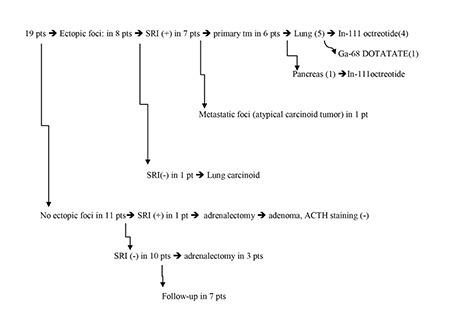
Methods: Nineteen patients who had In-111 octreotide somatostatin receptor scintigraphy (SRS) and/or Ga-68 DOTATATE PET-CT to localize ectopic ACTH producing tumors between the years 2000 and 2012 were included retrospectively in our study. The results of SRI were compared with clinical onset, radiological findings and surgical data of the patients.
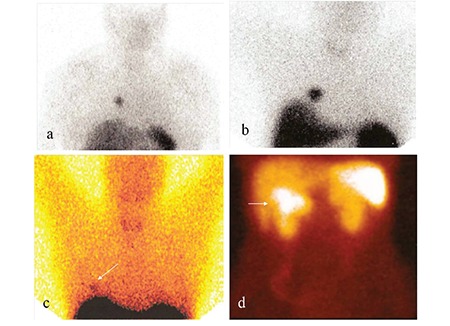
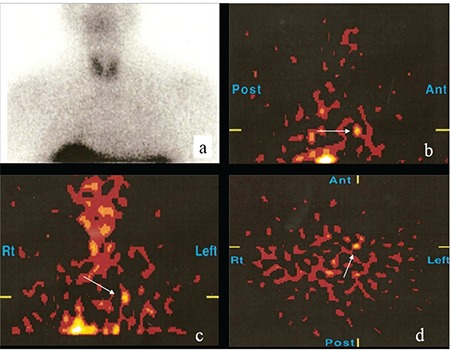
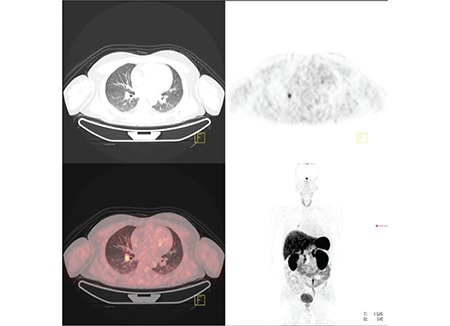
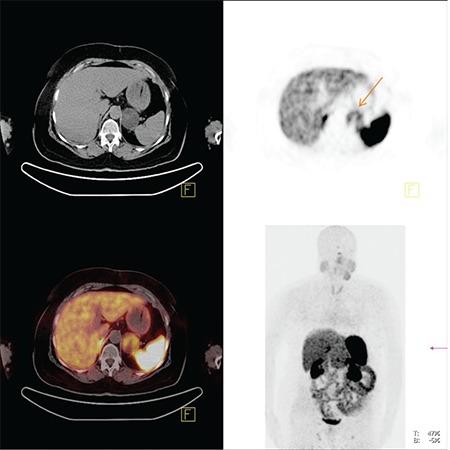
Results: Sixteen In-111 octreotide SRS and five Ga-68 DOTATATE PET-CT were performed in 19 patients. In eight out of 19 patients, ectopic ACTH secretion site could be detected. In five patients, SRS showed pathologic uptake. In four of these patients, surgery revealed pulmonary carcinoid tumors and in one patient pancreatic neuroendocrine tumor. In one patient, Ga-68 DOTATATE PET-CT revealed pathologic uptake in lung nodule which came out to be pulmonary carcinoid tumor. In another patient who had resection of metastases of atypical carcinoid tumor prior to scans, new metastatic foci were detected both with SRS and Ga-68 DOTATATE PET-CT imaging. In one patient, although SRS was negative, CT which was performed three years later showed a lung nodule diagnosed as pulmonary carcinoid tumor. In 11 patients, ectopic ACTH secretion site could not be detected. In 10 of those patients, scintigraphic and radiological imaging did not show any lesions and in one patient, Ga-68 DOTATATE PET-CT was false positive.
Conclusion: SRI has a complementary role with radiological imaging in localizing ectopic ACTH secretion sites. PET-CT imaging with Ga-68 peptide conjugates is a promising new modality for this indication.
Conflict of interest: None declared.
Keywords: Cushing syndrome; ectopic ACTH Syndrome; gallium radioisotopes; indium-111-octreotide; positron-emission tomography/computed tomography; scintigraphy; somatostatin receptor.
Figures
References
-
- Guyton AC, Hall JE. The textbook of medical physiology. Philadelphia: W.B. Saunders Company; 2000. The adrenocortical hormones; pp. 869–883.
-
- Tabarin A, Valli N, Chanson P, Bachelot Y, Rohmer V, Bex-Bachellerie V, Catargi B, Roger P, Laurent F. Usefulness of somatostation receptor scintigraphy in patients with occult ectopic adrenocorticotropin syndrome. J Clin Endocrinol Metab. 1999;84:1193–1202. - PubMed
-
- Ilias I, Torpy DJ, Pacak K, Mullen N, Wesley RA, Nieman LK. Cushing’s syndrome due to ectopic corticotropin secretion: twenty years’ experience at the National Institutes of Health. J Clin Endocrinol Metab. 2005;90:4955–4462. - PubMed
-
- Hernandez I, Espinosa-de-los-Monteros AL, Mendoza V, Cheng S, Molina M, Sosa E, Mercado M. Ectopic ACTH-secreting syndrome: a single center experience report with a high prevalence of occult tumor. Archives of Medical Research. 2006;37:976–980. - PubMed
-
- De Herder WW, Krenning EP, Malchoff CD, Hofland LJ, Reubi JC, Kwekkeboom DJ, Oei HY, Pols HAP, Bruining HA, Nobels FRE, Lamberts SWJ. Somatostatin receptor scintigraphy: its value in tumor localization in patients with Cushing’s syndrome caused by ectopic corticotropin or corticotropin-releasing hormone secretion. The American Journal of Medicine. 1994;96:305–312. - PubMed
LinkOut - more resources
Full Text Sources
Other Literature Sources
Research Materials
