


Mitochondrial retrograde signaling at the crossroads of tumor bioenergetics, genetics and epigenetics
- PMID: 24004957
- PMCID: PMC3832239
- DOI: 10.1016/j.mito.2013.08.007
Mitochondrial retrograde signaling at the crossroads of tumor bioenergetics, genetics and epigenetics
Abstract
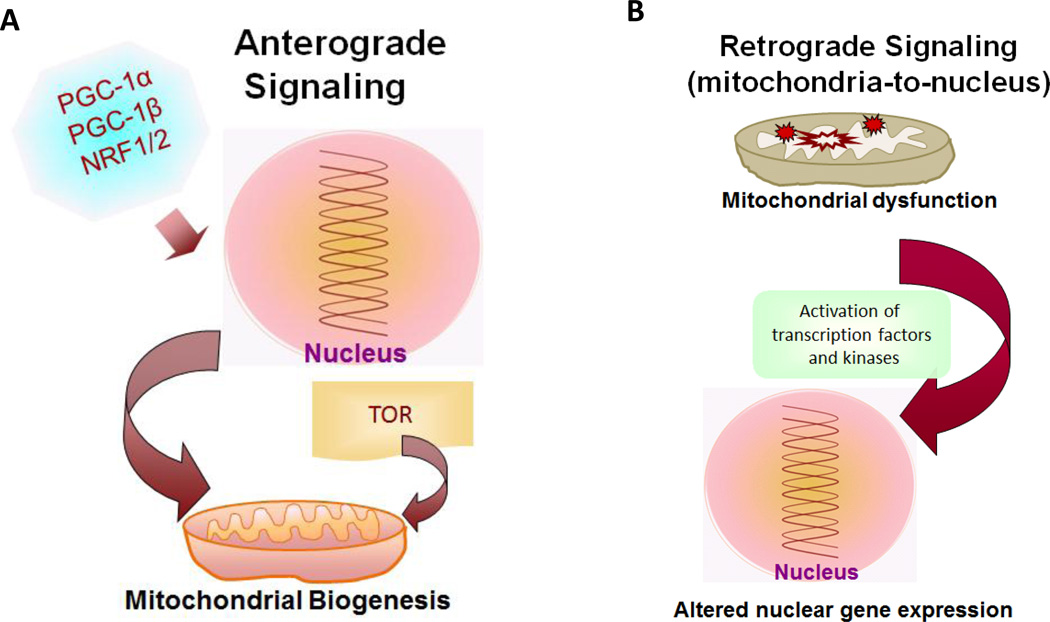
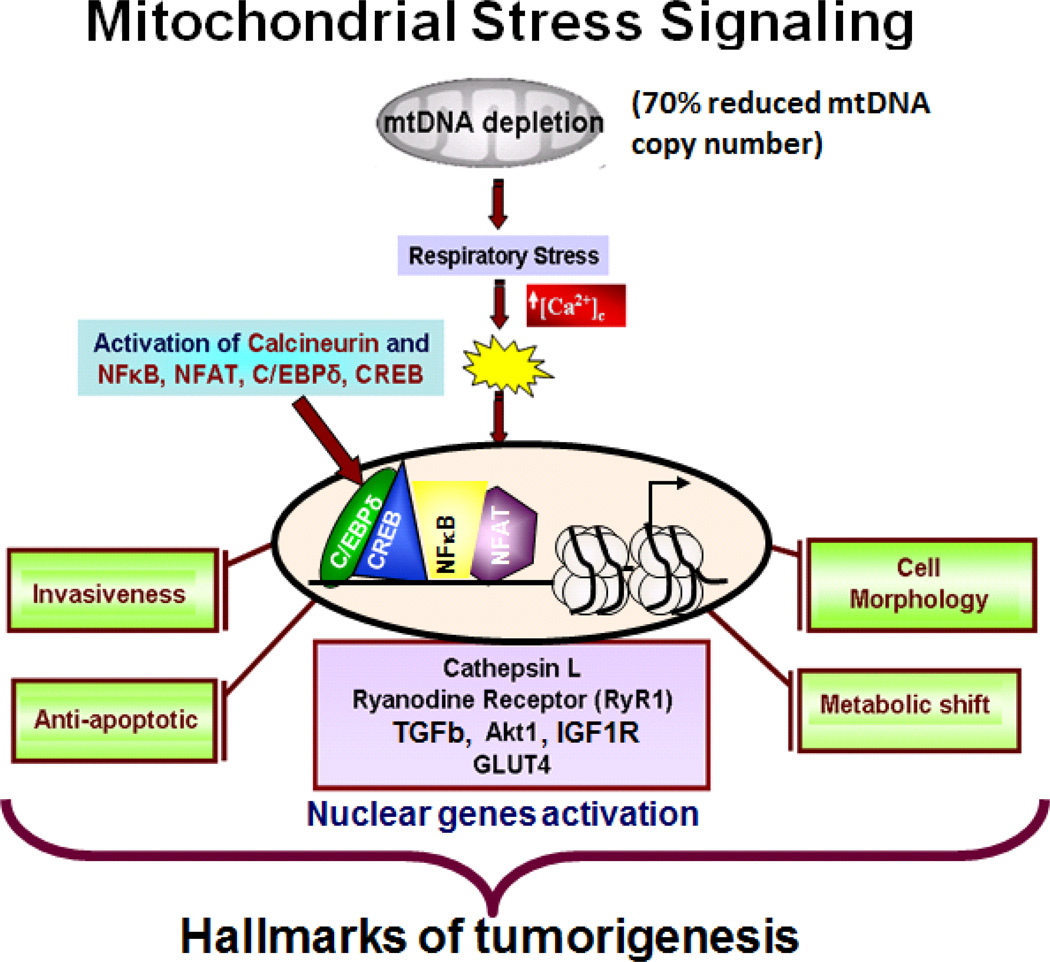
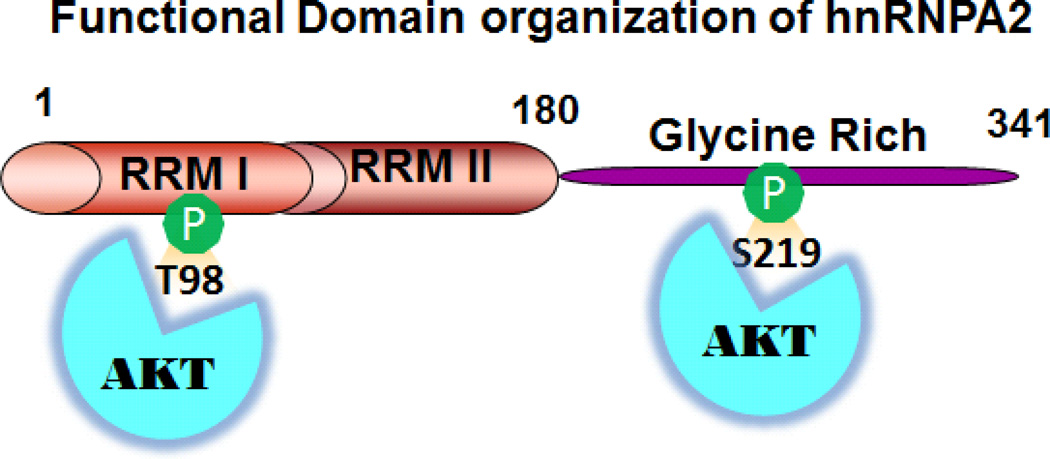
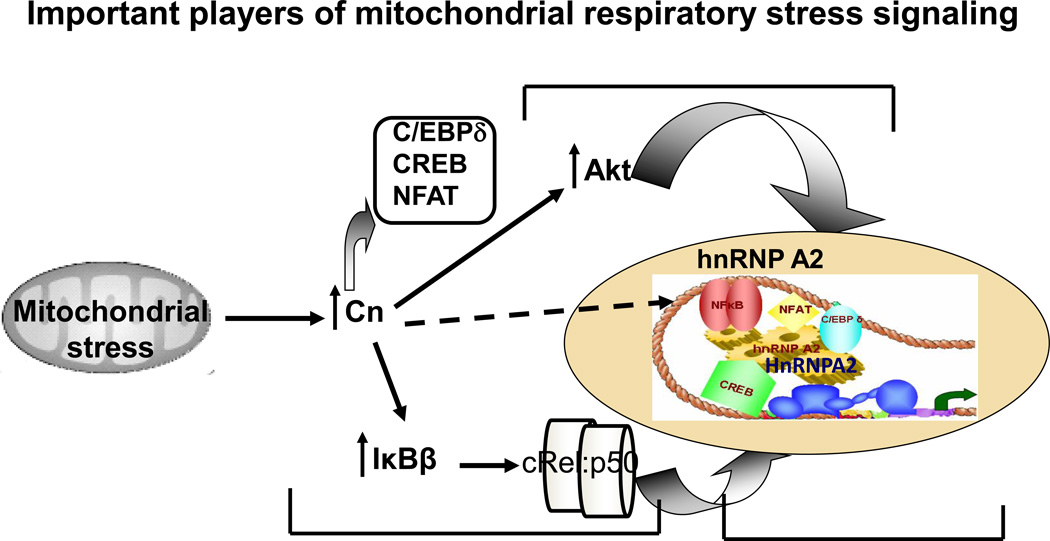
Mitochondria play a central role not only in energy production but also in the integration of metabolic pathways as well as signals for apoptosis and autophagy. It is becoming increasingly apparent that mitochondria in mammalian cells play critical roles in the initiation and propagation of various signaling cascades. In particular, mitochondrial metabolic and respiratory states and status on mitochondrial genetic instability are communicated to the nucleus as an adaptive response through retrograde signaling. Each mammalian cell contains multiple copies of the mitochondrial genome (mtDNA). A reduction in mtDNA copy number has been reported in various human pathological conditions such as diabetes, obesity, neurodegenerative disorders, aging and cancer. Reduction in mtDNA copy number disrupts mitochondrial membrane potential (Δψm) resulting in dysfunctional mitochondria. Dysfunctional mitochondria trigger retrograde signaling and communicate their changing metabolic and functional state to the nucleus as an adaptive response resulting in an altered nuclear gene expression profile and altered cell physiology and morphology. In this review, we provide an overview of the various modes of mitochondrial retrograde signaling focusing particularly on the Ca(2+)/Calcineurin mediated retrograde signaling. We discuss the contribution of the key factors of the pathway such as Calcineurin, IGF1 receptor, Akt kinase and HnRNPA2 in the propagation of signaling and their role in modulating genetic and epigenetic changes favoring cellular reprogramming towards tumorigenesis.
Keywords: Calcineurin; Cancer; Epigenetics; HnRNPA2; Mitochondrial DNA; Mitochondrial retrograde signaling.
© 2013. Published by Elsevier B.V. and Mitochondria Research Society.
Conflict of interest statement
Figures
References
-
- Altschafl BA, Beutner G, Sharma VK, Sheu SS, Valdivia HH. The mitochondrial ryanodine receptor in rat heart: a pharmaco-kinetic profile. Biochim. Biophys. Acta. 2007;1768:1784–1795. - PubMed
-
- Amuthan G, Biswas G, Ananadatheerthavarada HK, Vijayasarathy C, Shephard HM, Avadhani NG. Mitochondrial stress-induced calcium signaling, phenotypic changes and invasive behavior in human lung carcinoma A549 cells. Oncogene. 2002;21:7839–7849. - PubMed
Publication types
MeSH terms
Grants and funding
LinkOut - more resources
Full Text Sources
Other Literature Sources
Miscellaneous
