


Role of bile acids in liver injury and regeneration following acetaminophen overdose
- PMID: 24007882
- PMCID: PMC3814573
- DOI: 10.1016/j.ajpath.2013.07.012
Role of bile acids in liver injury and regeneration following acetaminophen overdose
Abstract
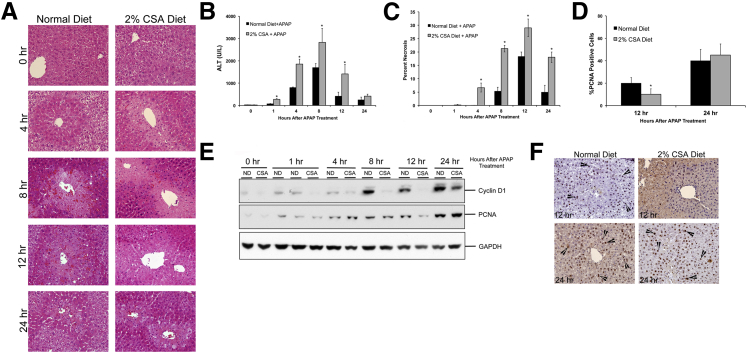
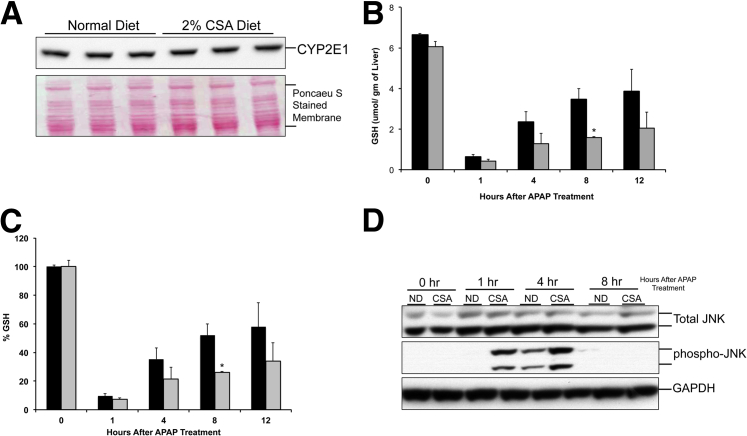
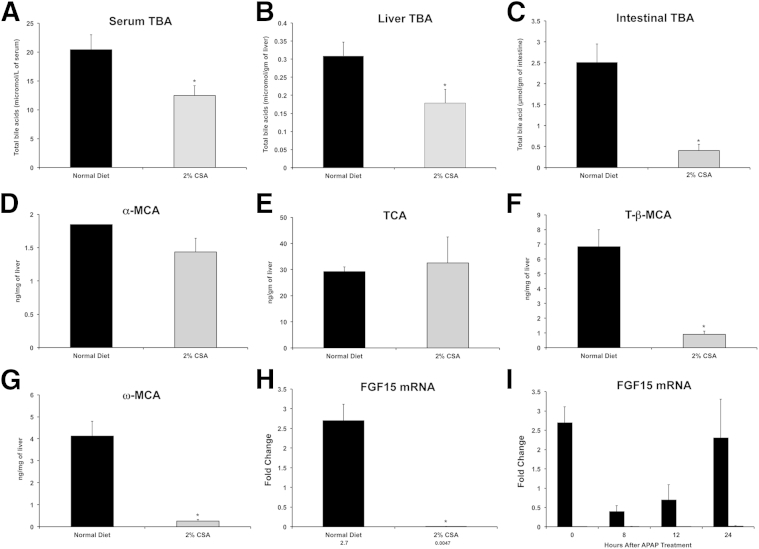
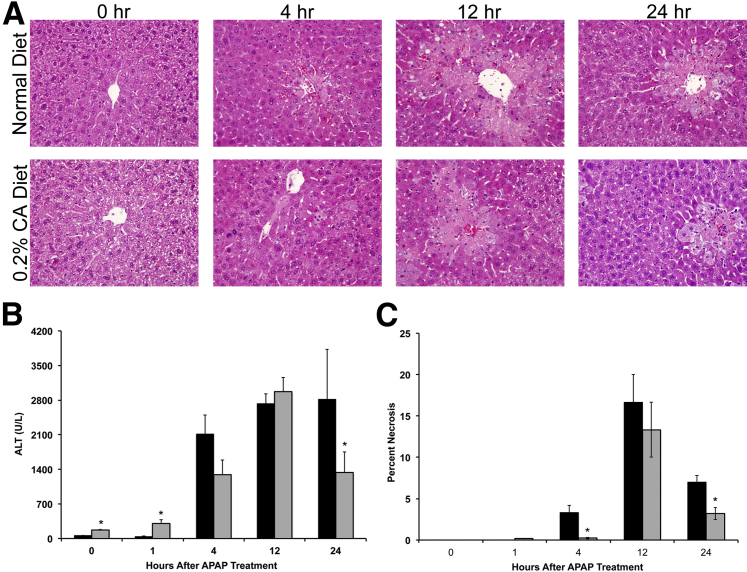
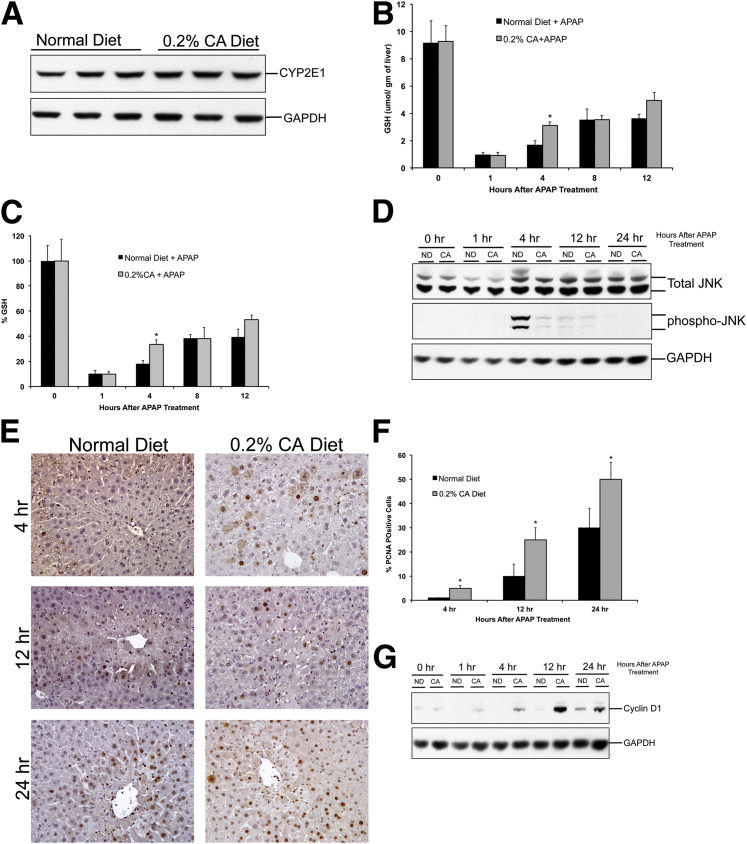
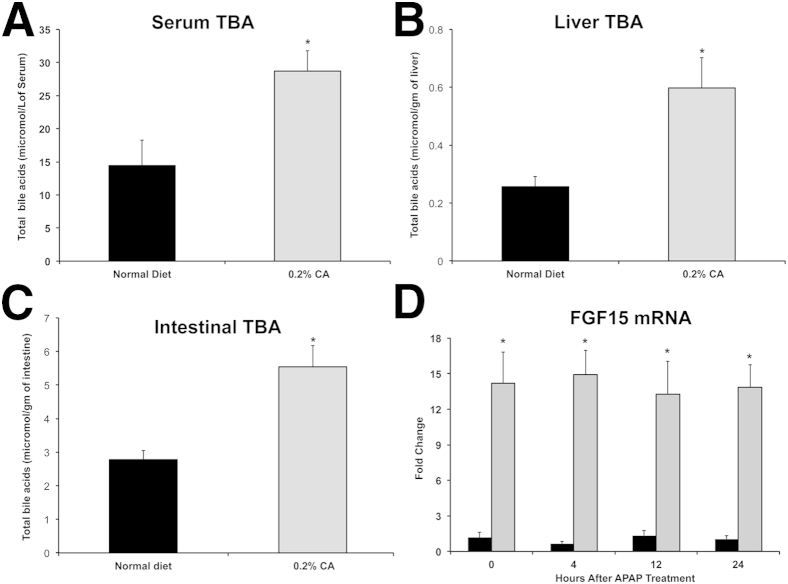
Bile acids play a critical role in liver injury and regeneration, but their role in acetaminophen (APAP)-induced liver injury is not known. We tested the effect of bile acid modulation on APAP hepatotoxicity using C57BL/6 mice, which were fed a normal diet, a 2% cholestyramine (CSA)-containing diet for bile acid depletion, or a 0.2% cholic acid (CA)-containing diet for 1 week before treatment with 400 mg/kg APAP. CSA-mediated bile acid depletion resulted in significantly higher liver injury and delayed regeneration after APAP treatment. In contrast, 0.2% CA supplementation in the diet resulted in a moderate delay in progression of liver injury and significantly higher liver regeneration after APAP treatment. Either CSA-mediated bile acid depletion or CA supplementation did not affect hepatic CYP2E1 levels or glutathione depletion after APAP treatment. CSA-fed mice exhibited significantly higher activation of c-Jun N-terminal protein kinases and a significant decrease in intestinal fibroblast growth factor 15 mRNA after APAP treatment. In contrast, mice fed a 0.2% CA diet had significantly lower c-Jun N-terminal protein kinase activation and 12-fold higher fibroblast growth factor 15 mRNA in the intestines. Liver regeneration after APAP treatment was significantly faster in CA diet-fed mice after APAP administration secondary to rapid cyclin D1 induction. Taken together, these data indicate that bile acids play a critical role in both initiation and recovery of APAP-induced liver injury.
Copyright © 2013 American Society for Investigative Pathology. Published by Elsevier Inc. All rights reserved.
Figures
References
-
- Trauner M., Claudel T., Fickert P., Moustafa T., Wagner M. Bile acids as regulators of hepatic lipid and glucose metabolism. Dig Dis. 2010;28:220–224. - PubMed
-
- Gadaleta R.M., van Mil S.W., Oldenburg B., Siersema P.D., Klomp L.W., van Erpecum K.J. Bile acids and their nuclear receptor FXR: relevance for hepatobiliary and gastrointestinal disease. Biochim Biophys Acta. 2010;1801:683–692. - PubMed
-
- Wang Y.D., Chen W.D., Moore D.D., Huang W. FXR: a metabolic regulator and cell protector. Cell Res. 2008;18:1087–1095. - PubMed
Publication types
MeSH terms
Substances
Grants and funding
LinkOut - more resources
Full Text Sources
Other Literature Sources
Medical
Research Materials
Miscellaneous
