Impact of treatment exposures on cardiovascular risk and insulin resistance in childhood cancer survivors
- PMID: 24008489
- PMCID: PMC3818503
- DOI: 10.1158/1055-9965.EPI-13-0610
Impact of treatment exposures on cardiovascular risk and insulin resistance in childhood cancer survivors
Abstract
Background: Childhood cancer survivors (CCS) are more insulin resistant and have higher levels of several cardiovascular risk factors even while still children. This study examines specific treatment exposures associated with cardiovascular risk factors and insulin resistance.
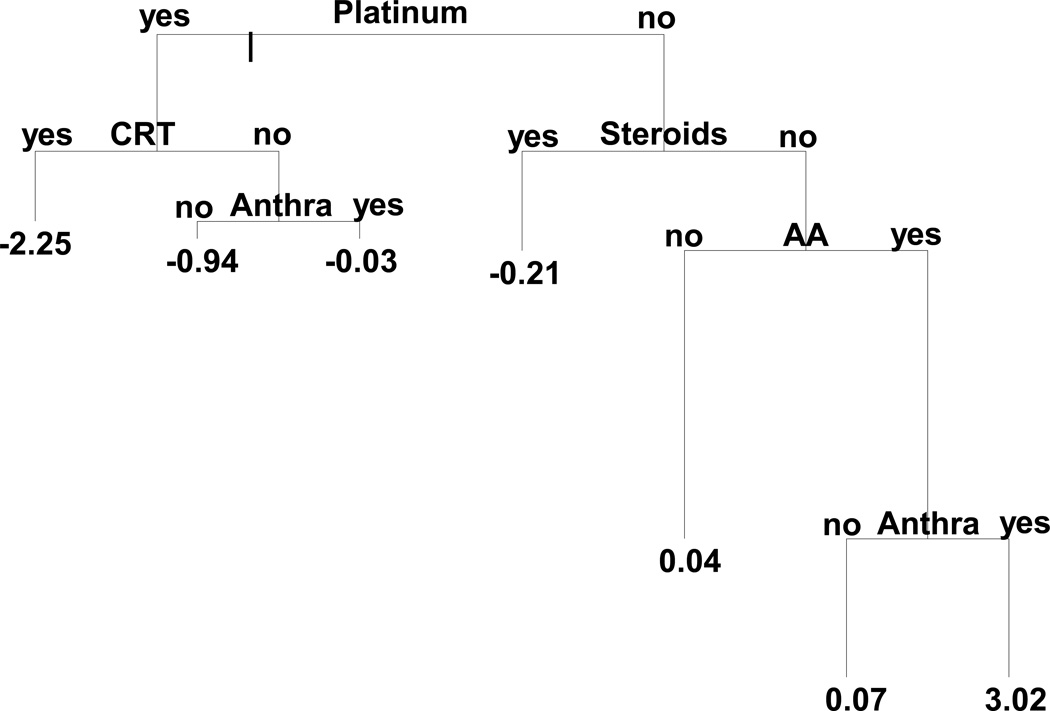
Methods: CCS of ages 9 to 18 years at study entry and in remission 5 years or more from diagnosis (n = 319) and 208 sibling controls were recruited into this cross-sectional study that included physiologic assessment of insulin resistance (hyperinsulinemic euglycemic clamp) and assessment of cardiovascular risk factors. Regression and recursive tree modeling were used to ascertain treatment combinations associated with insulin resistance and cardiovascular risk.
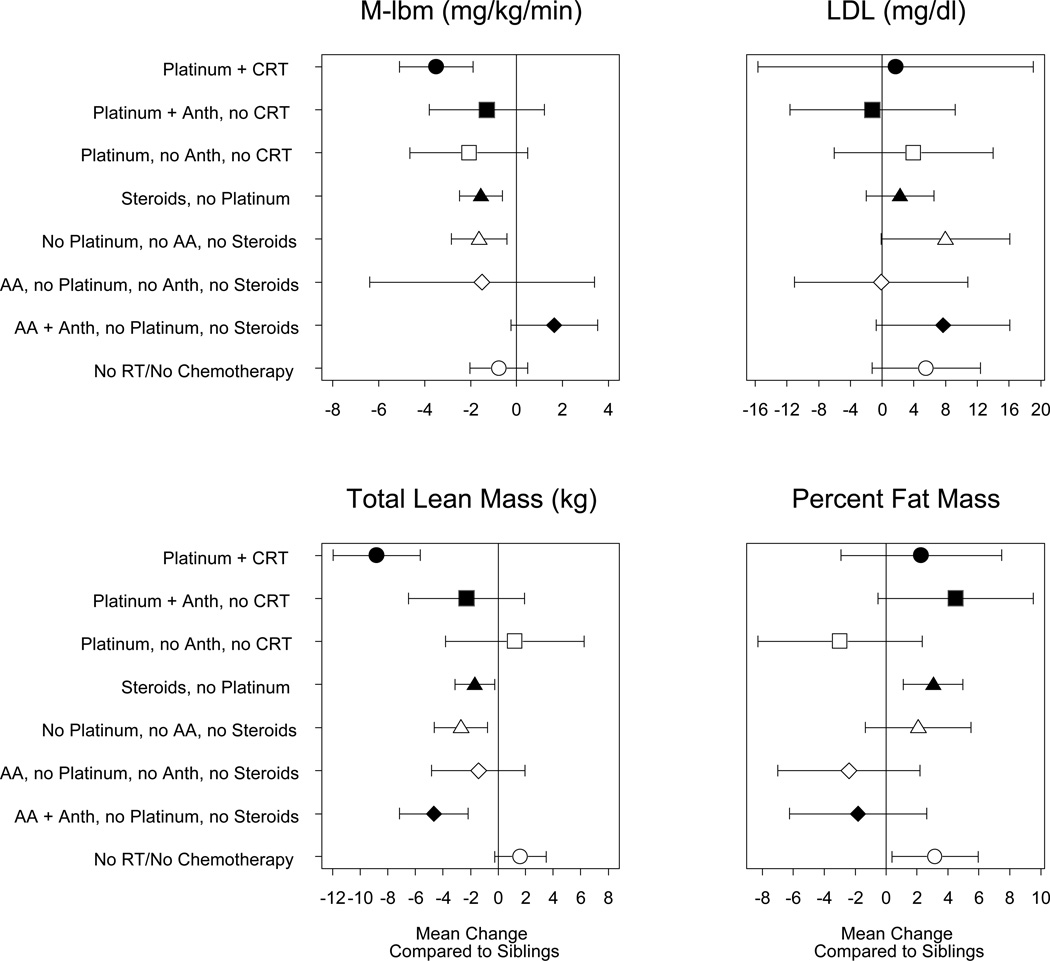
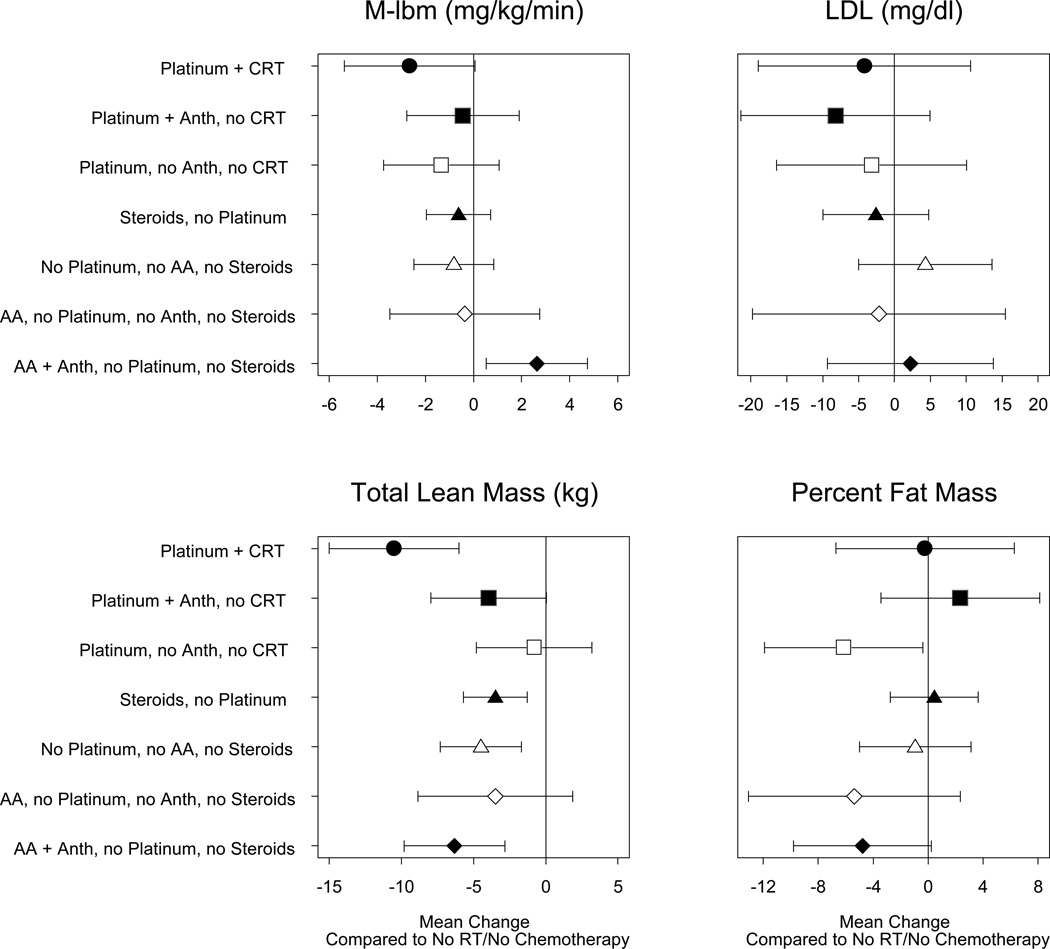
Results: Mean current age of CCS was 14.5 years and 54% were male (siblings 13.6 years, 54% male). Diagnoses included leukemia (35%), brain tumors (36%), solid tumors (33%), or lymphoma (6%). Among CCS, analysis of individual chemotherapy agents failed to find associations with cardiovascular risk factors or insulin resistance. Compared with siblings, insulin resistance was significantly higher in CCS who received platinum plus cranial radiotherapy (CRT, 92% brain tumors) and in those who received steroids but no platinum (majority leukemia). Insulin resistance did not differ between CCS who received surgery alone versus siblings. Within survivor comparisons failed to elucidate treatment combinations that increased insulin resistance compared with those who received surgery only.
Conclusions: Exposure to platinum, CRT, or steroids is associated with insulin resistance and cardiovascular risk factors and should be taken into consideration in the development of screening recommendations for cardiovascular risk.
Impact: Earlier identification of CCS who may benefit from targeted prevention efforts may reduce their future risk of cardiovascular disease.
©2013 AACR
Conflict of interest statement
Figures
References
-
- Reulen RC, Winter DL, Frobisher C, Lancashire ER, Stiller CA, Jenney ME, et al. Longterm cause-specific mortality among survivors of childhood cancer. JAMA. 2010;304:172–179. - PubMed
-
- Talvensaari KK, Lanning M, Tapanainen P, Knip M. Long-term survivors of childhood cancer have an increased risk of manifesting the metabolic syndrome. J Clin Endocrinol Metab. 1996;81:3051–3055. - PubMed
Publication types
MeSH terms
Substances
Grants and funding
LinkOut - more resources
Full Text Sources
Other Literature Sources
Research Materials