


Quantification of airflow into the maxillary sinuses before and after functional endoscopic sinus surgery
- PMID: 24009143
- PMCID: PMC5924450
- DOI: 10.1002/alr.21203
Quantification of airflow into the maxillary sinuses before and after functional endoscopic sinus surgery
Abstract
Background: The effects of increases in maxillary sinus (MS) airflow following functional endoscopic sinus surgery (FESS) are unknown. The goal of this study was to quantify the effects of FESS on airflow into the MS in a cohort of patients with chronic rhinosinusitis, and compare MS flow rate with patient-reported outcome measures.
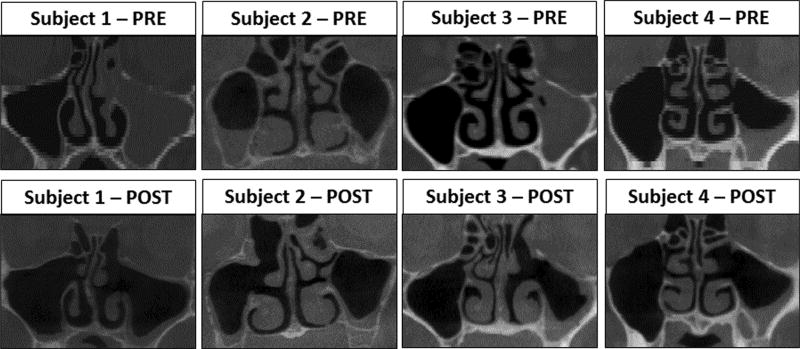
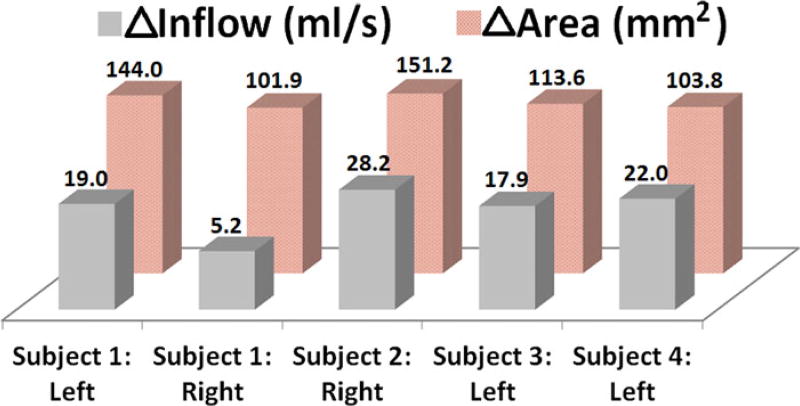
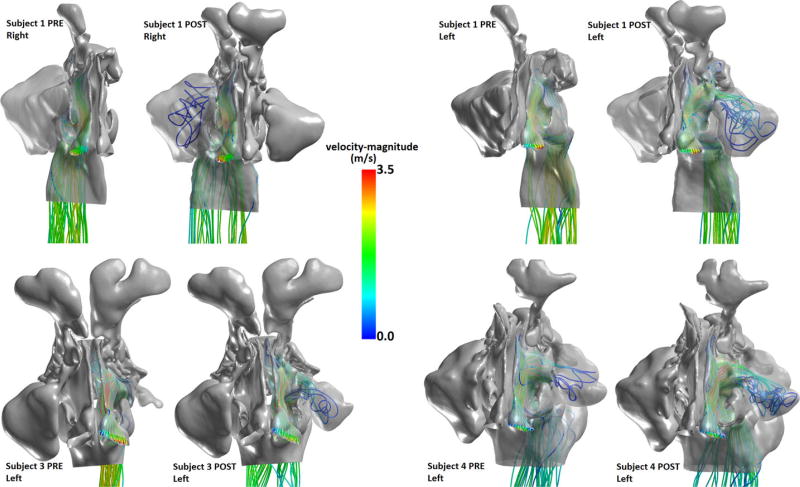
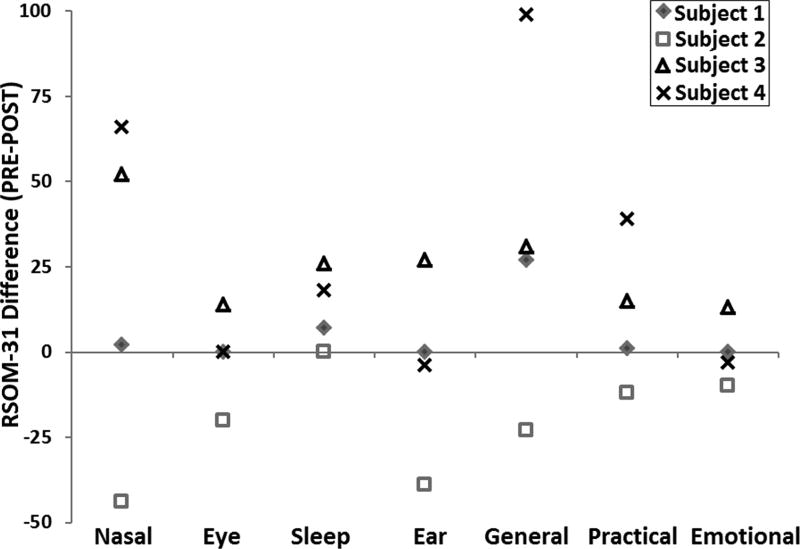
Methods: A pilot study was conducted in which preoperative and postoperative computed tomography scans of 4 patients undergoing bilateral or unilateral FESS were used to create 3-dimensional (3D) reconstructions of the nasal airway and paranasal sinuses using Mimics™ (Materialise, Inc.). The size of the maxillary antrostomies post-FESS ranged from 107 to 160 mm(2). Computational meshes were generated from the 3D reconstructions, and steady-state, laminar, inspiratory airflow was simulated in each mesh using the computational fluid dynamics (CFD) software Fluent™ (ANSYS, Inc.) under physiologic, pressure-driven conditions. Airflow into the MS was estimated from the simulations and was compared preoperatively and postoperatively. In addition, patients completed preoperative and postoperative Rhinosinusitis Outcome Measure-31 (RSOM-31) questionnaires and scores were compared with MS airflow rates.
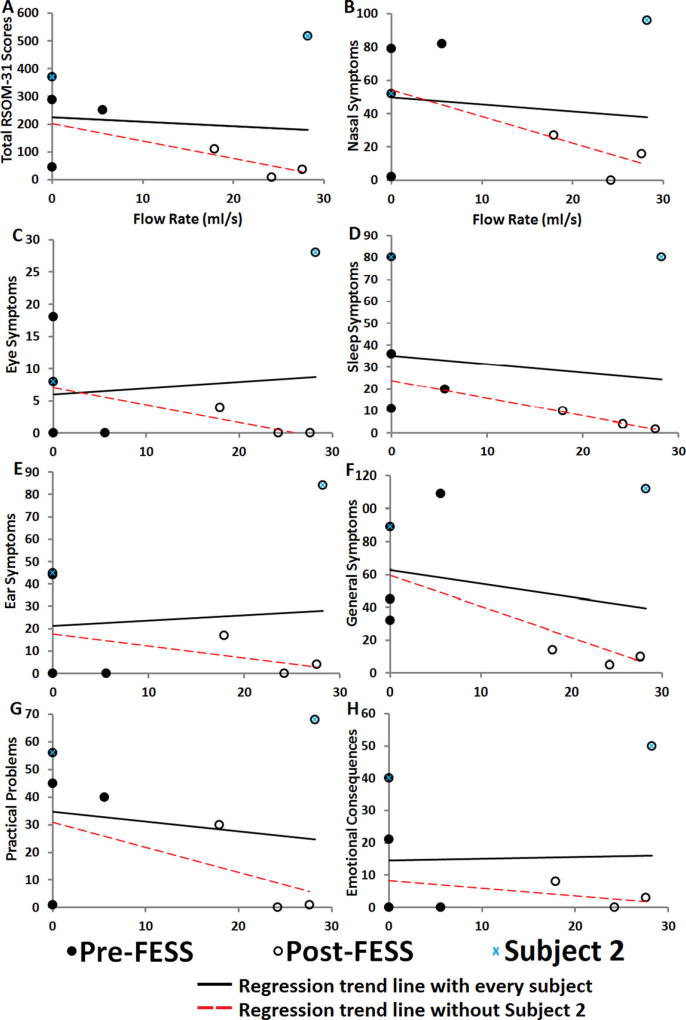
Results: CFD simulations predicted that average airflow rate into post-FESS MS increased by 18.5 mL/second, and that average flow velocity into the MS more than quadrupled. Simulation results also showed that MS flow rate trended with total RSOM-31 and all domain scores.
Conclusion: CFD simulations showed that the healed maxillary antrostomy after FESS can greatly enhance airflow into the MS. Our pilot study suggests that to some extent, increasing airflow into the MS may potentially improve chronic rhinosinusitis patients' quality of life pre-FESS and post-FESS.
Keywords: FESS; chronic rhinosinusitis; computational fluid dynamics; maxillary sinus; nasal airflow.
© 2013 ARS-AAOA, LLC.
Conflict of interest statement
Potential conflict of interest: None provided.
Figures
References
-
- Anselmo-Lima WT, Ferreira MD, Valera FC, et al. Histological evaluation of maxillary sinus mucosa after functional endoscopic sinus surgery. Am J Rhinol. 2007;21:719–724. - PubMed
-
- Hood CM, Schroter RC, Doorly DJ, et al. Computational modeling of flow and gas exchange in models of the human maxillary sinus. J Appl Physiol. 2009;107:1195–1203. - PubMed
-
- Pleis JR, Ward BW, Lucas JW. Summary health statistics for U.S. adults: National Health Interview Survey, 2009. Vital Health Stat 10. 2010;(249):1–207. - PubMed
-
- Bhattacharyya N. Incremental health care utilization and expenditures for chronic rhinosinusitis in the United States. Ann Otol Rhinol Laryngol. 2011;120:423–427. - PubMed
-
- Welch KC, Stankiewicz JA. A contemporary review of endoscopic sinus surgery: techniques, tools, and outcomes. Laryngoscope. 2009;119:2258–2268. - PubMed
MeSH terms
Grants and funding
LinkOut - more resources
Full Text Sources
Other Literature Sources
Medical
Miscellaneous
