Independent effects of systemic and peritoneal inflammation on peritoneal dialysis survival
- PMID: 24009237
- PMCID: PMC3839554
- DOI: 10.1681/ASN.2013030314
Independent effects of systemic and peritoneal inflammation on peritoneal dialysis survival
Abstract
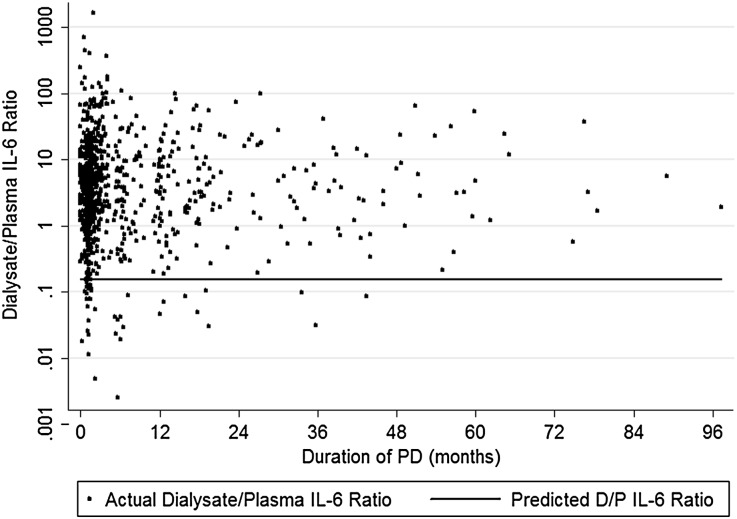
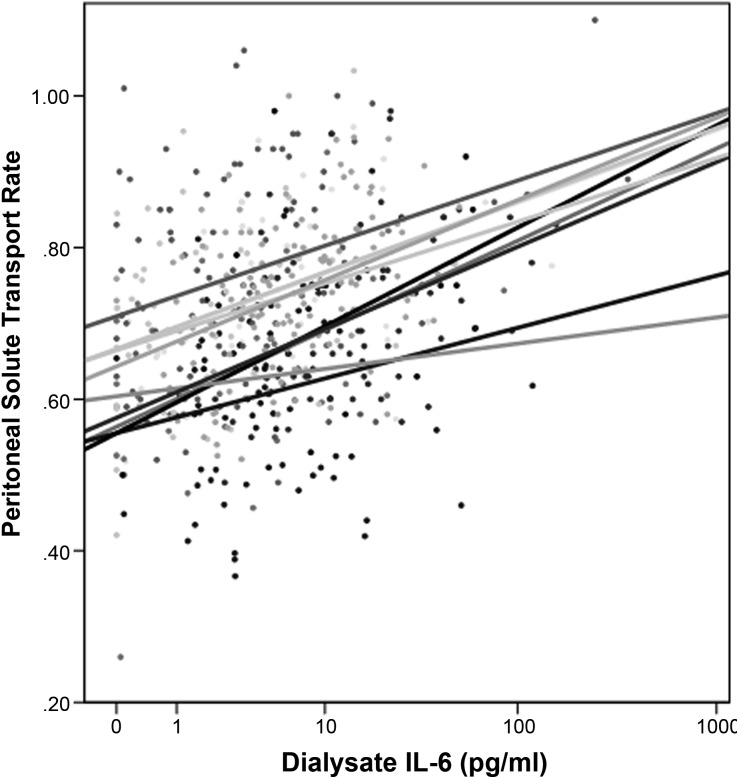
Systemic inflammation, as evidenced by elevated inflammatory cytokines, is a feature of advanced renal failure and predicts worse survival. Dialysate IL-6 concentrations associate with variability in peritoneal small solute transport rate (PSTR), which has also been linked to patient survival. Here, we determined the link between systemic and intraperitoneal inflammation with regards to peritoneal membrane function and patient survival as part of the Global Fluid Study, a multinational, multicenter, prospective, combined incident and prevalent cohort study (n=959 patients) with up to 8 years of follow-up. Data collected included patient demographic characteristics, comorbidity, modality, dialysis prescription, and peritoneal membrane function. Dialysate and plasma cytokines were measured by electrochemiluminescence. A total of 426 survival endpoints occurred in 559 incident and 358 prevalent patients from 10 centers in Korea, Canada, and the United Kingdom. On patient entry to the study, systemic and intraperitoneal cytokine networks were dissociated, with evidence of local cytokine production within the peritoneum. After adjustment for multiple covariates, systemic inflammation was associated with age and comorbidity and independently predicted patient survival in both incident and prevalent cohorts. In contrast, intraperitoneal inflammation was the most important determinant of PSTR but did not affect survival. In prevalent patients, the relationship between local inflammation and membrane function persisted but did not account for an increased mortality associated with faster PSTR. These data suggest that systemic and local intraperitoneal inflammation reflect distinct processes and consequences in patients treated with peritoneal dialysis, so their prevention may require different therapeutic approaches; the significance of intraperitoneal inflammation requires further elucidation.
Figures
Comment in
-
Dialysis: Systemic IL-6 levels predict survival after peritoneal dialysis.Nat Rev Nephrol. 2013 Dec;9(12):708-10. doi: 10.1038/nrneph.2013.231. Epub 2013 Oct 29. Nat Rev Nephrol. 2013. PMID: 24166144
References
-
- Brimble KS, Walker M, Margetts PJ, Kundhal KK, Rabbat CG: Meta-analysis: Peritoneal membrane transport, mortality, and technique failure in peritoneal dialysis. J Am Soc Nephrol 17: 2591–2598, 2006 - PubMed
-
- Asghar RB, Davies SJ: Pathways of fluid transport and reabsorption across the peritoneal membrane. Kidney Int 73: 1048–1053, 2008 - PubMed
-
- Chung SH, Heimbürger O, Stenvinkel P, Qureshi AR, Lindholm B: Association between residual renal function, inflammation and patient survival in new peritoneal dialysis patients. Nephrol Dial Transplant 18: 590–597, 2003 - PubMed
-
- Davies SJ, Phillips L, Naish PF, Russell GI: Quantifying comorbidity in peritoneal dialysis patients and its relationship to other predictors of survival. Nephrol Dial Transplant 17: 1085–1092, 2002 - PubMed
-
- Davies SJ, Bryan J, Phillips L, Russell GI: Longitudinal changes in peritoneal kinetics: The effects of peritoneal dialysis and peritonitis. Nephrol Dial Transplant 11: 498–506, 1996 - PubMed
Publication types
MeSH terms
Substances
LinkOut - more resources
Full Text Sources
Other Literature Sources
Medical