


Barrier disrupting effects of alternaria alternata extract on bronchial epithelium from asthmatic donors
- PMID: 24009658
- PMCID: PMC3751915
- DOI: 10.1371/journal.pone.0071278
Barrier disrupting effects of alternaria alternata extract on bronchial epithelium from asthmatic donors
Abstract
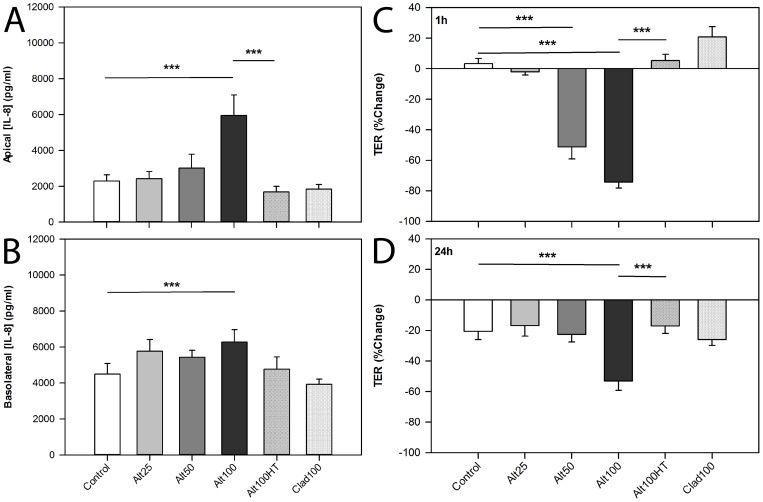
Sensitization and exposure to the allergenic fungus Alternaria alternata has been associated with increased risk of asthma and asthma exacerbations. The first cells to encounter inhaled allergens are epithelial cells at the airway mucosal surface. Epithelial barrier function has previously been reported to be defective in asthma. This study investigated the contribution of proteases from Alternaria alternata on epithelial barrier function and inflammatory responses and compared responses of in vitro cultures of differentiated bronchial epithelial cells derived from severely asthmatic donors with those from non-asthmatic controls. Polarised 16HBE cells or air-liquid interface (ALI) bronchial epithelial cultures from non-asthmatic or severe asthmatic donors were challenged apically with extracts of Alternaria and changes in inflammatory cytokine release and transepithelial electrical resistance (TER) were measured. Protease activity in Alternaria extracts was characterised and the effect of selectively inhibiting protease activity on epithelial responses was examined using protease inhibitors and heat-treatment. In 16HBE cells, Alternaria extracts stimulated release of IL-8 and TNFα, with concomitant reduction in TER; these effects were prevented by heat-treatment of the extracts. Examination of the effects of protease inhibitors suggested that serine proteases were the predominant class of proteases mediating these effects. ALI cultures from asthmatic donors exhibited a reduced IL-8 response to Alternaria relative to those from healthy controls, while neither responded with increased thymic stromal lymphopoietin (TSLP) release. Only cultures from asthmatic donors were susceptible to the barrier-weakening effects of Alternaria. Therefore, the bronchial epithelium of severely asthmatic individuals may be more susceptible to the deleterious effects of Alternaria.
Conflict of interest statement
Figures


References
-
- Cookson W (2004) The immunogenetics of asthma and eczema: a new focus on the epithelium. Nat Rev Immunol 4: 978–988. - PubMed
-
- Bals R, Hiemstra PS (2004) Innate immunity in the lung: how epithelial cells fight against respiratory pathogens. Eur Respir J 23: 327–333. - PubMed
-
- Knight DA, Holgate ST (2003) The airway epithelium: structural and functional properties in health and disease. Respirology 8: 432–446. - PubMed
-
- Xiao C, Puddicombe SM, Field S, Haywood J, Broughton-Head V, et al. (2011) Defective epithelial barrier function in asthma. J Allergy Clin Immunol 128: 549–556. - PubMed
-
- Denning DW, O'Driscoll BR, Hogaboam CM, Bowyer P, Niven RM (2006) The link between fungi and severe asthma: a summary of the evidence. Eur Respir J 27: 615–626. - PubMed
Publication types
MeSH terms
Substances
Grants and funding
LinkOut - more resources
Full Text Sources
Other Literature Sources
Medical
