


Helicobacter bilis gamma-glutamyltranspeptidase enhances inflammatory stress response via oxidative stress in colon epithelial cells
- PMID: 24009737
- PMCID: PMC3751837
- DOI: 10.1371/journal.pone.0073160
Helicobacter bilis gamma-glutamyltranspeptidase enhances inflammatory stress response via oxidative stress in colon epithelial cells
Abstract
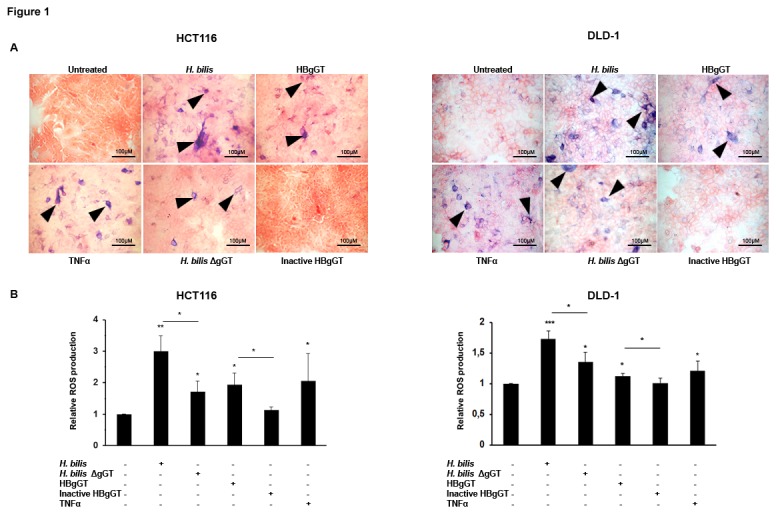
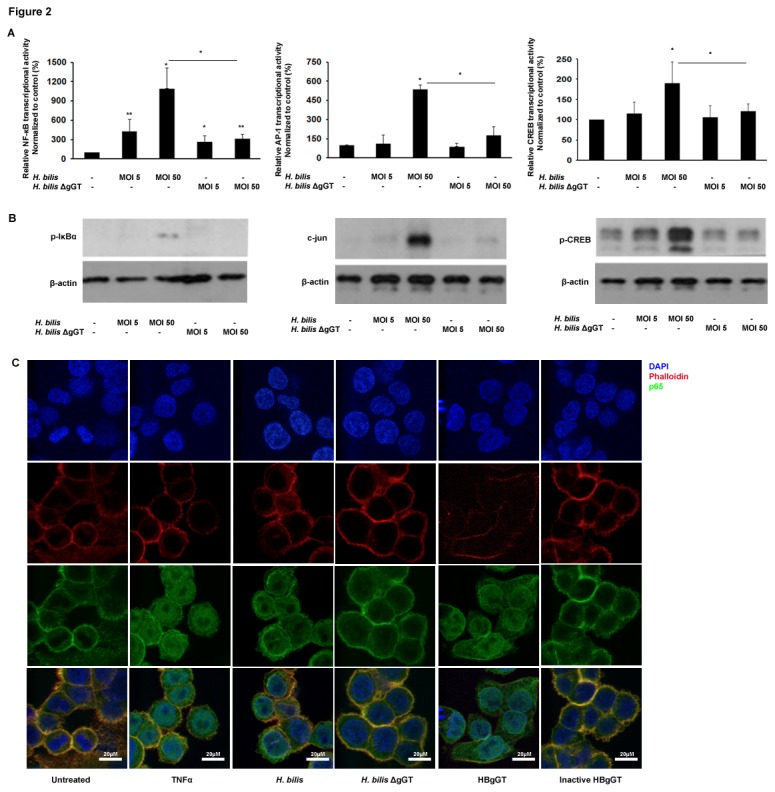
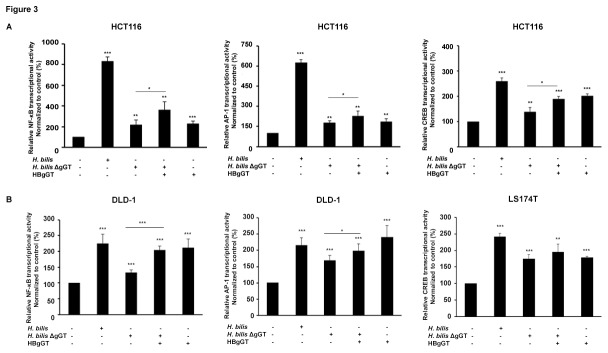
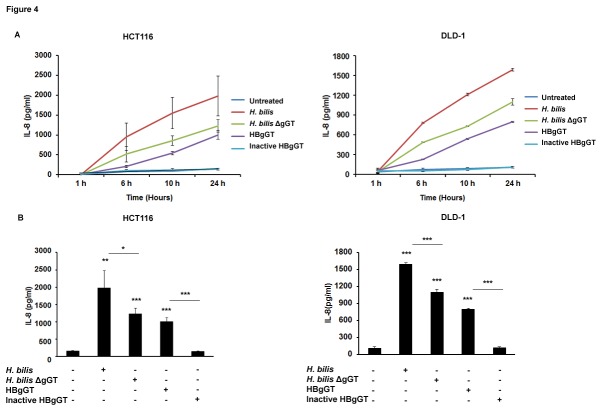
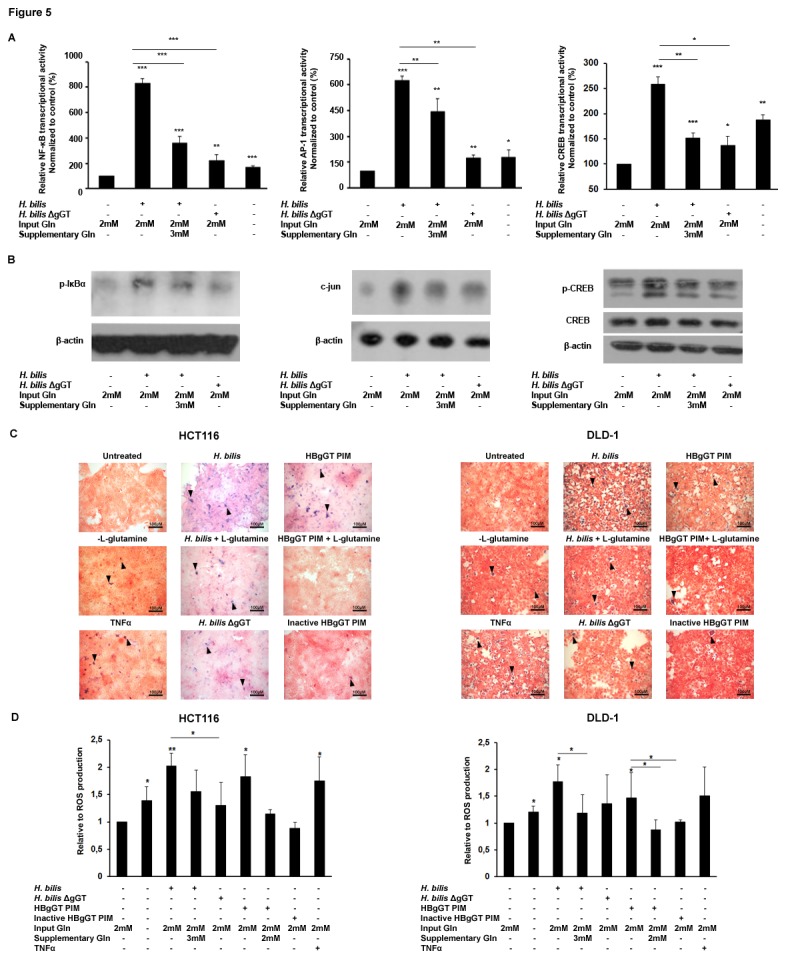
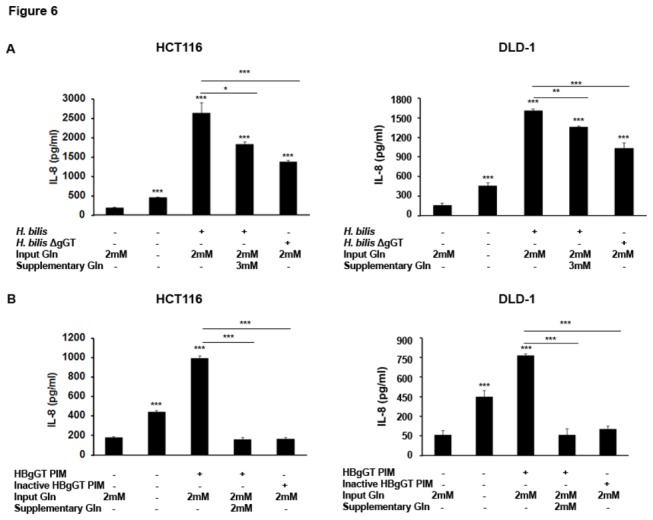
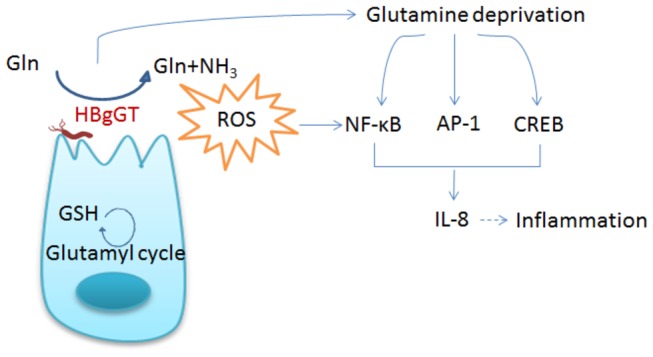
Helicobacter bilis (H. bilis) infection is associated with cases of inflammatory bowel Disease, thyphlocolitis, hepatitis and cholecystitis. However, little is known about the bacterial virulence determinants or the molecular mechanisms involved. Recently, H. bilis γ-glutamyltranspeptidase (HBgGT) was shown to be a virulence factor decreasing host cell viability. Bacterial gGTs play a key role in synthesis and degradation of glutathione and enables the bacteria to utilize extracellular glutamine and glutathione as sources of glutamate. gGT-mediated loss of cell viability has so far been linked to DNA damage via oxidative stress, but the signaling cascades involved herein have not been described. In this study, we identified enhanced ROS production induced by HBgGT as a central factor involved in the activation of the oxidative stress response cascades, which finally activate CREB, AP-1 and NF-κB in H. bilis infected colon cancer cells. IL-8, an important pro-inflammatory chemokine that is a common downstream target of these transcription factors, was up-regulated upon H. bilis infection in an HBgGT dependent manner. Moreover, the induction of these signaling responses and inflammatory cytokine production in host cells could be linked to HBgGT-mediated glutamine deprivation. This study implicates for the first time HBgGT as an important regulator of signaling cascades regulating inflammation in H. bilis infected host epithelial cells that could be responsible for induction of inflammatory disorders by the bacterium.
Conflict of interest statement
Figures
References
-
- Fox JG (2007) Helicobacter bilis: bacterial provocateur orchestrates host immune responses to commensal flora in a model of inflammatory bowel disease. Gut 56: 898-900. doi:10.1136/gut.2006.115428. PubMed: 17566023. - DOI - PMC - PubMed
-
- Rossi M, Zanoni RG, Hänninen ML (2010) Delineation of two Helicobacter bilis genomospecies: implications for systematics and evolution. Int J Syst Evol Microbiol 60: 2392-2397. doi:10.1099/ijs.0.016287-0. PubMed: 19946059. - DOI - PubMed
-
- Jergens AE, Wilson-Welder JH, Dorn A, Henderson A, Liu Z et al. (2007) Helicobacter bilis triggers persistent immune reactivity to antigens derived from the commensal bacteria in gnotobiotic C3H/HeN mice. Gut 56: 934-940. doi:10.1136/gut.2006.099242. PubMed: 17145736. - DOI - PMC - PubMed
-
- Liu Z, Ramer-Tait AE, Henderson AL, Demirkale CY, Nettleton D et al. (2011) Helicobacter bilis colonization enhances susceptibility to Typhlocolitis following an inflammatory trigger. Dig Dis Sci 56: 2838-2848. doi:10.1007/s10620-011-1701-3. PubMed: 21503679. - DOI - PubMed
Publication types
MeSH terms
Substances
LinkOut - more resources
Full Text Sources
Other Literature Sources
Medical
Miscellaneous
