


Phylogeography of Japanese encephalitis virus: genotype is associated with climate
- PMID: 24009790
- PMCID: PMC3757071
- DOI: 10.1371/journal.pntd.0002411
Phylogeography of Japanese encephalitis virus: genotype is associated with climate
Abstract
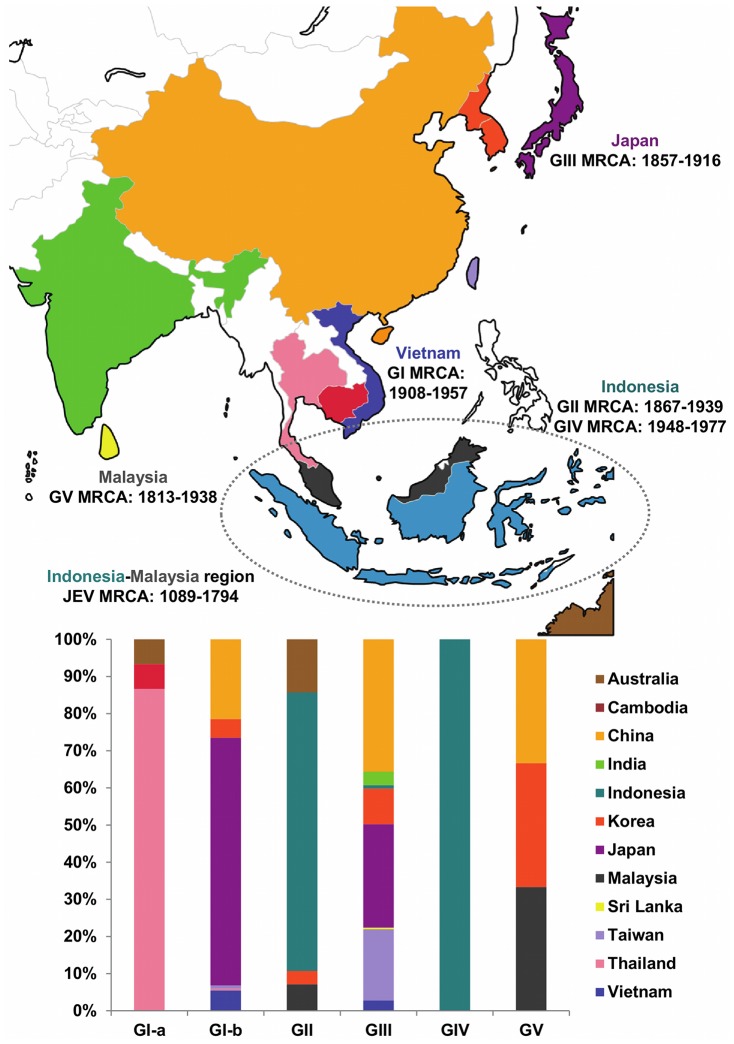
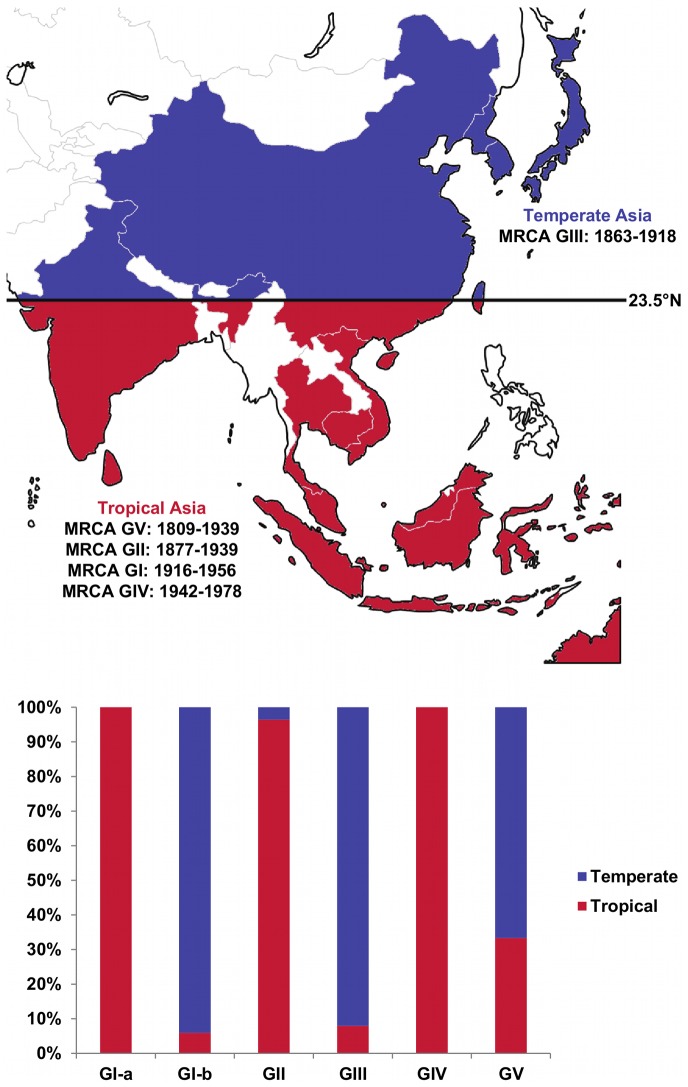
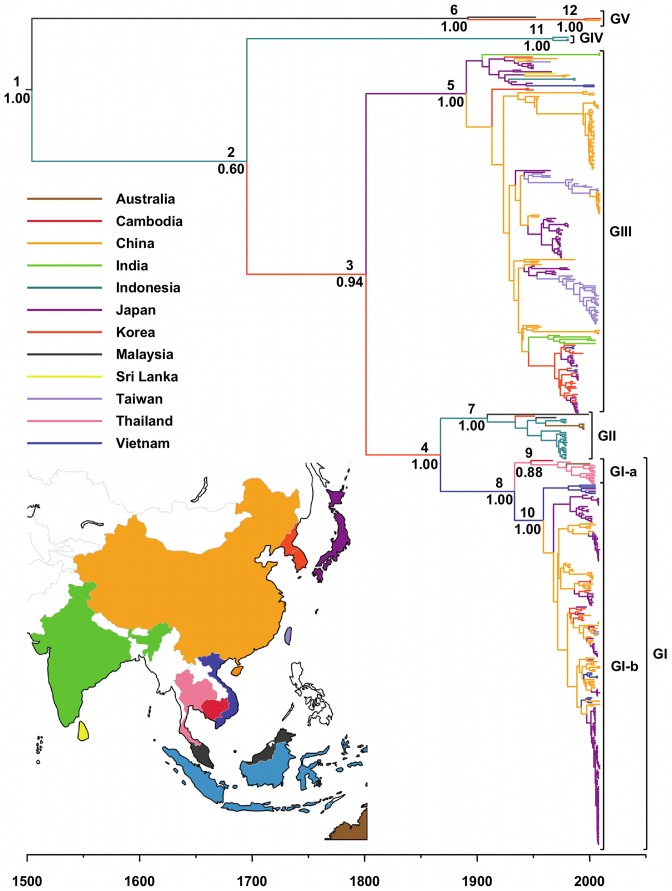
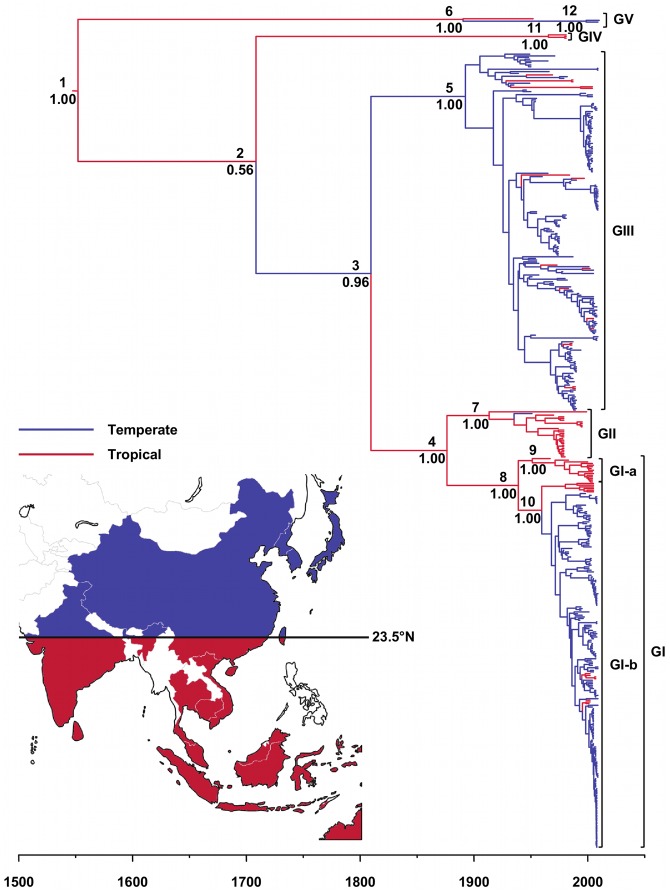
The circulation of vector-borne zoonotic viruses is largely determined by the overlap in the geographical distributions of virus-competent vectors and reservoir hosts. What is less clear are the factors influencing the distribution of virus-specific lineages. Japanese encephalitis virus (JEV) is the most important etiologic agent of epidemic encephalitis worldwide, and is primarily maintained between vertebrate reservoir hosts (avian and swine) and culicine mosquitoes. There are five genotypes of JEV: GI-V. In recent years, GI has displaced GIII as the dominant JEV genotype and GV has re-emerged after almost 60 years of undetected virus circulation. JEV is found throughout most of Asia, extending from maritime Siberia in the north to Australia in the south, and as far as Pakistan to the west and Saipan to the east. Transmission of JEV in temperate zones is epidemic with the majority of cases occurring in summer months, while transmission in tropical zones is endemic and occurs year-round at lower rates. To test the hypothesis that viruses circulating in these two geographical zones are genetically distinct, we applied Bayesian phylogeographic, categorical data analysis and phylogeny-trait association test techniques to the largest JEV dataset compiled to date, representing the envelope (E) gene of 487 isolates collected from 12 countries over 75 years. We demonstrated that GIII and the recently emerged GI-b are temperate genotypes likely maintained year-round in northern latitudes, while GI-a and GII are tropical genotypes likely maintained primarily through mosquito-avian and mosquito-swine transmission cycles. This study represents a new paradigm directly linking viral molecular evolution and climate.
Conflict of interest statement
The authors have declared that no competing interests exist.
Figures
References
-
- Lewis L, Taylor HG, Sorem MB, Norcross JW, Kindsvatter VH (1947) Japanese B encephalitis. Arch Neurol Psychiatry 57: 430–463. - PubMed
-
- Mitamura T, Kitaoka M, Mori K, Okubo K (1938) Isolation of the virus of Japanese encephalitis from mosquitoes caught in nature. Tokyo Iji Shinshi 62: 820.
-
- Buescher EL, Scherer WF (1959) Ecologic studies of Japanese encephalitis virus in Japan. IX. Epidemiologic correlations and conclusions. Am J Trop Med Hyg 8: 719–722. - PubMed
-
- Buescher EL, Scherer WF, Mc CH, Moyer JT, Rosenberg MZ, et al. (1959) Ecologic studies of Japanese encephalitis virus in Japan. IV. Avian infection. Am J Trop Med Hyg 8: 678–688. - PubMed
-
- Buescher EL, Scherer WF, Rosenberg MZ, Gresser I, Hardy JL, et al. (1959) Ecologic studies of Japanese encephalitis virus in Japan. II. Mosquito infection. Am J Trop Med Hyg 8: 651–664. - PubMed
Publication types
MeSH terms
Substances
Associated data
- Actions
- Actions
Grants and funding
LinkOut - more resources
Full Text Sources
Other Literature Sources
