


Hepatitis virus capsid polymorph stability depends on encapsulated cargo size
- PMID: 24010404
- PMCID: PMC5683388
- DOI: 10.1021/nn4017839
Hepatitis virus capsid polymorph stability depends on encapsulated cargo size
Abstract
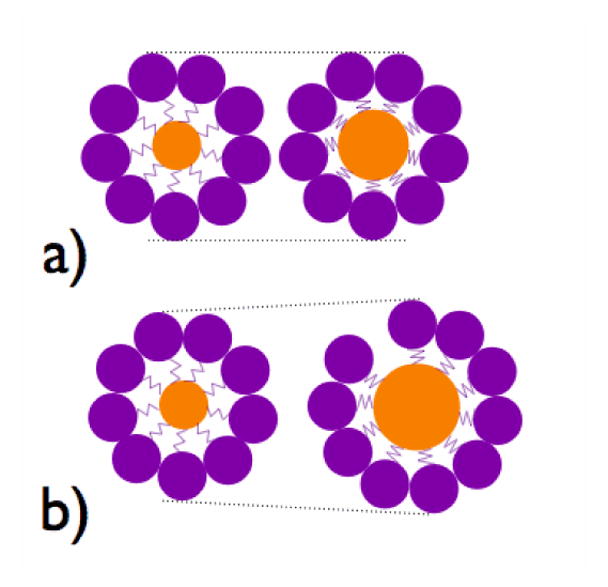
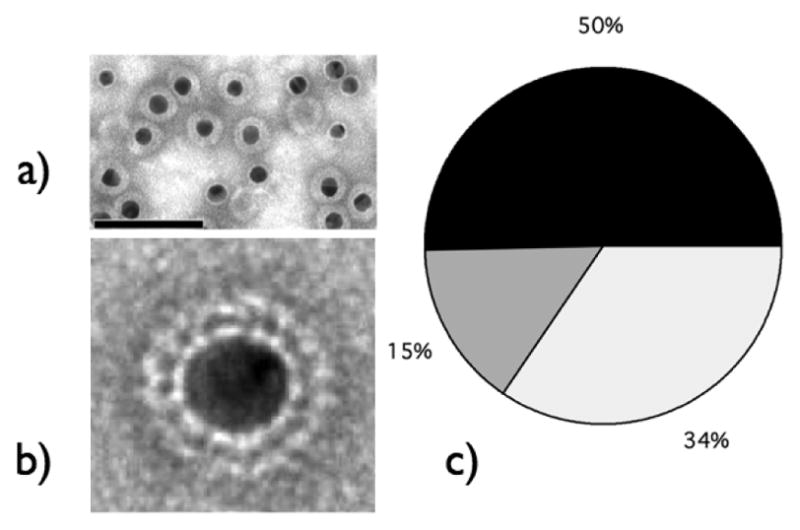
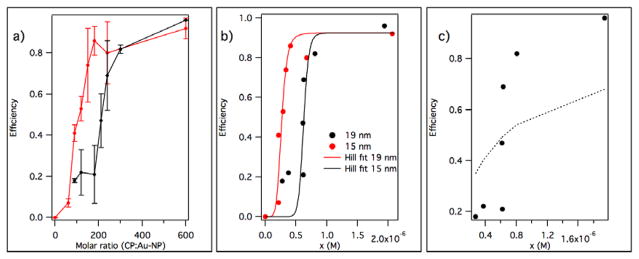
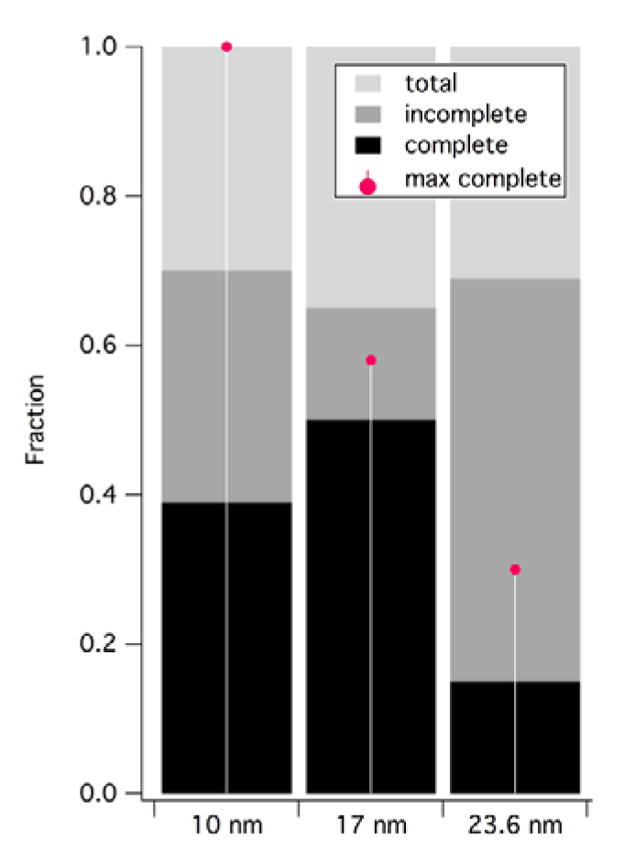
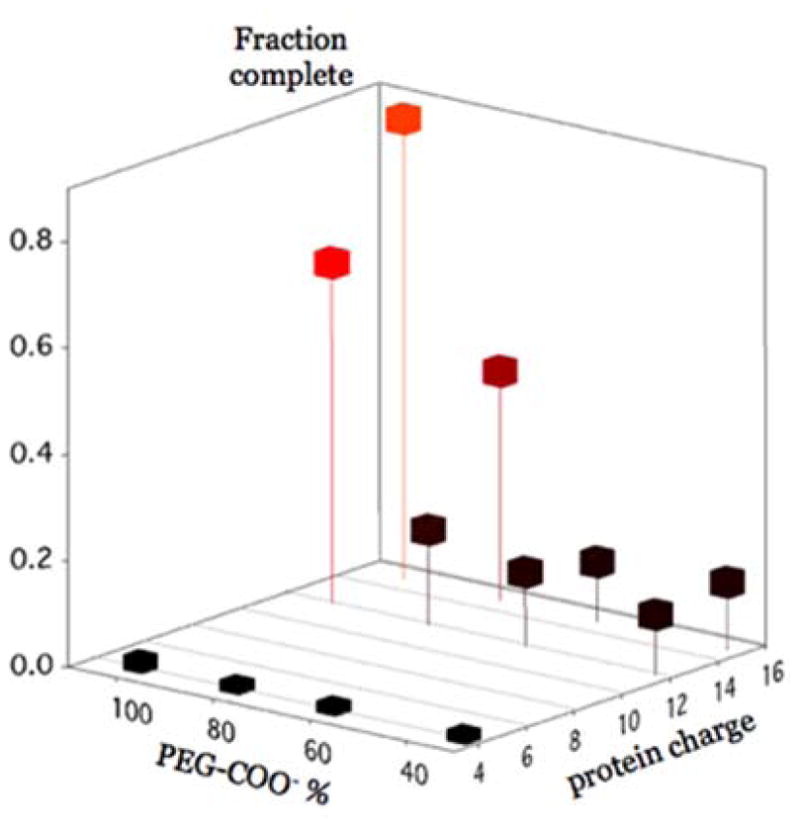
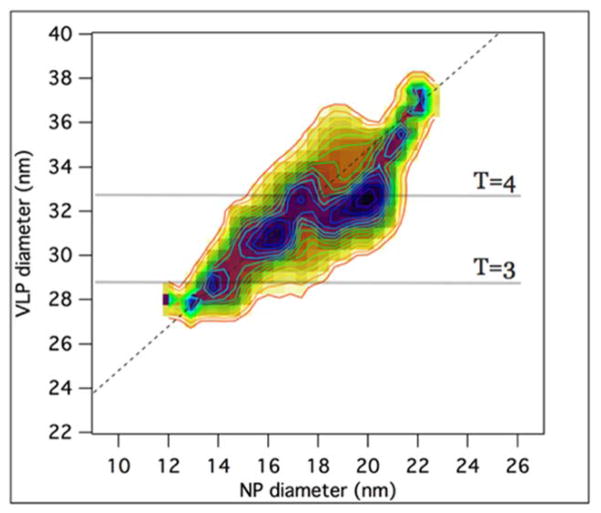
Protein cages providing a controlled environment to encapsulated cargo are a ubiquitous presence in any biological system. Well-known examples are capsids, the regular protein shells of viruses, which protect and deliver the viral genome. Since some virus capsids can be loaded with nongenomic cargoes, they are interesting for a variety of applications ranging from biomedical delivery to energy harvesting. A question of vital importance for such applications is how does capsid stability depend on the size of the cargo? A nanoparticle-templated assembly approach was employed here to determine how different polymorphs of the Hepatitis B virus icosahedral capsid respond to a gradual change in the encapsulated cargo size. It was found that assembly into complete virus-like particles occurs cooperatively around a variety of core diameters, albeit the degree of cooperativity varies. Among these virus-like particles, it was found that those of an outer diameter corresponding to an icosahedral array of 240 proteins (T = 4) are able to accommodate the widest range of cargo sizes.
Figures
References
-
- Douglas T, Young M. Viruses: Making Friends with Old Foes. Science. 2006;312:873–875. - PubMed
-
- Manchester M, Steinmetz FN. Viruses and Nanotechnology. Preface. Curr Top Microbiol Immunol. 2009;327:v–vi. - PubMed
-
- Minten IJ, Claessen VI, Blank K, Rowan AE, Nolte RJM, Cornelissen JJLM. Catalytic Capsids: the Art of Confinement. Chem Sci. 2011;2:358–362.
Publication types
MeSH terms
Substances
Grants and funding
LinkOut - more resources
Full Text Sources
Other Literature Sources
