


Effects of chemotherapy and radiotherapy on spermatogenesis in humans
- PMID: 24012199
- PMCID: PMC3826884
- DOI: 10.1016/j.fertnstert.2013.08.010
Effects of chemotherapy and radiotherapy on spermatogenesis in humans
Abstract
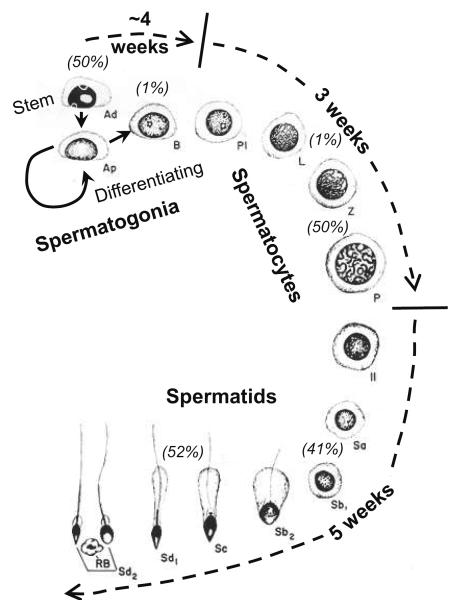
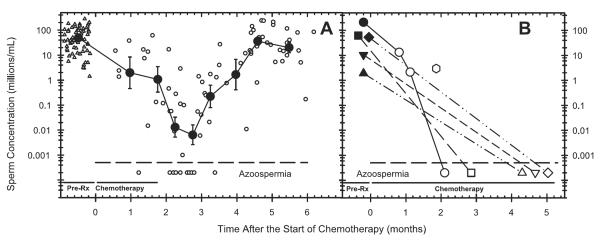
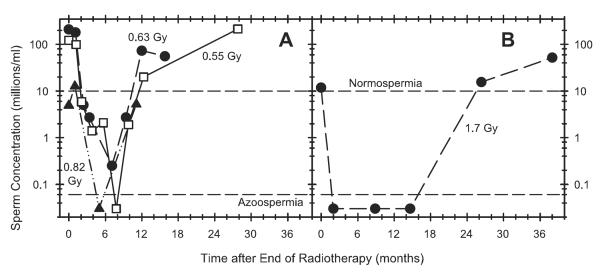
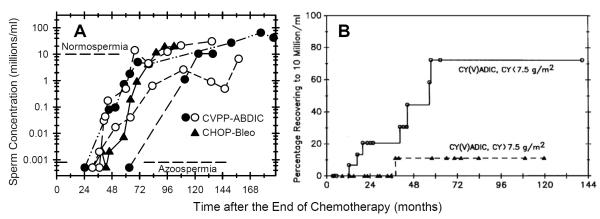
Treatment of cancer with chemo- or radiotherapy causes reduction of sperm counts often to azoospermic levels that may persist for several years or be permanent. The time course of declines in sperm count can be predicted by the sensitivity of germ cells, with differentiating spermatogonia being most sensitive, and the known kinetics of recovery. Recovery from oligo- or azoospermia is more variable and depends on whether there is killing of stem cells and alteration of the somatic environment that normally supports differentiation of stem cells. Of the cytotoxic therapeutic agents, radiation and most alkylating drugs are the most potent at producing long-term azoospermia. Most of the newer biologic targeted therapies, except those used to target radioisotopes or toxins to cells, seem to have only modest effects, mostly on the endocrine aspects of the male reproductive system; however, their effects when used in combination with cytotoxic agents have not been well studied.
Keywords: Cancer; biologic targeted therapy; chemotherapy; radiotherapy; spermatogenesis.
Copyright © 2013 American Society for Reproductive Medicine. Published by Elsevier Inc. All rights reserved.
Figures
References
-
- Oakberg EF. Sensitivity and time of degeneration of spermatogenic cells irradiated in various stages of maturation in the mouse. Radiat Res. 1955;2:369–91. - PubMed
-
- Rowley MJ, Leach DR, Warner GA, Heller CG. Effect of graded doses of ionizing radiation on the human testis. Radiat Res. 1974;59:665–78. - PubMed
-
- Meistrich ML, Finch M, da Cunha MF, Hacker U, Au WW. Damaging effects of fourteen chemotherapeutic drugs on mouse testis cells. Cancer Res. 1982;42:122–31. - PubMed
-
- Edwards RG, Sirlin JL. The effect of 200 R of x-rays on the rate of spermatogenesis and spermiogenesis in the mouse. Exp Cell Res. 1958;15:522–8. - PubMed
Publication types
MeSH terms
Substances
Grants and funding
LinkOut - more resources
Full Text Sources
Other Literature Sources
