


Morphometry of superior temporal gyrus and planum temporale in schizophrenia and psychotic bipolar disorder
- PMID: 24012458
- PMCID: PMC3825771
- DOI: 10.1016/j.schres.2013.08.014
Morphometry of superior temporal gyrus and planum temporale in schizophrenia and psychotic bipolar disorder
Abstract
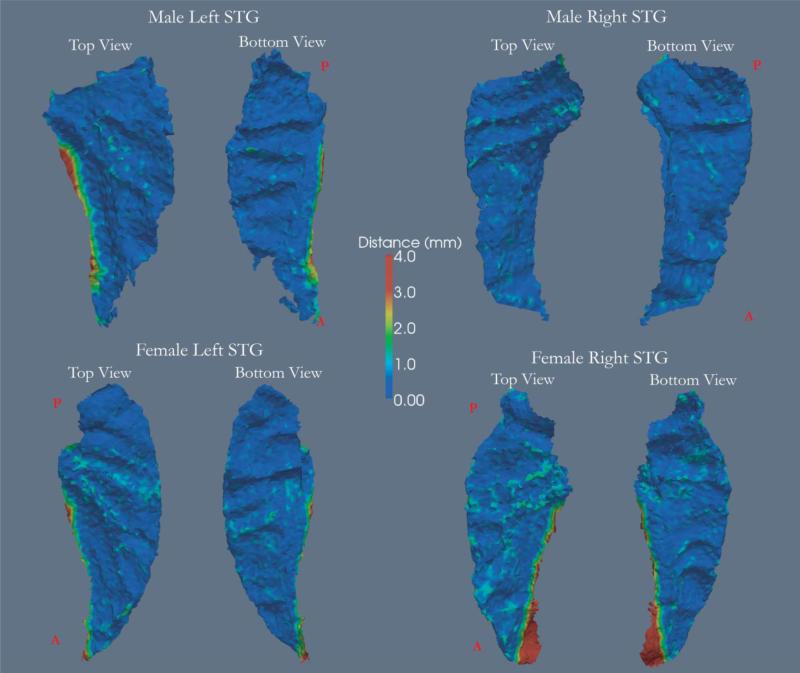
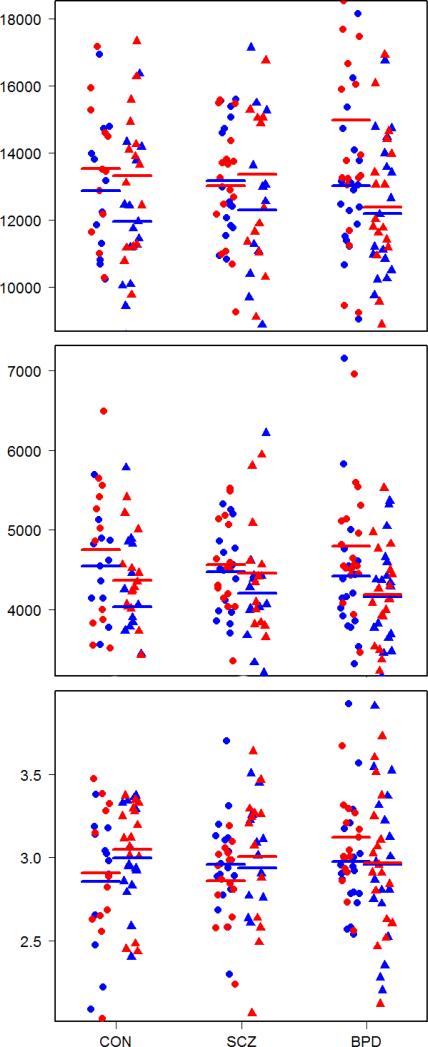
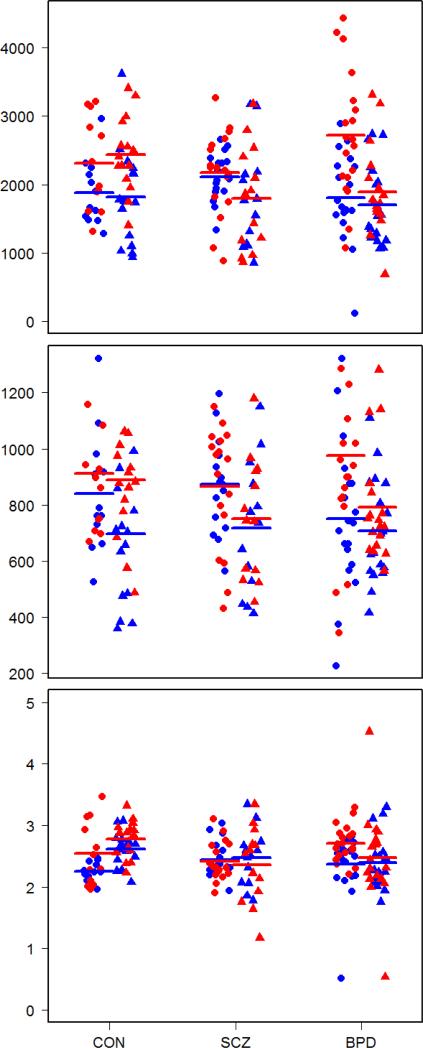
Structural abnormalities in temporal lobe, including the superior temporal gyrus (STG) and planum temporale (PT), have been reported in schizophrenia (SCZ) and bipolar disorder (BPD) patients. While most MRI studies have suggested gray matter volume and surface area reduction in temporal lobe regions, few have explored changes in laminar thickness in PT and STG in SCZ and BPD. ROI subvolumes of the STG from 94 subjects were used to yield gray matter volume, gray/white surface area and laminar thickness for STG and PT cortical regions. Morphometric analysis suggests that there may be gender and laterality effects on the size and shape of the PT in BPD (n=36) and SCZ (n=31) with reduced laterality in PT in subjects with SCZ but not in BPD. In addition, PT surface area was seen to be larger in males, and asymmetry in PT surface area was larger in BPD. Subjects with SCZ had reduced thickness and smaller asymmetry in PT volume. Thus, the PT probably plays a more sensitive role than the STG in structural abnormalities seen in SCZ.
Keywords: Bipolar disorder; Laminar thickness; Laterality; Planum temporale; Schizophrenia; Superior temporal gyrus.
© 2013.
Figures
References
-
- Annett M. A classification of hand preference by association analysis. British journal of psychology. 1970;61(3):303–321. - PubMed
-
- Barta PE, Pearlson GD, Brill LB, 2nd, Royall R, McGilchrist IK, Pulver AE, Powers RE, Casanova MF, Tien AY, Frangou S, Petty RG. Planum temporale asymmetry reversal in schizophrenia: replication and relationship to gray matter abnormalities. The American journal of psychiatry. 1997;154(5):661–667. - PubMed
-
- Beasley CL, Chana G, Honavar M, Landau S, Everall IP, Cotter D. Evidence for altered neuronal organisation within the planum temporale in major psychiatric disorders. Schizophrenia research. 2005;73(1):69–78. - PubMed
Publication types
MeSH terms
Grants and funding
LinkOut - more resources
Full Text Sources
Other Literature Sources
Medical
