


Experimental models of status epilepticus and neuronal injury for evaluation of therapeutic interventions
- PMID: 24013377
- PMCID: PMC3794781
- DOI: 10.3390/ijms140918284
Experimental models of status epilepticus and neuronal injury for evaluation of therapeutic interventions
Abstract
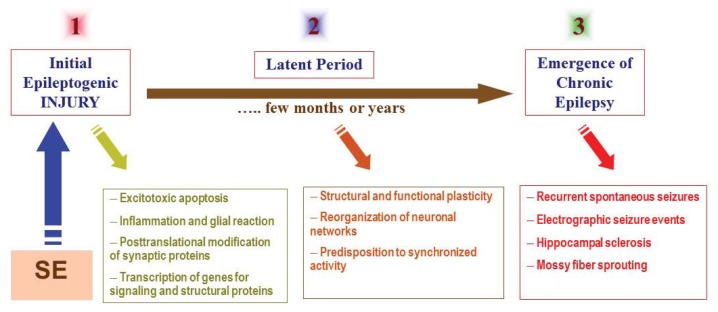
This article describes current experimental models of status epilepticus (SE) and neuronal injury for use in the screening of new therapeutic agents. Epilepsy is a common neurological disorder characterized by recurrent unprovoked seizures. SE is an emergency condition associated with continuous seizures lasting more than 30 min. It causes significant mortality and morbidity. SE can cause devastating damage to the brain leading to cognitive impairment and increased risk of epilepsy. Benzodiazepines are the first-line drugs for the treatment of SE, however, many people exhibit partial or complete resistance due to a breakdown of GABA inhibition. Therefore, new drugs with neuroprotective effects against the SE-induced neuronal injury and degeneration are desirable. Animal models are used to study the pathophysiology of SE and for the discovery of newer anticonvulsants. In SE paradigms, seizures are induced in rodents by chemical agents or by electrical stimulation of brain structures. Electrical stimulation includes perforant path and self-sustaining stimulation models. Pharmacological models include kainic acid, pilocarpine, flurothyl, organophosphates and other convulsants that induce SE in rodents. Neuronal injury occurs within the initial SE episode, and animals exhibit cognitive dysfunction and spontaneous seizures several weeks after this precipitating event. Current SE models have potential applications but have some limitations. In general, the experimental SE model should be analogous to the human seizure state and it should share very similar neuropathological mechanisms. The pilocarpine and diisopropylfluorophosphate models are associated with prolonged, diazepam-insensitive seizures and neurodegeneration and therefore represent paradigms of refractory SE. Novel mechanism-based or clinically relevant models are essential to identify new therapies for SE and neuroprotective interventions.
Figures
References
-
- Pitkanen A., Immonen R.J., Grohn O.H., Kharatishvili I. From traumatic brain injury to posttraumatic epilepsy: What animal models tell us about the process and treatment options. Epilepsia. 2009;50:21–29. - PubMed
-
- Sutula T.P. Mechanisms of epilepsy progression: Current theories and perspectives from neuroplasticity in adulthood and development. Epilepsy Res. 2004;60:161–171. - PubMed
-
- Dudek F.E., Staley K.J. The time course of acquired epilepsy: Implications for therapeutic intervention to suppress epileptogenesis. Neurosci. Lett. 2011;497:240–246. - PubMed
Publication types
MeSH terms
Substances
Grants and funding
LinkOut - more resources
Full Text Sources
Other Literature Sources
