The C terminus of p53 regulates gene expression by multiple mechanisms in a target- and tissue-specific manner in vivo
- PMID: 24013501
- PMCID: PMC3778241
- DOI: 10.1101/gad.224386.113
The C terminus of p53 regulates gene expression by multiple mechanisms in a target- and tissue-specific manner in vivo
Abstract
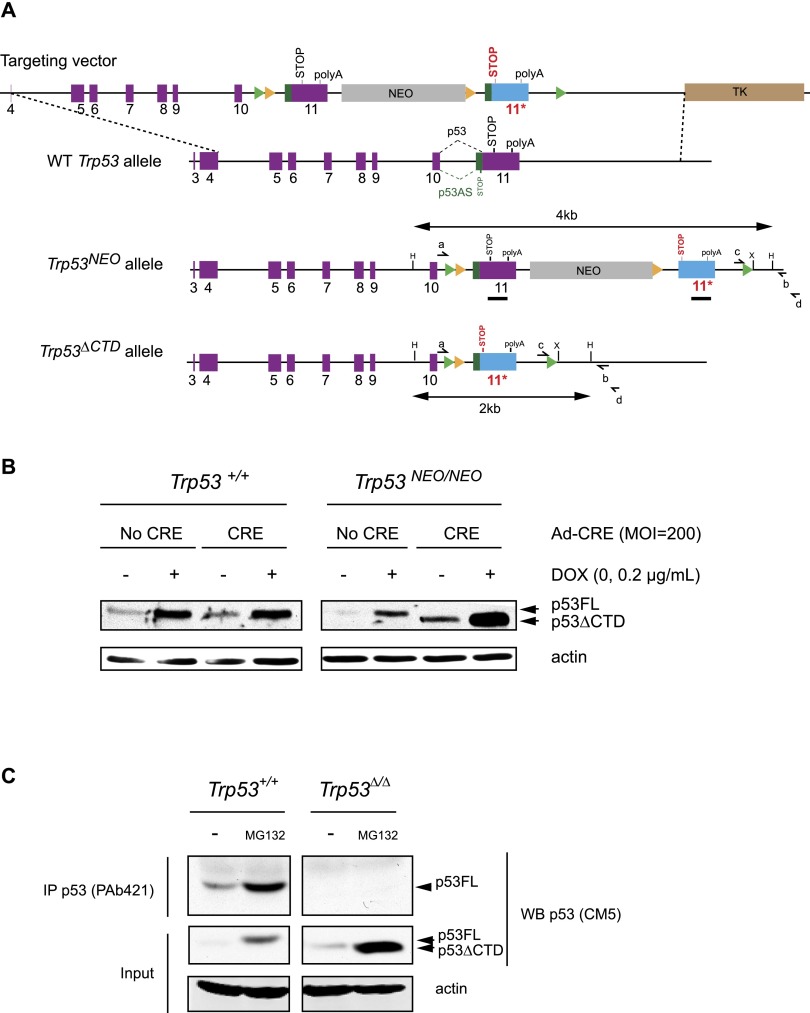
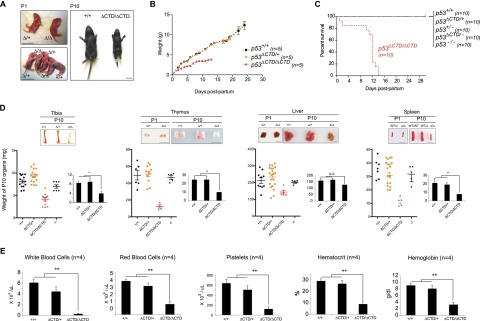
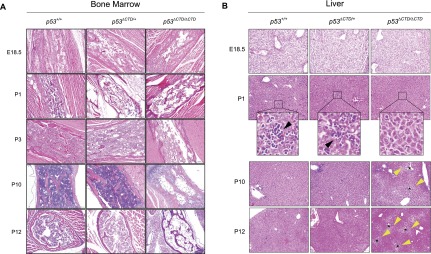
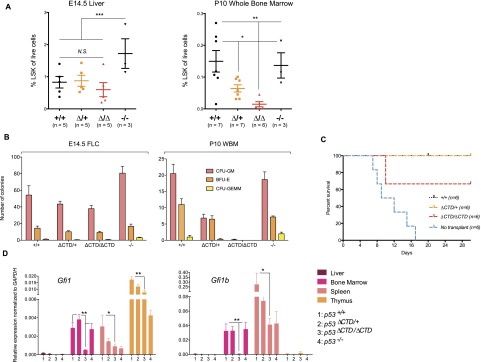
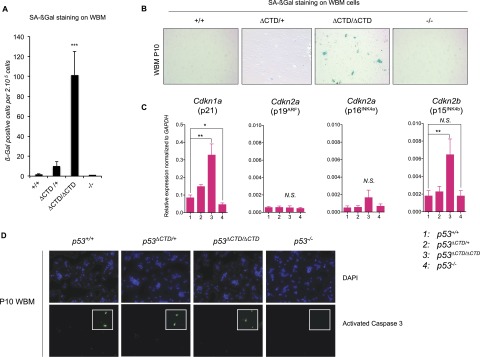
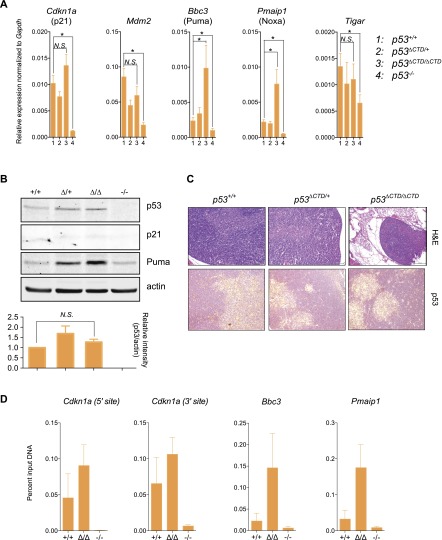
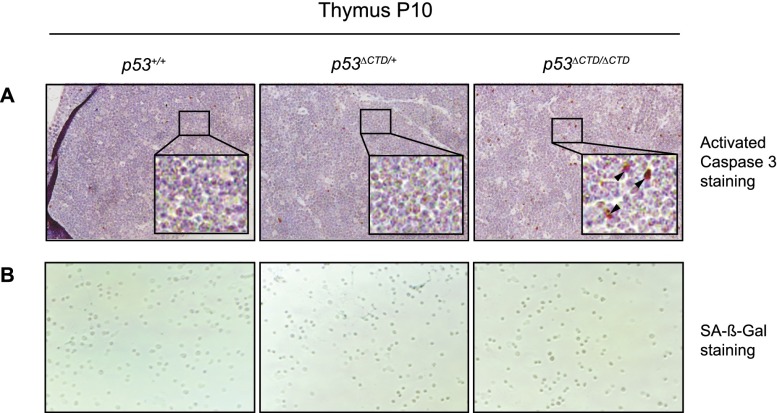
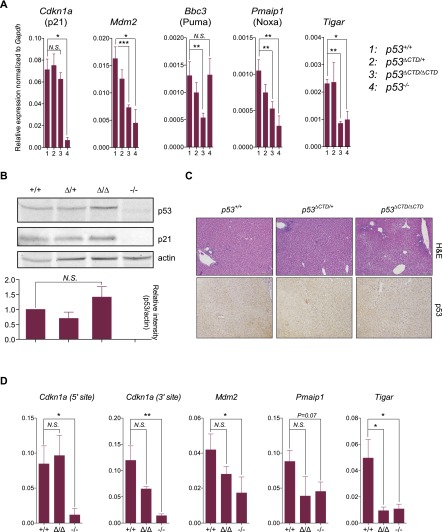
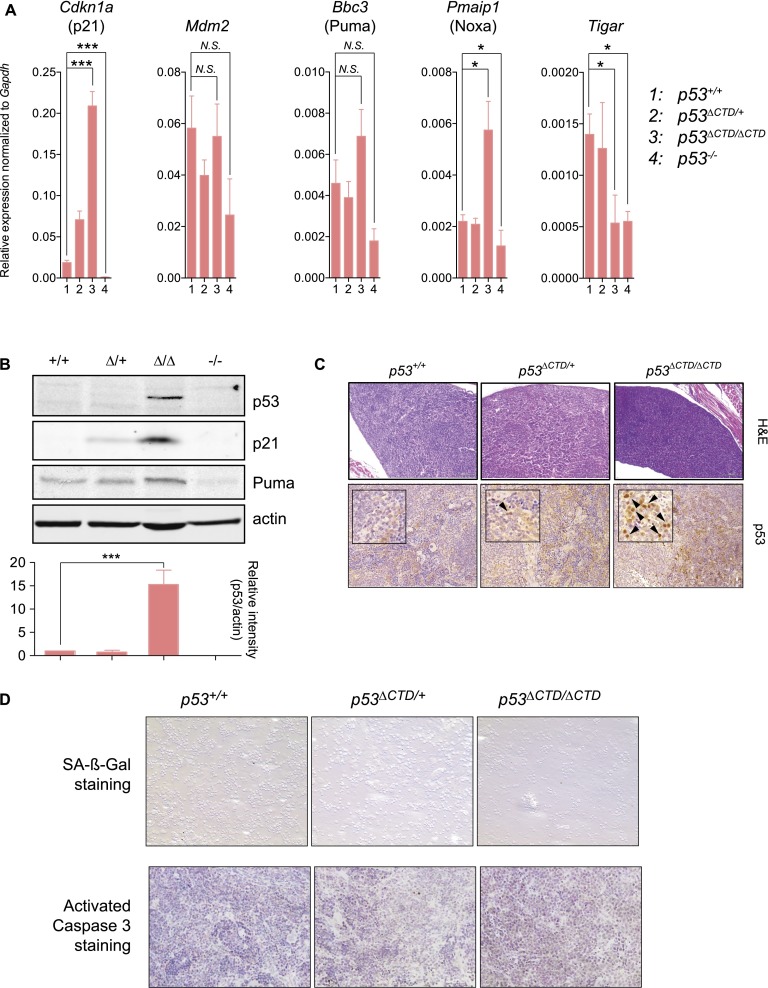
The p53 tumor suppressor is a transcription factor that mediates varied cellular responses. The C terminus of p53 is subjected to multiple and diverse post-translational modifications. An attractive hypothesis is that differing sets of combinatorial modifications therein determine distinct cellular outcomes. To address this in vivo, a Trp53(ΔCTD/ΔCTD) mouse was generated in which the endogenous p53 is targeted and replaced with a truncated mutant lacking the C-terminal 24 amino acids. These Trp53(ΔCTD/ΔCTD) mice die within 2 wk post-partum with hematopoietic failure and impaired cerebellar development. Intriguingly, the C terminus acts via three distinct mechanisms to control p53-dependent gene expression depending on the tissue. First, in the bone marrow and thymus, the C terminus dampens p53 activity. Increased senescence in the Trp53(ΔCTD/ΔCTD) bone marrow is accompanied by up-regulation of Cdkn1 (p21). In the thymus, the C-terminal domain negatively regulates p53-dependent gene expression by inhibiting promoter occupancy. Here, the hyperactive p53(ΔCTD) induces apoptosis via enhanced expression of the proapoptotic Bbc3 (Puma) and Pmaip1 (Noxa). In the liver, a second mechanism prevails, since p53(ΔCTD) has wild-type DNA binding but impaired gene expression. Thus, the C terminus of p53 is needed in liver cells at a step subsequent to DNA binding. Finally, in the spleen, the C terminus controls p53 protein levels, with the overexpressed p53(ΔCTD) showing hyperactivity for gene expression. Thus, the C terminus of p53 regulates gene expression via multiple mechanisms depending on the tissue and target, and this leads to specific phenotypic effects in vivo.
Keywords: C terminus; gene expression; hematopoiesis; mouse; p53; tissue specificity.
Figures
References
-
- Ahn J, Prives C 2001. The C-terminus of p53: The more you learn the less you know. Nat Struct Biol 8: 730–732 - PubMed
-
- Armstrong JF, Kaufman MH, Harrison DJ, Clarke AR 1995. High-frequency developmental abnormalities in p53-deficient mice. Curr Biol 5: 931–936 - PubMed
-
- Barlev NA, Liu L, Chehab NH, Mansfield K, Harris KG, Halazonetis TD, Berger SL 2001. Acetylation of p53 activates transcription through recruitment of coactivators/histone acetyltransferases. Mol Cell 8: 1243–1254 - PubMed
Publication types
MeSH terms
Substances
Grants and funding
LinkOut - more resources
Full Text Sources
Other Literature Sources
Molecular Biology Databases
Research Materials
Miscellaneous