


Interventions for managing relapse of the lower front teeth after orthodontic treatment
- PMID: 24014170
- PMCID: PMC10793711
- DOI: 10.1002/14651858.CD008734.pub2
Interventions for managing relapse of the lower front teeth after orthodontic treatment
Abstract
Background: Orthodontic relapse can be defined as the tendency for teeth to return to their pre-treatment position, and this occurs especially in lower front teeth (lower canines and lower incisors). Retention, to maintain the position of corrected teeth, has become one of the most important phases of orthodontic treatment. However, 10 years after the completion of orthodontic treatment, only 30% to 50% of orthodontic patients effectively retain the satisfactory alignment initially obtained. After 20 years, satisfactory alignment reduces to 10%. When relapse occurs, simple effective strategies are required to effectively manage the problem. The periodontal, physiological or psychological conditions may be different from those before orthodontic treatment, so re-treatment methods may also need to be different.
Objectives: To assess the effects of interventions used to manage relapse of the lower front teeth after first fixed orthodontic treatment.
Search methods: The following electronic databases were searched: the Cochrane Oral Health Group Trials Register (to 9 November 2012), the Cochrane Central Register of Controlled Trials (CENTRAL) (The Cochrane Library 2012, Issue 10), MEDLINE via OVID (1950 to 9 November 2012), EMBASE via OVID (1980 to 9 November 2012). There were no restrictions regarding language or date of publication. A thorough handsearch was done in relation to the following journals: American Journal of Orthodontics and Dentofacial Orthopedics (1970 to 9 November 2012), Angle Orthodontist (1978 to 9 November 2012), European Journal of Orthodontics (1979 to 9 November 2012), Journal of Orthodontics (1978 to 9 November 2012), Chinese Journal of Stomatology (1953 to 9 November 2012), West China Journal of Stomatology (1983 to 9 November 2012), Chinese Journal of Dental Materials and Devices (1992 to 9 November 2012) and Chinese Journal of Orthodontics (1994 to 9 November 2012).
Selection criteria: We would have included randomised controlled trials (RCTs) which compared any of the following: fixed options (including labial braces, lingual braces and fixed lingual wire), removable options (including Hawley's retainer with active components such as Hawley's retainer with spring elastomeric module, Bloore removable aligner and any other modifications on the Hawley's retainer to correct the lower front teeth, and invisible removable aligners such as Invisalign and Clearstep) and no active treatment for the management of relapsed lower front teeth after orthodontic treatment. We excluded RCTs of participants with craniofacial deformities/syndromes or serious skeletal deformities who received prior surgical/surgical orthodontic treatment.
Data collection and analysis: Two review authors, independently and in duplicate, assessed the results of the searches to identify studies for inclusion. The Cochrane Collaboration statistical guidelines were to be followed for data synthesis.
Main results: We did not identify any RCTs which met the inclusion criteria for this review.
Authors' conclusions: This review has revealed that there was no evidence from RCTs to show that one intervention was superior to another to manage the relapse of the alignment of lower front teeth using any method or index, aesthetic assessment by participants and practitioners, treatment time, patient's discomfort, quality of life, cost-benefit considerations, stability of the correction, and side effects including pain, gingivitis, enamel decalcification and root resorption. There is an urgent need for RCTs in this area to identify the most effective and safe method for managing the relapse of alignment of the lower front teeth.
Conflict of interest statement
None known.
Figures
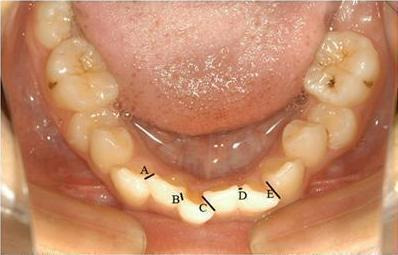
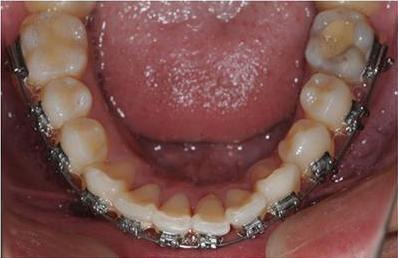
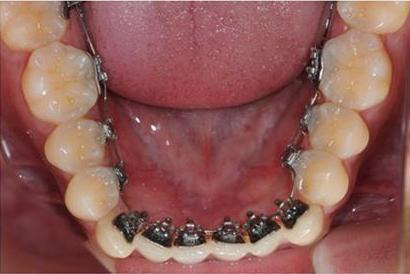
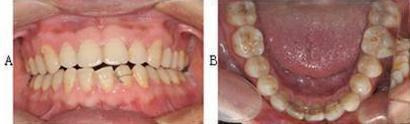
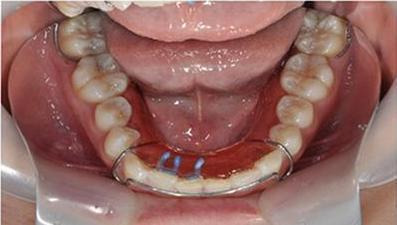
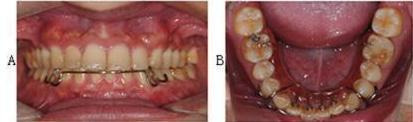
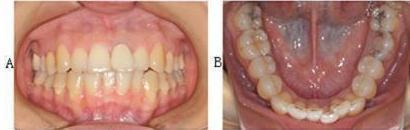
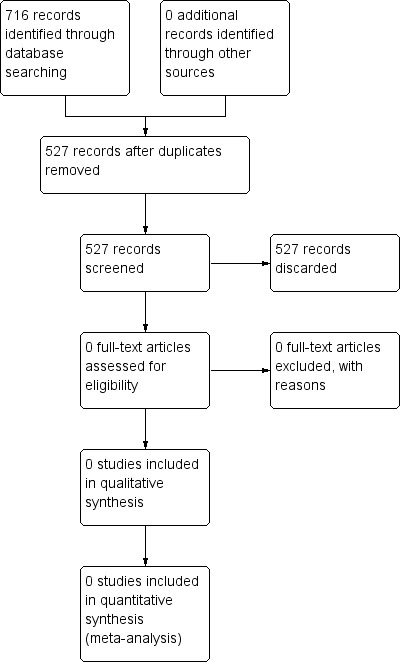
Comment in
-
No randomised trials of interventions to manage relapse of lower incisors after orthodontic treatment.Evid Based Dent. 2013 Dec;14(4):116-7. doi: 10.1038/sj.ebd.6400971. Evid Based Dent. 2013. PMID: 24357825
References
Additional references
Al‐Balkhi 2004
-
- Al‐Balkhi KM. The effect of different lower third molar conditions on the re‐crowding of lower anterior teeth in the absence of tight interproximal contacts one‐year post orthodontic treatment: a pilot study. Journal of Contemporary Dental Practice 2004;5(3):66‐73. - PubMed
Artun 1996
-
- Artun J, Garol JD, Little RM. Long‐term stability of mandibular incisors following successful treatment of Class II, Division 1, malocclusions. Angle Orthodontist 1996;66(3):229‐38. - PubMed
Bloore 1998
-
- Bloore JA, Bloore GE. Correction of adult incisor crowding with a new removable appliance. Journal of Clinical Orthodontics 1998;32(2):111‐6. - PubMed
Boese 1980
-
- Boese LR. Fiberotomy and reproximation without lower retention, nine years in retrospect. Angle Orthodontist 1980;50(2):88‐97. - PubMed
Caniklioglu 2005
-
- Caniklioglu C, Oztürk Y. Patient discomfort: a comparison between lingual and labial fixed appliances. Angle Orthodontist 2005;75(1):86‐91. - PubMed
Canut 1999
-
- Canut JA, Arias S. A long‐term evaluation of treated Class II division 2 malocclusions: a retrospective study model analysis. European Journal of Orthodontics 1999;21(4):377‐86. - PubMed
Carano 2001
-
- Carano A, Ciocia C, Farronato G. Use of lingual brackets for deep‐bite correction. Journal of Clinical Orthodontics 2001;35(7):449‐50. - PubMed
Chaushu 2008
-
- Chaushu S, Becker A, Chaushu G. Lingual orthodontic treatment and absolute anchorage to correct an impacted maxillary canine in an adult. American Journal of Othodontics and Dentofacial Orthopedics 2008;134(6):811‐9. - PubMed
Cureton 1996
-
- Cureton SL. Correcting Malaligned Mandibular Incisors with Removable Retainers. Journal of Clinical Orthodontics 1996;1996(7):390‐5. - PubMed
Egger 1997
Fillion 1997
-
- Fillion D. The correction of open‐bite in adults using lingual orthodontics. Orthodontie Francaise 1997;68(1):307‐10. - PubMed
Gorman 1991
-
- Gorman JC, Smith RJ. Comparison of treatment effects with labial and lingual fixed appliances. American Journal of Orthodontics and Dentofacial Orthopedics 1991;99(3):202‐9. - PubMed
Grauer 2011
-
- Grauer D, Proffit WR. Accuracy in tooth positioning with a fully customized lingual orthodontic appliance. American Journal of Orthodontics and Dentofacial Orthopedics 2011;140(3):433‐43. - PubMed
Hansen 1997
-
- Hansen K, Koutsonas TG, Pancherz H. Long‐term effects of Herbst treatment on the mandibular incisor segment: a cephalometric and biometric investigation. American Journal of Orthodontics and Dentofacial Orthopedics 1997;112(1):92‐103. - PubMed
Higgins 2011
-
- Higgins JPT, Green S (editors). Cochrane Handbook for Systematic Reviews of Interventions version 5.1.0 (updated March 2011). The Cochrane Collaboration, 2011. Available from www.cochrane‐handbook.org.
Hohoff 2003
-
- Hohoff A, Fillion D, Stamm T, Goder G, Sauerland C, Ehmer U. Oral comfort, function and hygiene in patients with lingual brackets. A prospective longitudinal study. Journal of Orofacial Orthopedics 2003;64(5):359‐71. - PubMed
Invisalign 2006
-
- Introducing Invisalign. The invisible way to straighten your teeth without braces. Available from www.invisalign.co.uk/.
Joffe 2003
-
- Joffe L. Invisalign: early experiences. Journal of Orthodontics 2003;30(4):348‐52. - PubMed
Joondeph 1994
-
- Joondeph DR, Reidel RA. Retention and relapse. In: Vanarsdall RL Jr editor(s). Orthodontics: Current Principles and Techniques. St Louis: Mosby‐Year Book, 1994:908‐50.
Kahl‐Nieke 1995
-
- Kahl‐Nieke B, Fischbach H, Schwarze CW. Post‐retention crowding and incisor irregularity: a long‐term follow‐up evaluation of stability and relapse. British Journal of Orthodontics 1995;22(3):249‐57. - PubMed
Kawakami 2004
-
- Kawakami M, Miyawaki S, Noguchi H, Kirita T. Screw‐type implants used as anchorage for lingual orthodontic mechanics: a case of bimaxillary protrusion with second premolar extraction. Angle Orthodontist 2004;74(5):715‐9. - PubMed
Kurz 1998
-
- Kurz C, Romano R. Lingual orthodontics: historical perspective. In: Romano R editor(s). Lingual Orthodontics. Hamilton (ON): BC Decker, 1998:3‐20.
Liou 2001
-
- Liou EJ, Chen LI, Huang CS. Nickel‐titanium mandibular bonded lingual 3‐3 retainer: for permanent retention and solving relapse of mandibular anterior crowding. American Journal of Orthodontics and Dentofacial Orthopedics 2001;119(4):443‐9. - PubMed
Little 1975
-
- Little RM. The irregularity index: a quantitative score of mandibular anterior alignment. American Journal of Orthodontics and Dentofacial Orthopedics 1975;68(5):554‐63. - PubMed
Little 1981
-
- Little RM, Wallen TR, Riedel RA. Stability and relapse of mandibular anterior alignment ‐ first premolar extraction cases treated by traditional edgewise orthodontics. American Journal of Orthodontics 1981;80(4):349‐65. - PubMed
Little 1988
-
- Little RM, Riedel RA, Artun J. An evaluation of changes in mandibular anterior alignment from 10 to 20 years postretention. American Journal of Orthodontics and Dentofacial Orthopedics 1988;93(3):423‐8. - PubMed
Moss 1980a
-
- Moss JP. The soft tissue environment of teeth and jaws. An experimental and clinical study: part 1. British Journal of Orthodontics 1980;7(3):127‐37. - PubMed
Moss 1980b
-
- Moss JP. The soft tissue environment of teeth and jaws. Experimental malocclusion: parts 2 and 3. British Journal of Orthodontics 1980;7(4):205‐16. - PubMed
Pauls 2008
-
- Pauls HJ. Lingual orthodontics with orthognathic surgery in a severe class II, division 2 case. Journal of Orofacial Orthopedics 2008;69(2):449‐50. - PubMed
Pauls 2010
-
- Pauls AH. Therapeutic accuracy of individualized brackets in lingual orthodontics. Journal of Orofacial Orthopedics 2010;71(5):348‐61. - PubMed
Perera 1987
-
- Perera PS. Rotational growth and incisor compensation. Angle Orthodontist 1987;57(1):39‐49. - PubMed
Poon 1998
-
- Poon KC, Taverne AA. Lingual orthodontics: a review of its history. Australian Orthodontic Journal 1998;15(2):101‐4,9. - PubMed
Richardson 1994
-
- Richardson ME. Late lower arch crowding: the role of differential horizontal growth. British Journal of Orthodontics 1994;21(4):379‐85. - PubMed
Rossouw 1993
-
- Rossouw PE, Preston CB, Lombard CJ, Truter JW. A longitudinal evaluation of the anterior border of the dentition. American Journal of Orthodontics and Dentofacial Orthopedics 1993;104(2):146‐52. - PubMed
Rygh 1988
-
- Rygh P, Moyer RE. Force systems and tissue responses to forces in orthodontics and facial orthopedics. In: Moyers RE editor(s). Handbook of Orthodontics. 4th Edition. Chicago: Year Book Medical Publishers, 1988:306‐11.
Rücker 2008
-
- Rücker G, Schwarzer G, Carpenter J. Arcsine test for publication bias in meta‐analyses with binary outcomes. Statistics in Medicine 2008;27(5):746‐63. - PubMed
Shah 2003
-
- Shah AA. Postretention changes in mandibular crowding: a review of the literature. American Journal of Orthodontics and Dentofacial Orthopedics 2003;124(4):298‐308. - PubMed
Sharpe 1987
-
- Sharpe W, Reed B, Subtelny JD, Polson A. Orthodontic relapse, apical root resorption, and crestal alveolar bone levels. American Journal of Orthodontics and Dentofacial Orthopedics 1987;91(3):252‐8. - PubMed
Sinclair 1986
-
- Sinclair PM, Cannito MF, Goates LJ, Solomos LF, Alexander CM. Patient responses to lingual appliances. Journal of Clinical Orthodontics 1986;20(6):396‐404. - PubMed
Southard 1992
-
- Southard TE, Southard KA, Tolley EA. Periodontal force: a potential cause of relapse. American Journal of Orthodontics and Dentofacial Orthopedics 1992;101(3):221‐7. - PubMed
van der Veen 2010
-
- Veen MH, Attin R, Schwestka‐Polly R, Wiechmann D. Caries outcomes after orthodontic treatment with fixed appliances: do lingual brackets make a difference?. European Journal of Oral Sciences 2010;118(3):298‐303. - PubMed
Vlaskalic 2001
-
- Vlaskalic V, Boyd R. Orthodontic treatment of a mildly crowded malocclusion using the Invisalign System. Australian Orthodontic Journal 2001;17(1):41‐6. - PubMed
Wu 2011
-
- Wu A, McGrath C, Wong RW, Wiechmann D, Rabie AB. Comparison of oral impacts experienced by patients treated with labial or customized lingual fixed orthodontic appliances. American Journal of Orthodontics and Dentofacial Orthopedics 2011;139(6):784‐90. - PubMed
Publication types
MeSH terms
LinkOut - more resources
Full Text Sources
Other Literature Sources
Medical
Miscellaneous
