Circadian measurements of sirtuin biology
- PMID: 24014414
- PMCID: PMC4090050
- DOI: 10.1007/978-1-62703-637-5_19
Circadian measurements of sirtuin biology
Abstract
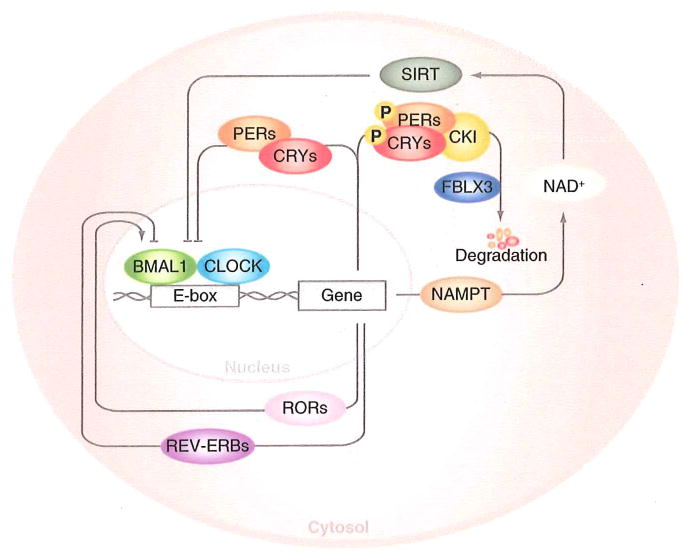
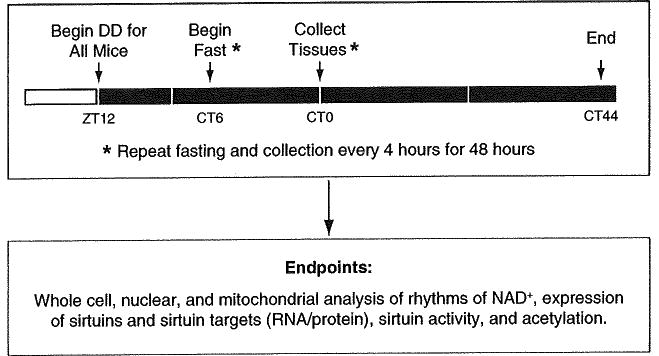
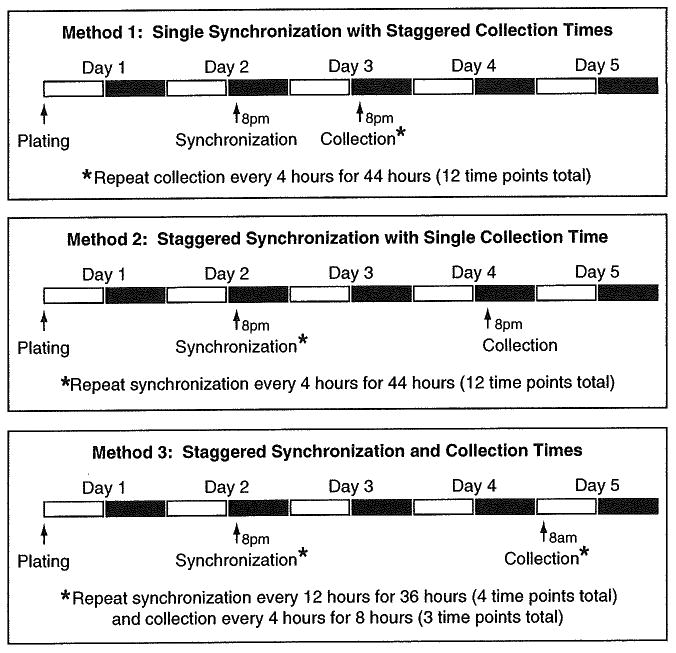
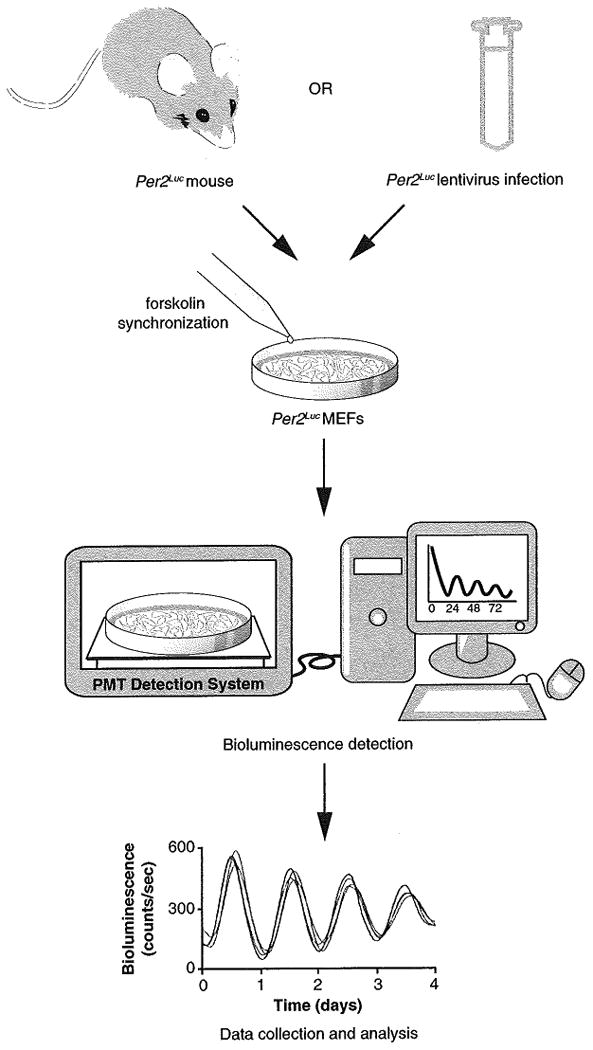
Many of our behavioral and physiological processes display daily oscillations that are under the control of the circadian clock. The core molecular clock network is present in both the brain and peripheral tissues and is composed of a complex series of interlocking transcriptional/translational feedback loops that oscillate with a periodicity of ~24 h. Recent evidence has implicated NAD(+) biosynthesis and the sirtuin family of NAD(+)-dependent protein deacetylases as part of a novel feedback loop within the core clock network, findings which underscore the importance of taking circadian timing into consideration when designing and interpreting metabolic studies, particularly in regard to sirtuin biology. Thus, this chapter introduces both in vivo and in vitro circadian methods to analyze various sirtuin-related endpoints across the light-dark cycle and discusses the transcriptional, biochemical, and physiological outputs of the clock.
Figures
References
-
- Maron BJ, Kogan J, Proschan MA, Hecht GM, Roberts WC. Circadian variability in the occurrence of sudden cardiac death in patients with hypertrophic cardiomyopathy. J Am Coll Cardiol. 1994;23(6):1405–1409. pii: 0735-1097 (94)90384-0. - PubMed
-
- Di Lorenzo L, De Pergola G, Zocchetti C, L'Abbate N, Basso A, Pannacciulli N, Cignarelli M, Giorgino R, Soleo L. Effect of shift work on body mass index: results of a study performed in 319 glucose-tolerant men working in a Southern Italian industry. Int J Obes Relat Metab Disord. 2003;27(11):1353–1358. doi: 10.1038/sj.ijo.0802419. pii: 0802419. - DOI - PubMed
MeSH terms
Substances
Grants and funding
LinkOut - more resources
Full Text Sources
Other Literature Sources