


Sympathetic cardiac hyperinnervation and atrial autonomic imbalance in diet-induced obesity promote cardiac arrhythmias
- PMID: 24014675
- PMCID: PMC3840265
- DOI: 10.1152/ajpheart.00196.2013
Sympathetic cardiac hyperinnervation and atrial autonomic imbalance in diet-induced obesity promote cardiac arrhythmias
Abstract
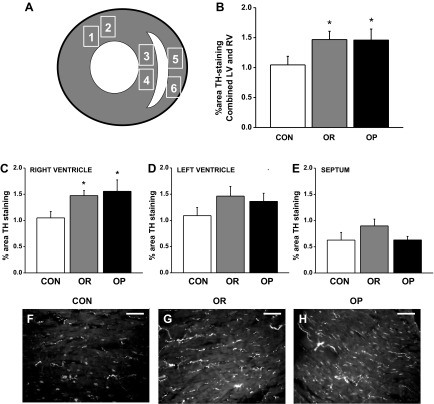
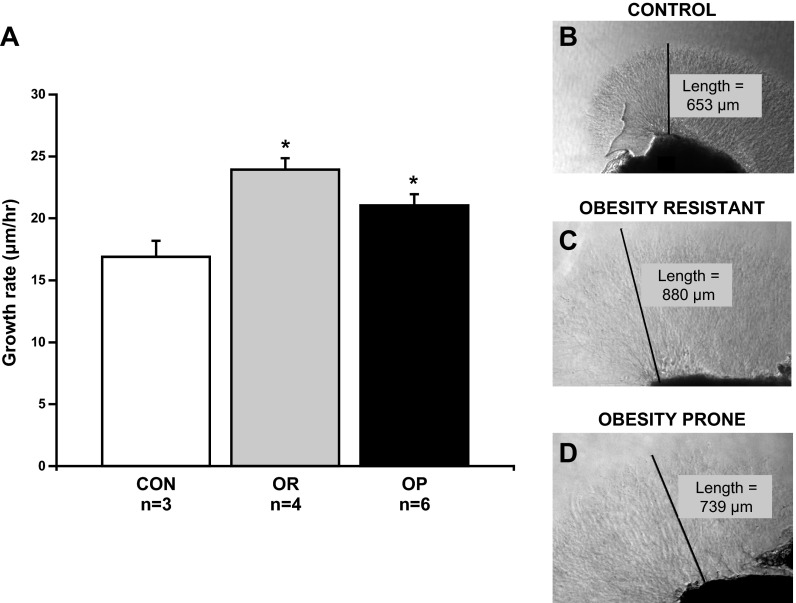
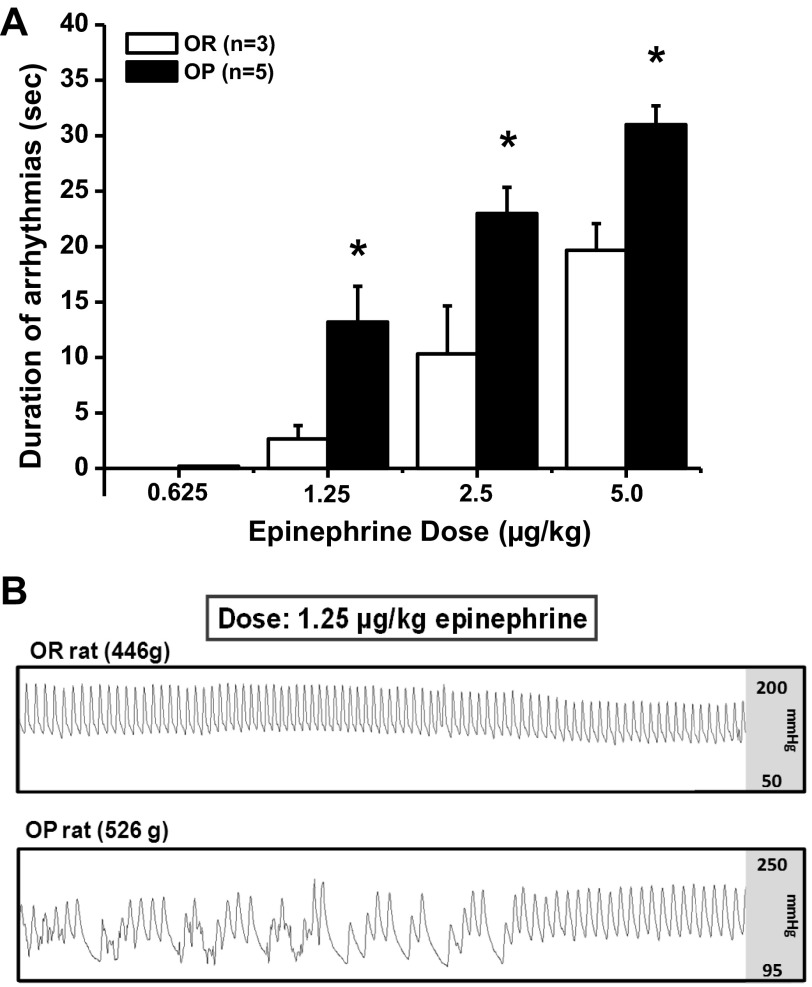
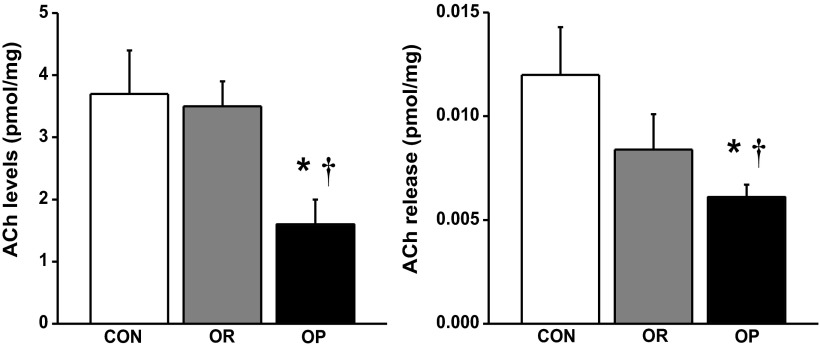
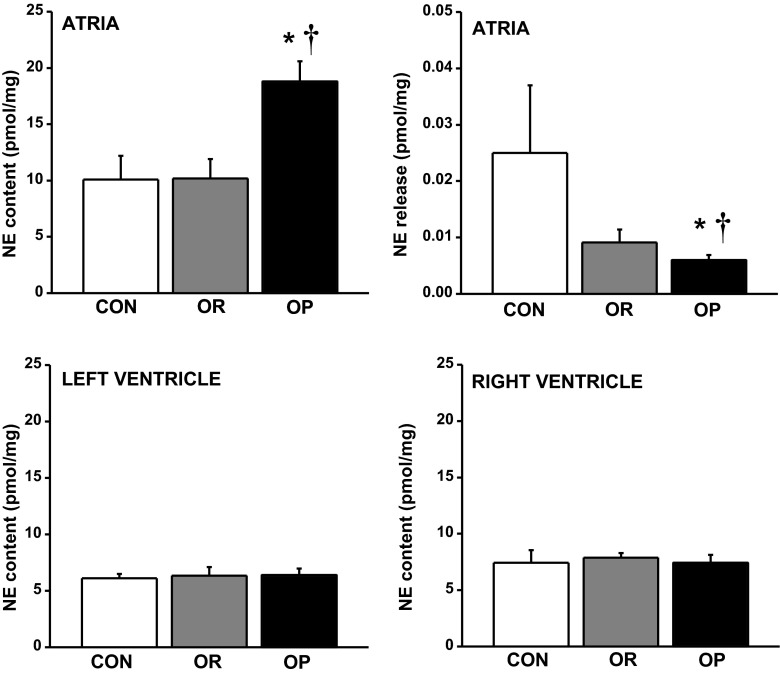
Obesity increases the risk of arrhythmias and sudden cardiac death, but the mechanisms are unknown. This study tested the hypothesis that obesity-induced cardiac sympathetic outgrowth and hyperinnervation promotes the development of arrhythmic events. Male Sprague-Dawley rats (250-275 g), fed a high-fat diet (33% kcal/fat), diverged into obesity-resistant (OR) and obesity-prone (OP) groups and were compared with rats fed normal chow (13% kcal/fat; CON). In vitro experiments showed that both OR and OP rats exhibited hyperinnervation of the heart and high sympathetic outgrowth compared with CON rats, even though OR rats are not obese. Despite the hyperinnervation and outgrowth, we showed that, in vivo, OR rats were less susceptible to arrhythmic events after an intravenous epinephrine challenge compared with OP rats. On examining total and stimulus-evoked neurotransmitter levels in an ex vivo system, we demonstrate that atrial acetylcholine content and release were attenuated in OP compared with OR and CON groups. OP rats also expressed elevated atrial norepinephrine content, while norepinephrine release was suppressed. These findings suggest that the consumption of a high-fat diet, even in the absence of overt obesity, stimulates sympathetic outgrowth and hyperinnervation of the heart. However, normalized cardiac parasympathetic nervous system control may protect the heart from arrhythmic events.
Keywords: arrhythmia; autonomic imbalance; neurite outgrowth; obesity.
Figures
References
-
- Arone LJ, Mackintosh R, Rosenbaum M, Leibel RL, Hirsch J. Autonomic nervous system activity in weight gain and weight loss. Am J Physiol Regul Integr Comp Physiol 269: R222–R225, 1995 - PubMed
-
- Aubin MC, Cardin S, Comtois P, Clement R, Gosselin H, Gillis MA, Le Quang K, Nattel S, Perrault LP, Calderone A. A high-fat diet increases risk of ventricular arrhythmia in female rats: enhanced arrhythmic risk in the absence of obesity or hyperlipidemia. J Appl Physiol 108: 933–940, 2010 - PubMed
-
- Beske SD, Taylor JA. Obesity and autonomic function. Clin Auton Res 11: 61–62, 2001 - PubMed
-
- Burger CD, Foreman AJ, Miller DP, Safford RE, McGoon MD, Badesch DB. Comparison of body habitus in patients with pulmonary arterial hypertension enrolled in the Registry to Evaluate Early and Long-term PAH Disease Management with normative values from the National Health and Nutrition Examination Survey. Mayo Clin Proc 86: 105–112, 2011 - PMC - PubMed
Publication types
MeSH terms
Substances
Grants and funding
LinkOut - more resources
Full Text Sources
Other Literature Sources
Medical
Miscellaneous
