Maturogenesis of non-vital immature permanent teeth
- PMID: 24015025
- PMCID: PMC3757898
- DOI: 10.4103/0976-237X.114891
Maturogenesis of non-vital immature permanent teeth
Abstract
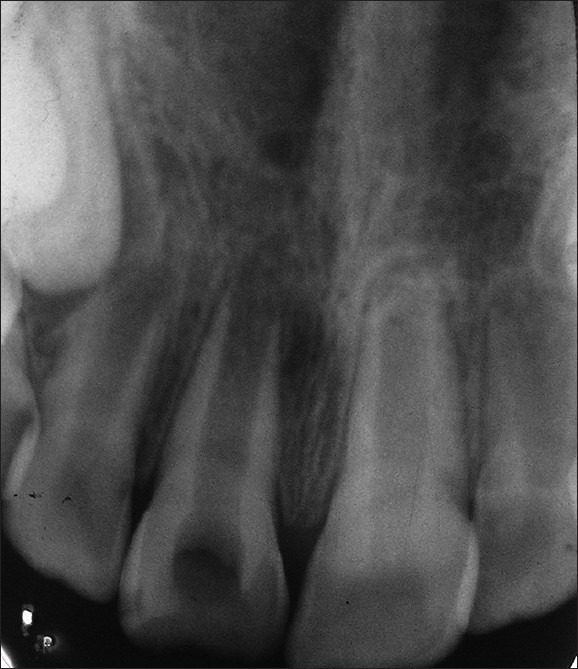
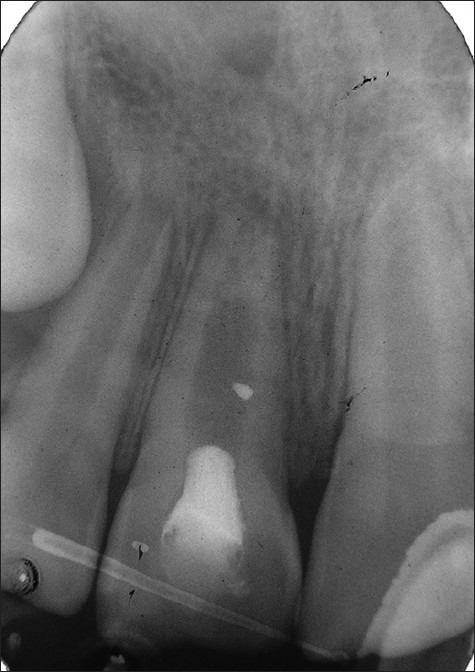
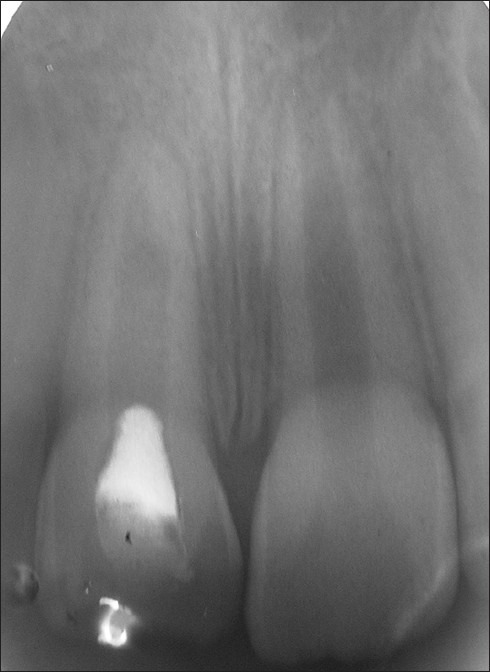
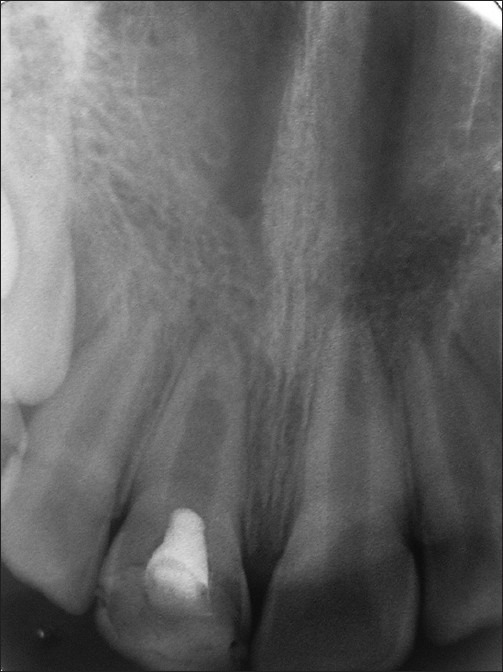
Pulpal necrosis in young permanent teeth often results in teeth with open apex, thin root walls and poor crown root ratio. Out of the available treatment options maturogenesis has been the most conservative option that exploits full potential of pulp for dentin deposition. Maturogenesis involves disinfecting the root canal system followed by stimulation of blood clot from the periapical tissue, which provides a matrix into which the cell could grow and sealing the coronal excess. In the present case report, tri antibacterial paste (3 Mix) was used as an intracanal medicament that proved successful in stimulating vital pulp cells of the periapical region for maturogenesis. Five months radiograph follow-up showed thickening of lateral dentinal walls, which progress until 15 months resulting in apical closure, thickening of lateral dentinal walls and increase root length.
Keywords: Apexification; apical papilla; maturogenesis; non-vital immature; permanent teeth; tri antibacterial paste.
Conflict of interest statement
Figures
References
-
- Webber RT. Apexogenesis versus apexification. Dent Clin North Am. 1984;28:669–97. - PubMed
-
- Andreasen JO, Farik B, Munksgaard EC. Long-term calcium hydroxide as a root canal dressing may increase risk of root fracture. Dent Traumatol. 2002;18:134–7. - PubMed
-
- Chueh LH, Ho YC, Kuo TC, Lai WH, Chen YH, Chiang CP. Regenerative endodontic treatment for necrotic immature permanent teeth. J Endod. 2009;35:160–4. - PubMed
-
- Jung IY, Lee SJ, Hargreaves KM. Biologically based treatment of immature permanent teeth with pulpal necrosis: A case series. J Endod. 2008;34:876–87. - PubMed
Publication types
LinkOut - more resources
Full Text Sources
Other Literature Sources
Miscellaneous