


A CNGB1 frameshift mutation in Papillon and Phalène dogs with progressive retinal atrophy
- PMID: 24015210
- PMCID: PMC3756049
- DOI: 10.1371/journal.pone.0072122
A CNGB1 frameshift mutation in Papillon and Phalène dogs with progressive retinal atrophy
Abstract
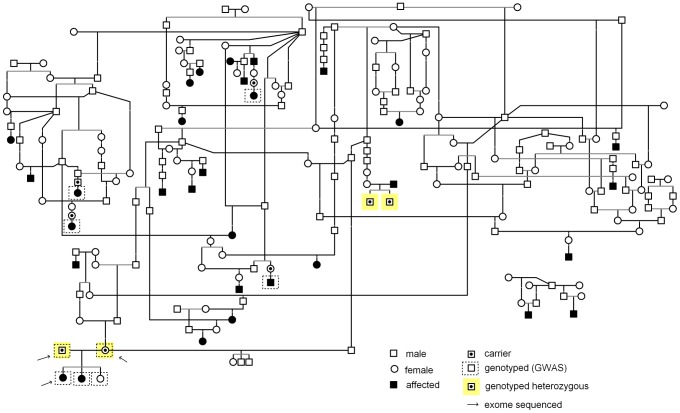
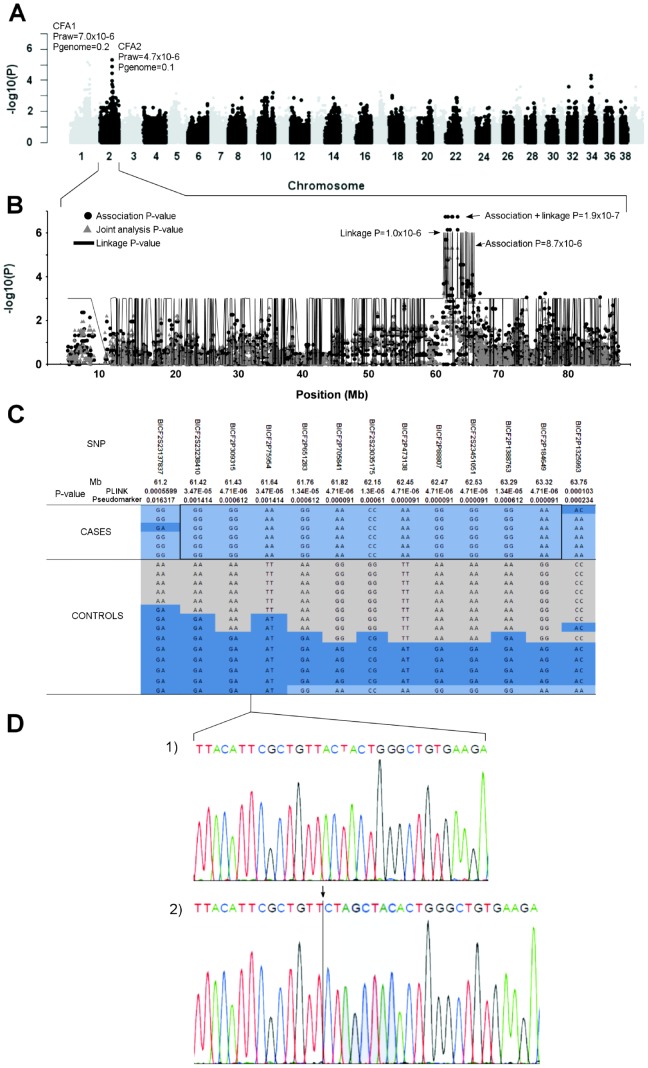
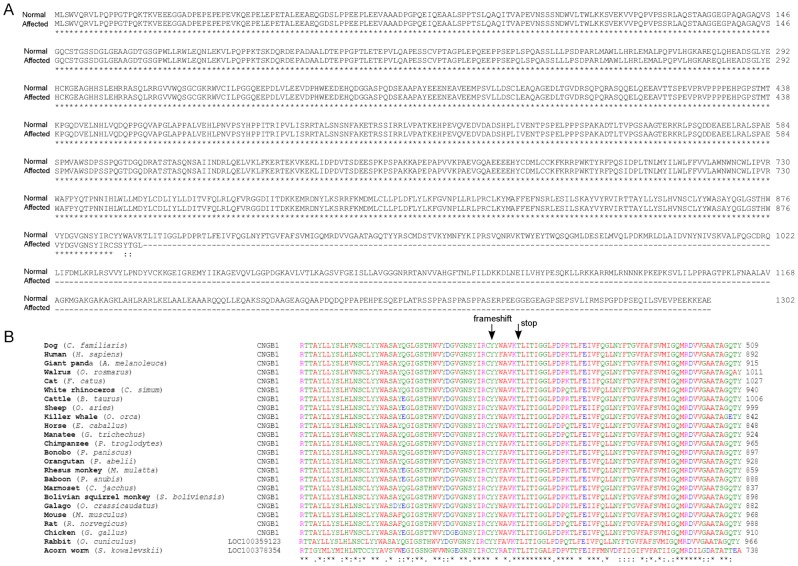
Progressive retinal degenerations are the most common causes of complete blindness both in human and in dogs. Canine progressive retinal atrophy (PRA) or degeneration resembles human retinitis pigmentosa (RP) and is characterized by a progressive loss of rod photoreceptor cells followed by a loss of cone function. The primary clinical signs are detected as vision impairment in a dim light. Although several genes have been associated with PRAs, there are still PRAs of unknown genetic cause in many breeds, including Papillons and Phalènes. We have performed a genome wide association and linkage studies in cohort of 6 affected Papillons and Phalènes and 14 healthy control dogs to map a novel PRA locus on canine chromosome 2, with a 1.9 Mb shared homozygous region in the affected dogs. Parallel exome sequencing of a trio identified an indel mutation, including a 1-bp deletion, followed by a 6-bp insertion in the CNGB1 gene. This mutation causes a frameshift and premature stop codon leading to probable nonsense mediated decay (NMD) of the CNGB1 mRNA. The mutation segregated with the disease and was confirmed in a larger cohort of 145 Papillons and Phalènes (PFisher = 1.4×10(-8)) with a carrier frequency of 17.2 %. This breed specific mutation was not present in 334 healthy dogs from 10 other breeds or 121 PRA affected dogs from 44 other breeds. CNGB1 is important for the photoreceptor cell function its defects have been previously associated with retinal degeneration in both human and mouse. Our study indicates that a frameshift mutation in CNGB1 is a cause of PRA in Papillons and Phalènes and establishes the breed as a large functional animal model for further characterization of retinal CNGB1 biology and possible retinal gene therapy trials. This study enables also the development of a genetic test for breeding purposes.
Conflict of interest statement
Figures
References
-
- Petersen-Jones SM (1998) Animal models of human retinal dystrophies. Eye 12: 566–570. - PubMed
-
- Downs L, Bell J, Freeman J, Hartley C, Hayward L, et al. (2012) Late-onset progressive retinal atrophy in the Gordon and Irish Setter breeds is associated with a frameshift mutation in C2orf71. Anim Genet 44: 169–77. - PubMed
Publication types
MeSH terms
Substances
LinkOut - more resources
Full Text Sources
Other Literature Sources
Medical
Research Materials
Miscellaneous
