


Optimization of isolated perfused/ventilated mouse lung to study hypoxic pulmonary vasoconstriction
- PMID: 24015341
- PMCID: PMC3757835
- DOI: 10.4103/2045-8932.114776
Optimization of isolated perfused/ventilated mouse lung to study hypoxic pulmonary vasoconstriction
Abstract
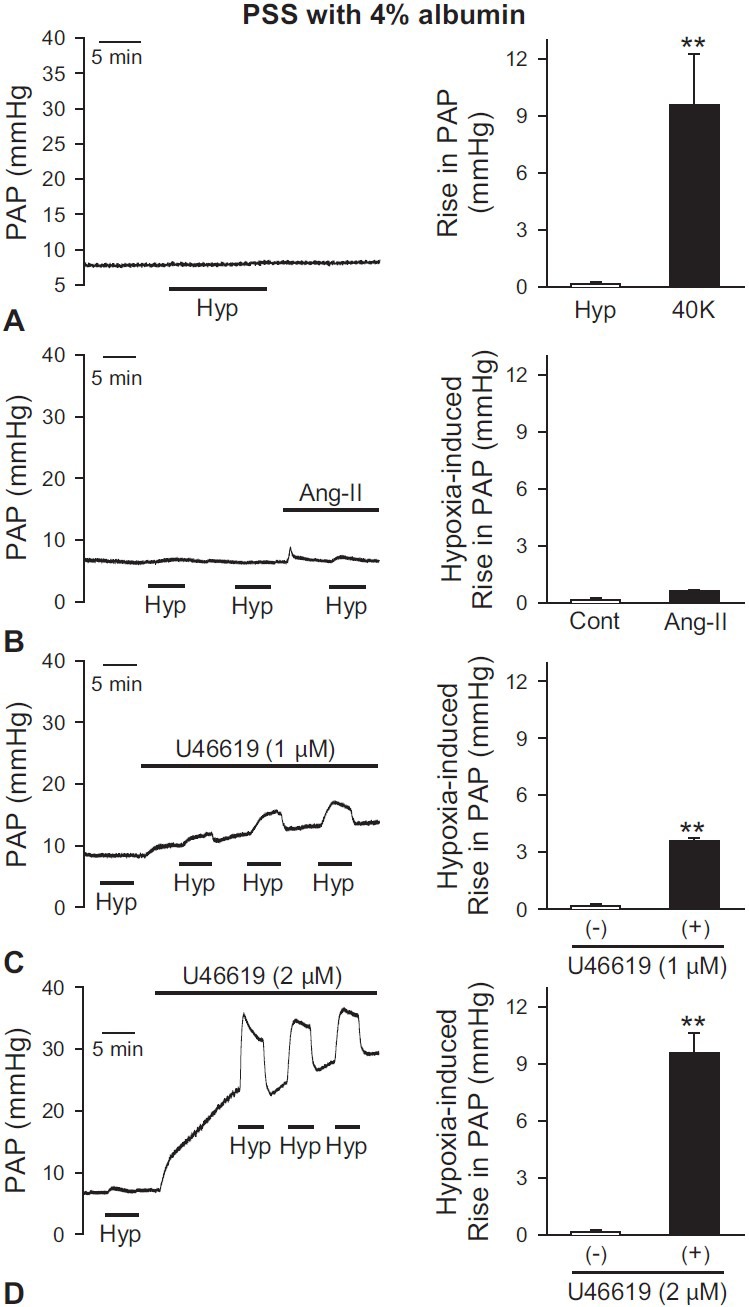
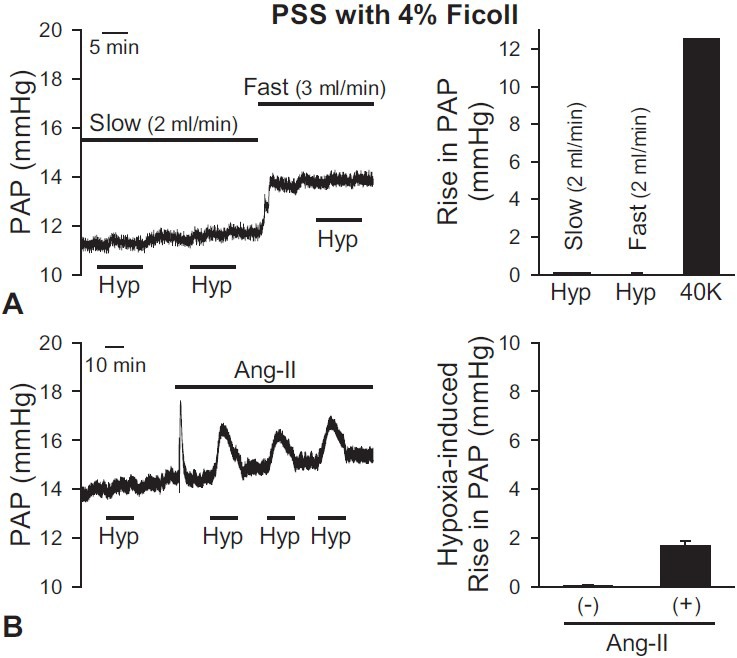
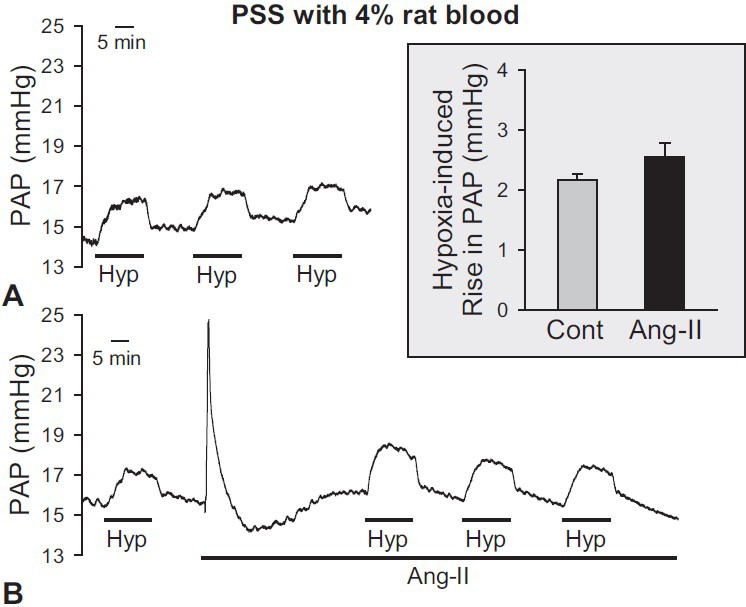
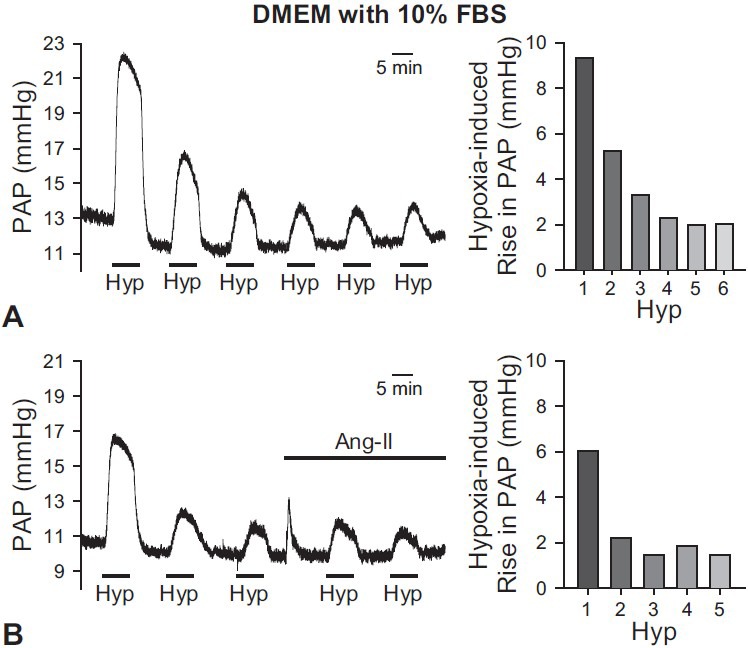
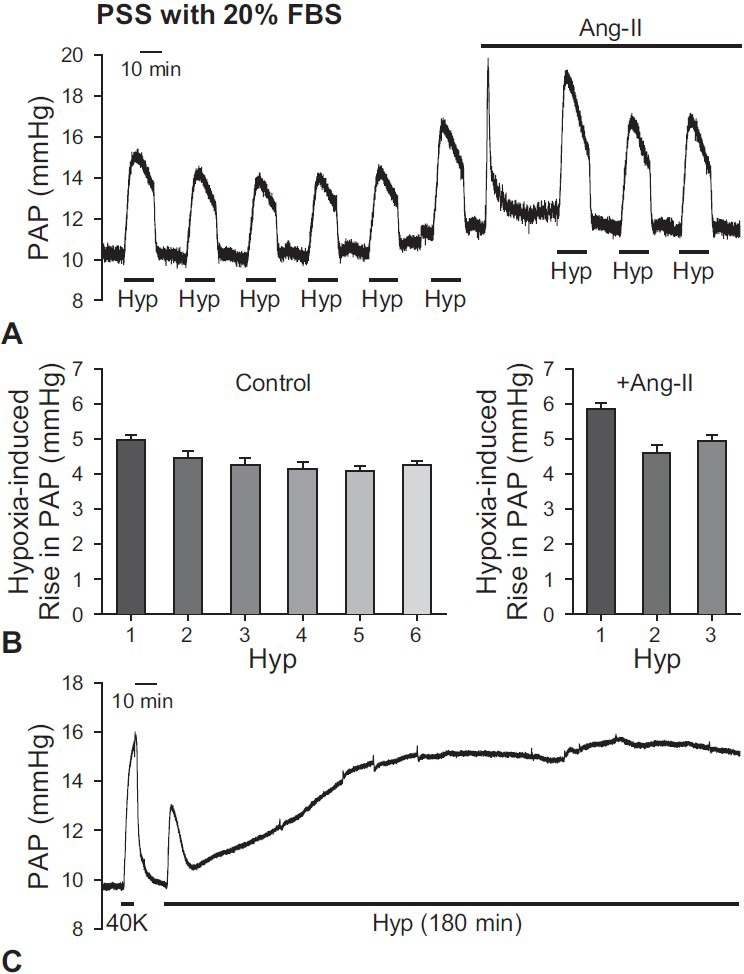
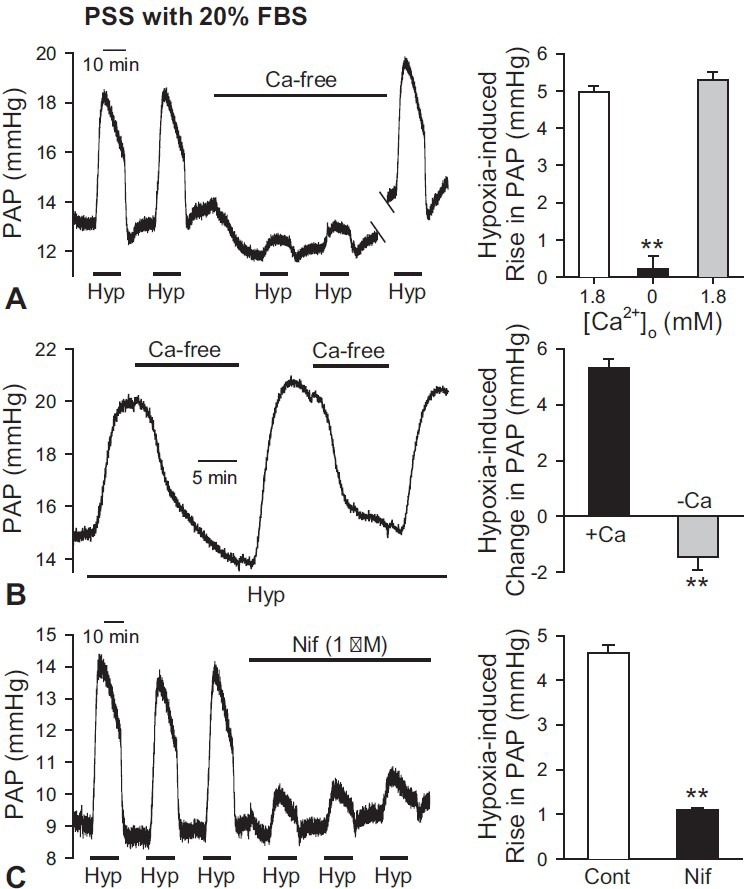
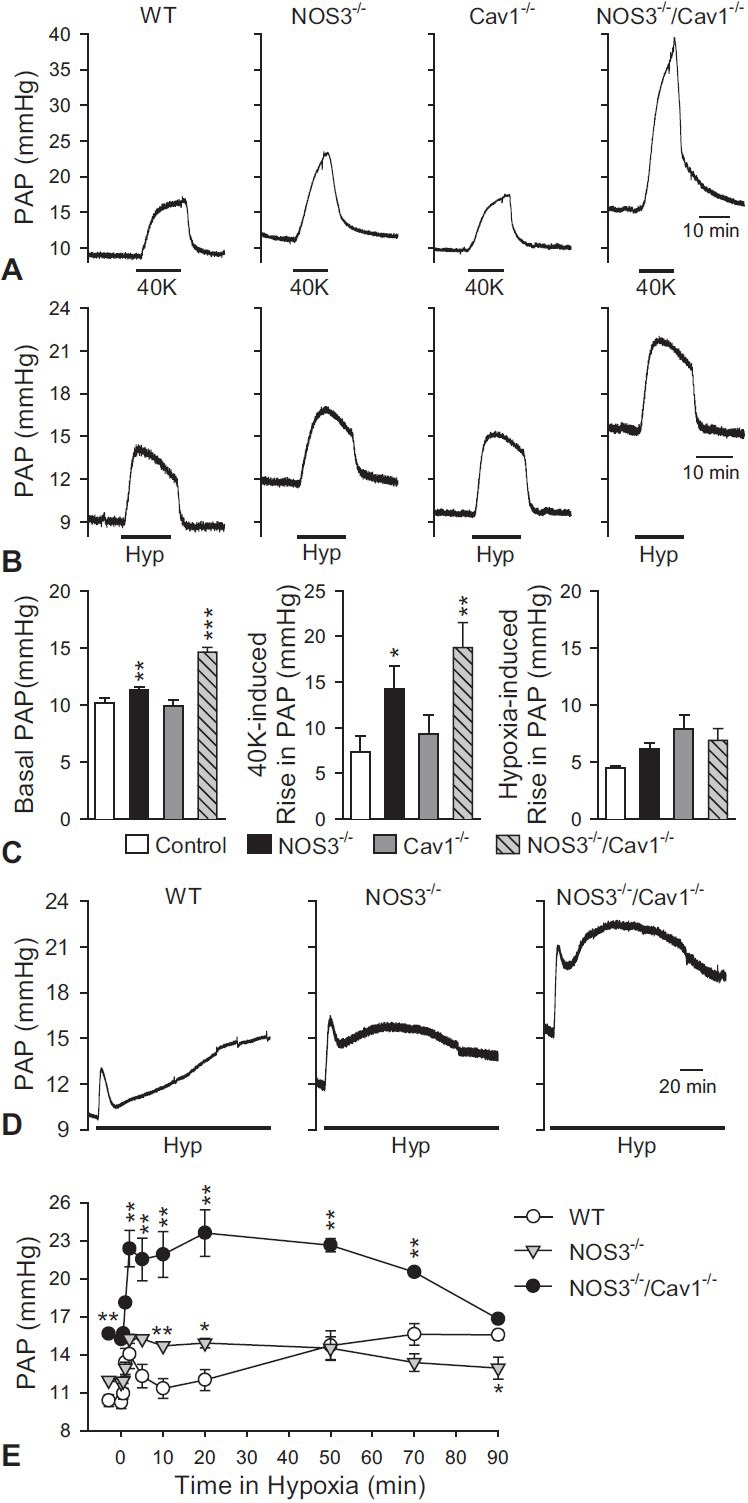
Hypoxic pulmonary vasoconstriction (HPV) is a compensatory physiological mechanism in the lung that optimizes the matching of ventilation to perfusion and thereby maximizes gas exchange. Historically, HPV has been primarily studied in isolated perfused/ventilated lungs; however, the results of these studies have varied greatly due to different experimental conditions and species. Therefore, in the present study, we utilized the mouse isolated perfused/ventilated lung model for investigation of the role of extracellular Ca(2+) and caveolin-1 and endothelial nitric oxide synthase expression on HPV. We also compared HPV using different perfusate solutions: Physiological salt solution (PSS) with albumin, Ficoll, rat blood, fetal bovine serum (FBS), or Dulbecco's Modified Eagle Medium (DMEM). After stabilization of the pulmonary arterial pressure (PAP), hypoxic (1% O2) and normoxic (21% O2) gases were applied via a ventilator in five-minute intervals to measure HPV. The addition of albumin or Ficoll with PSS did not induce persistent and strong HPV with or without a pretone agent. DMEM with the inclusion of FBS in the perfusate induced strong HPV in the first hypoxic challenge, but the HPV was neither persistent nor repetitive. PSS with rat blood only induced a small increase in HPV amplitude. Persistent and repetitive HPV occurred with PSS with 20% FBS as perfusate. HPV was significantly decreased by the removal of extracellular Ca(2+) along with addition of 1 mM EGTA to chelate residual Ca(2+) and voltage-dependent Ca(2+) channel blocker (nifedipine 1 μM). PAP was also reactive to contractile stimulation by high K(+) depolarization and U46619 (a stable analogue of thromboxane A2). In summary, optimal conditions for measuring HPV were established in the isolated perfused/ventilated mouse lung. Using this method, we further confirmed that HPV is dependent on Ca(2+) influx.
Keywords: endothelial nitric oxide synthase; hypoxia; mouse lung; pulmonary artery; pulmonary vasoconstriction.
Conflict of interest statement
Figures
References
-
- von Euler US, Liljestrand G. Observations on the pulmonary arterial blood pressure in the cat. Acta Physiol Scand. 1946;12:301–20.
-
- Yuan JX, editor. Boston: Kluwer Academic Publishers; 2004. Hypoxic Pulmonary Vasoconstriction: Cellular and Molecular Mechanisms.
-
- Archer SL, Wu XC, Thébaud B, Nsair A, Bonnet S, Tyrrell B, et al. Preferential expression and function of voltage-gated, O2-sensitive K+ channels in resistance pulmonary arteries explains regional heterogeneity in hypoxic pulmonary vasoconstriction: Ionic diversity in smooth muscle cells. Circ Res. 2004;95:308–18. - PubMed
-
- Osipenko ON, Tate RJ, Gurney AM. Potential role for Kv3.1b channels as oxygen sensors. Circ Res. 2000;86:534–40. - PubMed
Grants and funding
LinkOut - more resources
Full Text Sources
Other Literature Sources
Research Materials
Miscellaneous
