


Towards a better understanding of Rift Valley fever epidemiology in the south-west of the Indian Ocean
- PMID: 24016237
- PMCID: PMC3848763
- DOI: 10.1186/1297-9716-44-78
Towards a better understanding of Rift Valley fever epidemiology in the south-west of the Indian Ocean
Abstract
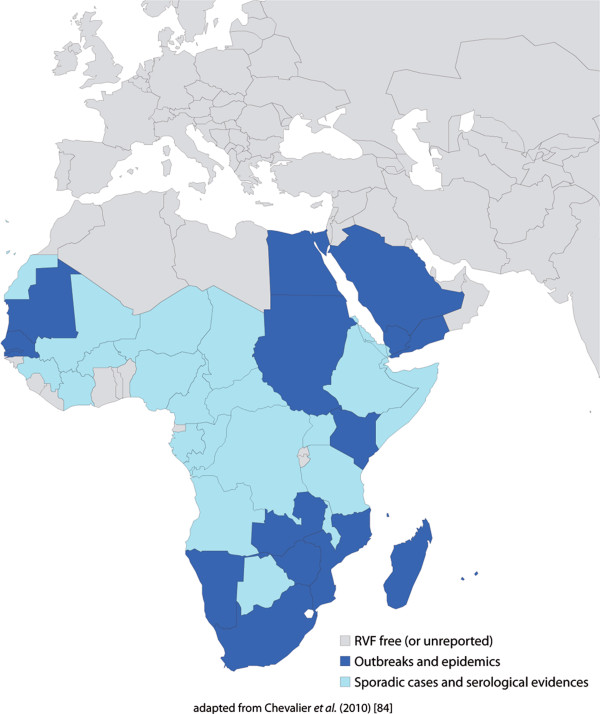
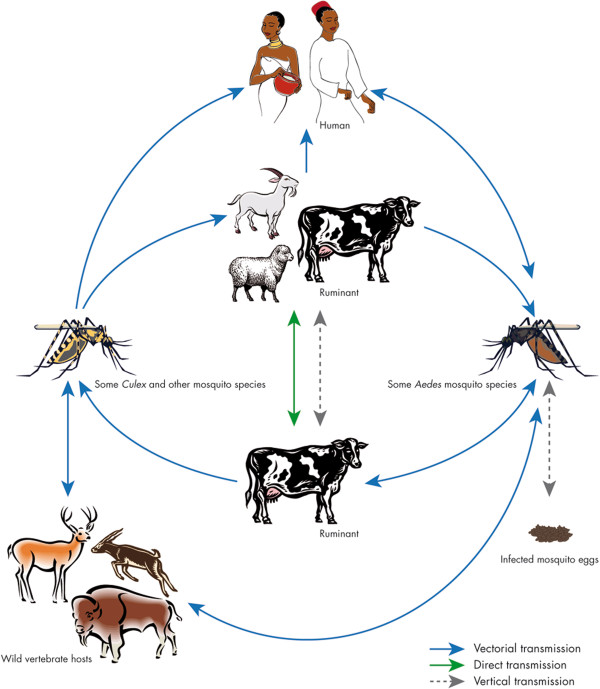
Rift Valley fever virus (Phlebovirus, Bunyaviridae) is an arbovirus causing intermittent epizootics and sporadic epidemics primarily in East Africa. Infection causes severe and often fatal illness in young sheep, goats and cattle. Domestic animals and humans can be contaminated by close contact with infectious tissues or through mosquito infectious bites. Rift Valley fever virus was historically restricted to sub-Saharan countries. The probability of Rift Valley fever emerging in virgin areas is likely to be increasing. Its geographical range has extended over the past years. As a recent example, autochthonous cases of Rift Valley fever were recorded in 2007-2008 in Mayotte in the Indian Ocean. It has been proposed that a single infected animal that enters a naive country is sufficient to initiate a major outbreak before Rift Valley fever virus would ever be detected. Unless vaccines are available and widely used to limit its expansion, Rift Valley fever will continue to be a critical issue for human and animal health in the region of the Indian Ocean.
Figures
References
-
- Eisa M, Obeid HMA, El Sawi ASA. Rift Valley fever in the Sudan. Bull Anim Health Prod Afr. 1977;24:343–347.
-
- Woods CW, Karpati AM, Grein T, McCarthy N, Gaturuku P, Muchiri E, Dunster L, Henderson A, Khan AS, Swanepoel R, Bonmarin I, Martin L, Mann P, Smoak BL, Ryan M, Ksiazek TG, Arthur RR, Ndikuyeze A, Agata NN, Peters CJ. World Health Organization Hemorrhagic Fever Task Force: an outbreak of Rift Valley fever in Northeastern Kenya, 1997–98. Emerg Infect Dis. 2002;8:138–144. doi: 10.3201/eid0802.010023. - DOI - PMC - PubMed
-
- Daubney R, Hudson JR, Garnham PC. Enzootic hepatitis of Rift Valley fever: an undescribed virus disease of sheep, cattle and human from East Africa. J Pathol Bacteriol. 1931;34:545–579. doi: 10.1002/path.1700340418. - DOI
-
- Meegan J, Bailey CL. In: The arboviruses: epidemiology and ecology. Monath TP, editor. Boca Raton: CRC Press Inc; 1989. Rift Valley fever; pp. 51–76.
Publication types
MeSH terms
LinkOut - more resources
Full Text Sources
Other Literature Sources
Research Materials
Miscellaneous
