. 2013 Jul;5(7):515-30.
doi: 10.18632/aging.100569.

Oxidative stress improves coronary endothelial function through activation of the pro-survival kinase AMPK

Affiliations

Oxidative stress improves coronary endothelial function through activation of the pro-survival kinase AMPK

Ehtesham Shafique et al. Aging (Albany NY). 2013 Jul.

Abstract

Age-associated decline in cardiovascular function is believed to occur from the deleterious effects of reactive oxygen species (ROS). However, failure of recent clinical trials using antioxidants in patients with cardiovascular disease, and the recent findings showing paradoxical role for NADPH oxidase-derived ROS in endothelial function challenge this long-held notion against ROS. Here, we examine the effects of endothelium-specific conditional increase in ROS on coronary endothelial function. We have generated a novel binary (Tet-ON/OFF) conditional transgenic mouse (Tet-Nox2:VE-Cad-tTA) that induces endothelial cell (EC)-specific overexpression of Nox2/gp91 (NADPH oxidase) and 1.8?0.42-fold increase in EC-ROS upon tetracycline withdrawal (Tet-OFF). We examined ROS effects on EC signaling and function. First, we demonstrate that endothelium-dependent coronary vasodilation was significantly improved in Tet-OFF Nox2 compared to Tet-ON (control) littermates. Using EC isolated from mouse heart, we show that endogenous ROS increased eNOS activation and nitric oxide (NO) synthesis through activation of the survival kinase AMPK. Coronary vasodilation in Tet-OFF Nox2 animals was CaMKK?-AMPK-dependent. Finally, we demonstrate that AMPK activation induced autophagy and thus, protected ECs from oxidant-induced cell death. Together, these findings suggest that increased ROS levels, often associated with cardiovascular conditions in advanced age, play a protective role in endothelial homeostasis by inducing AMPK-eNOS axis.


Conflict of interest statement

The authors declare no conflicts of interest.

Figures
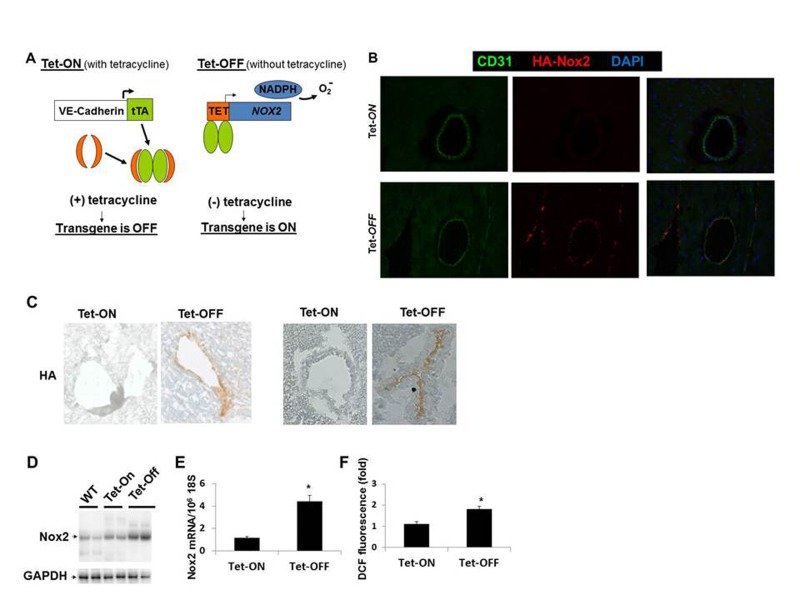
Figure 1
Figure 1. Endothelium-specific overexpression of Nox2 and ROS generation
(A) Schematic used to make conditional binary transgenic mice (NVF). Tet-ON, tetracycline in the drinking water to suppress the transgene; Tet-OFF, withdrawal of tetracycline for four weeks to induce the transgene. (B) Frozen heart sections of 8 weeks old Tet-ON and Tet.OFF NVF (for 4 weeks) mice showing EC-specific (CD31, green) HA-tagged Nox2 (red) expression in coronary vessels of Tet-OFF animal. (C) Immunohistochemistry using anti-HA antibody on frozen heart sections. (D) Western blots using transgenic mouse heart EC (MHEC) lysates showing Nox2 overexpression in two independent lines of Tet-OFF animals compared to Tet-On and WT animals. (E) Q-PCR using MHEC RNAs from Tet-ON and Tet-OFF animals (n=6/group). (F) FACS analyses using DCF fluorescence of MHECs (n=6/group). All animals were 8 weeks old, Tet-OFF were without tetracycline for four weeks. Tet-ON MHECs were grown in medium containing tetracycline 2μg/mL. *p<0.05.
Figure 2
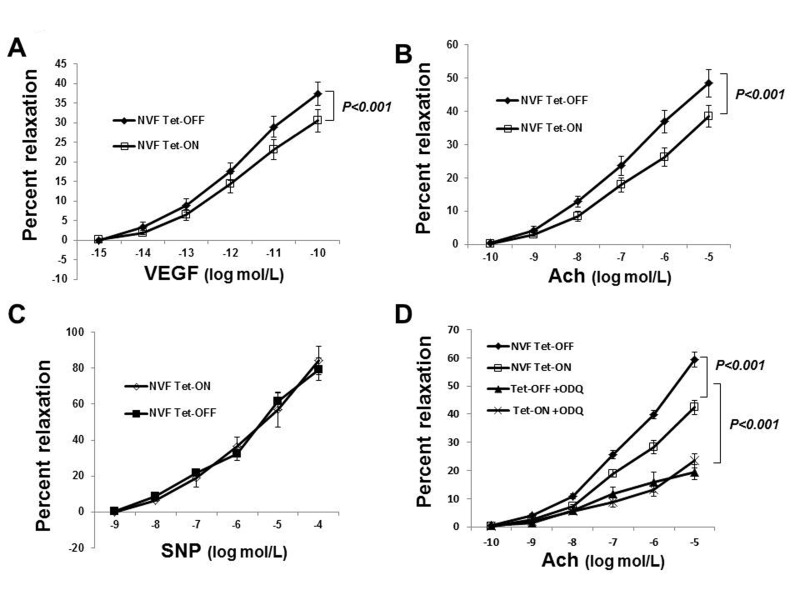
Figure 2. Increased coronary vasodilatation in Tet-OFF mice with higher EC-ROS
(A) Endothelium-dependent dilation of coronary arterioles from Tet-ON (n=6) and Tet-OFF (n=6) NVF mice in response to VEGF. 22±3.72% increase in vasodilation in Tet-OFF vs. Tet-ON. (B) Endothelium-dependent dilation of coronary arterioles from Tet-ON (n=6) and Tet-OFF (n=6) NVF mice in response to acetylcholine (Ach). 25±2.43% increased dilation in Tet-OFF vs. Tet-ON. (C) Endothelium-independent dilation of coronary arterioles from Tet-ON (n=6) and Tet-OFF (n=6) mice in response to NO donor, SNP. (D) NO-cGMP signaling inhibitor ODQ (10 μmol/L) inhibited coronary vasorelaxation in both Tet-ON and Tet-OFF coronary vessels. n = 6/group. All coronary vessels were pre-constricted ex-vivo using U46619 prior to the addition of VEGF, Ach or SNP as indicated.
Figure 3
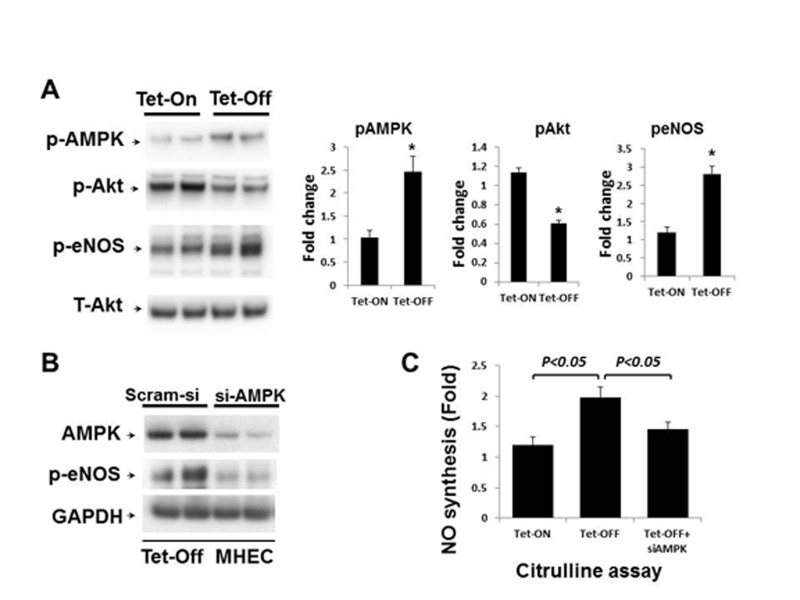
Figure 3. Above-physiological ROS levels induce AMPK-mediated eNOS activation in Tet-OFF MHEC
(A) Western blots (WB) analyses of MHEC protein lysates from two independent lines of NVF Tet-ON and Tet-OFF mice as indicated. WB was carried out using anti-phospho-AMPK (p-AMPK), anti-p-Akt (ser473), anti-p-eNOS (ser1179) and anti-T-Akt (total) antibodies. T-Akt was used as loading control. Right panels, bar graphs show quantitative densitometric analysis of three independent experiments using NIH image J (-fold change expressed in mean ± S.E.M.). *p<0.05 was considered statistically significant. (B) Protein extracts from Tet-OFF MHEC transfected with control siRNA (Scram-si) or si-AMPK were subject to Western blots as described in the Methods. Membranes were sequentially blotted, stripped and re-probed with anti-AMPK, anti-p-eNOS and GAPDH antibodies as shown. Representative blots of two independent experiments are shown. (C) NO production, as measured using citruline assay as described in Methods, was 2.1±0.32-fold higher in Tet-OFF MHEC compared to Tet-ON. Si-AMPK significantly inhibited NO production in Tet-OFF MHEC. *p<0.05.
Figure 4
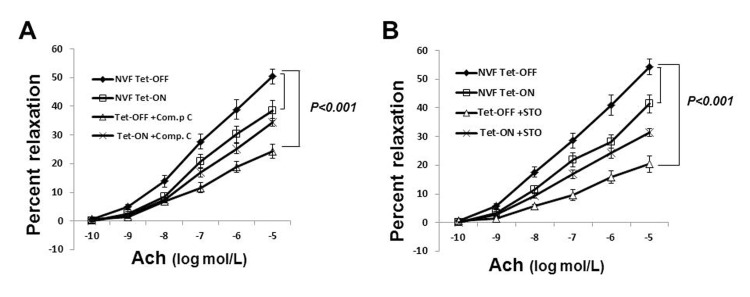
Figure 4. Inhibition of AMPK signaling reduced coronary vasodilatation in Tet-OFF NVF but not in Tet-ON NVF
(A) Isolated coronary vessels from Tet-ON and Tet-OFF transgenic mice (n=6/group) were subject to microvessel reactivity assay in the presence or absence of Compound C (80 μmol/L). Ach-mediated vasodilatation was inhibited by Compound C in the coronary vessels from Tet-OFF mice, whereas Compound C had no significant effect on the coronary vessels from Tet-ON mice. (B) Same as in (A), except pre-treatment was carried out using CaMKKβ-inhibitor STO-609 (50 nmol/L).
Figure 5
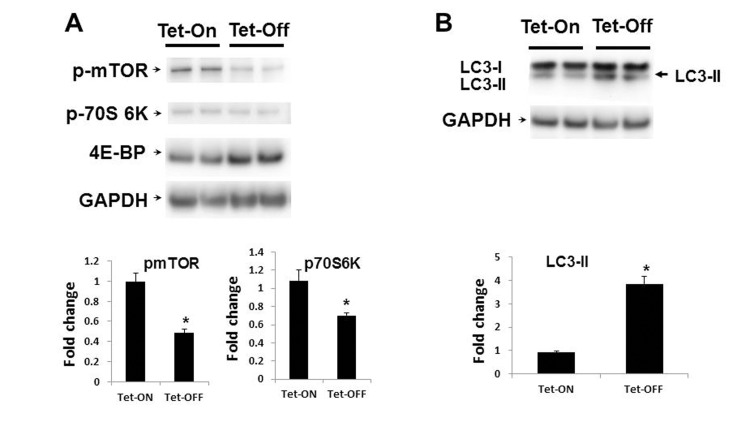
Figure 5. Inhibition of mTOR signaling in Tet-OFF MHEC with high ROS
(A) Western blot analyses of MHEC protein lysates from two independent lines of NVF Tet-ON and Tet-OFF mice as indicated. WB was carried out using anti-p-mTOR (p-mTOR), anti-p-70S 6k, and anti-4E-BP antibodies. GAPDH was used for loading control. Lower panels, bar graphs show quantitative densitometric analysis of three independent experiments of the p-mTOR and p-70S 6K bands (-fold change expressed in mean ± S.E.M.). *p<0.05 was considered statistically significant. (B) WB analyses of MHEC from two independent lines of NVF Tet-ON and Tet-OFF as in (A) except anti-LC3A (I and II) and ant-GAPDH antibodies were used. Arrow, induction of the autophagy marker LC3-II in Tet-OFF MHEC is indicated. Lower panel, bar graph showing quantitative analyses of LC3-II as indicated. *p<0.05.
Figure 6
Figure 6. Increased autophagy in Tet-OFF MHEC using adenovirus expressing mRFP-GFP-LC3
(A) Schematic presentation shows that GFP-LC3 (green) and mRFP-LC3 (red) signals are present on the autophagosome, whereas autolysosome contains only mRFP-LC3 (red) signals [40]. (B) Confocal microscopy of Adv-mRFP-GFP-LC3-transduced MHECs. (C) Quantification of red and green fluorophores using NIH ImageJ 1.47b demonstrate >1.5-fold increase in autophagy in Tet-OFF MHEC (n=50 cells). (D) Quantification of colocalization events (yellow) using spatial overlap of red and green was done in Fiji program (ImageJ 1.47h). 1.5-fold increase in overall autophagy in Tet-OFF MHEC (C), but no significant changes in the ratio of intracellular red vs. green in Tet-OFF MHEC (C), and no changes in the colocalization signals between Tet-ON vs. Tet-OFF (D) suggest an effective autophagic flux in Tet-OFF MHEC. *p<0.05.
Figure 7
Figure 7. Nox2-induced autophagy plays a protective role in cell survival during oxidative stress in ECs
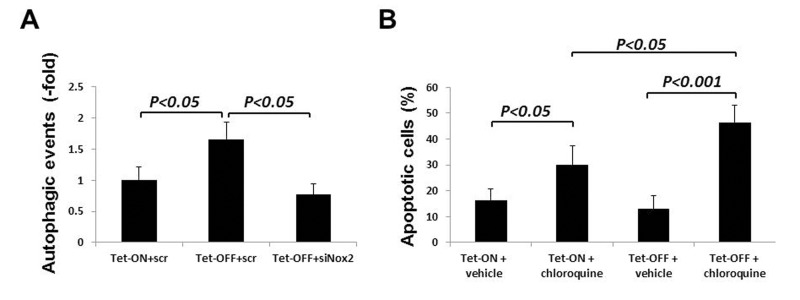
(A) Tet-ON and Tet-OFF MHEC were transduced with Adv-mRFP-GFP-LC3 and transfected with either si-scr or si-Nox2 as indicated. Quantification of red and green fluorophores using NIH ImageJ 1.47b demonstrate significant increase in autophagy in Tet-OFF MHEC (n=50 cells), which was abrogated by knockdown of Nox2. (B) Annexin V-FITC labeling was carried out to determine apoptotic MHEC as described in the Methods. Bar graph shows apoptotic cells as percentage of total viable cells population using three independent experiments. Autophagosome-lysosome fusion blocker chloroquine induced apoptosis in both Tet-ON and Tet-OFF MHEC. However, chloroquine-induced apoptosis was significantly higher in Tet-OFF MHEC.
Figure 8
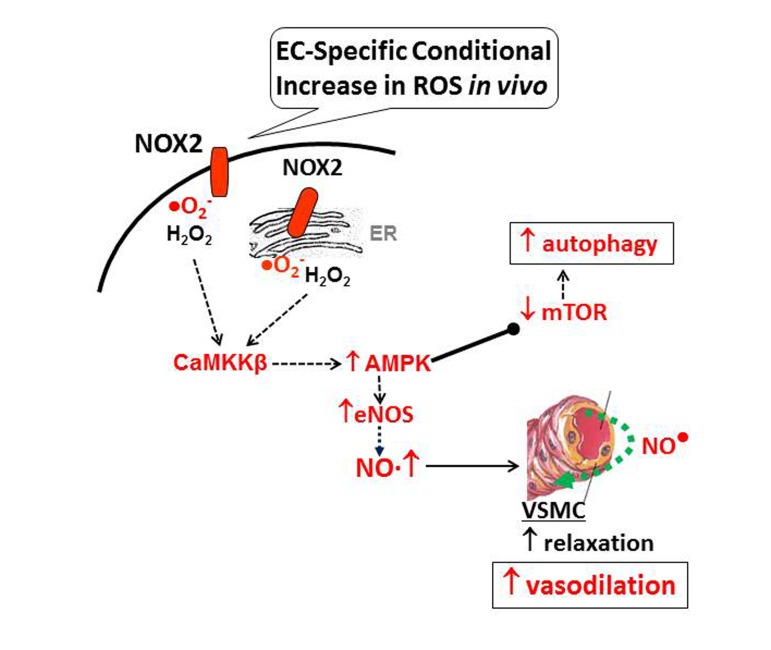
Figure 8. Model for EC-specific ROS-mediated improvement in endothelial function
Nox2-induced ROS in vascular endothelium activates CaMKKβ-AMPK, which in turn, activates eNOS to induce NO-mediated vasodilatation and inhibits mTOR resulting in protective autophagy.

References

    1. Datla SR, Griendling KK. Reactive oxygen species, NADPH oxidases, and hypertension. Hypertension. 2010;56:325–330. - PMC - PubMed
    1. Luo Z, Teerlink T, Griendling K, Aslam S, Welch WJ, Wilcox CS. Angiotensin II and NADPH oxidase increase ADMA in vascular smooth muscle cells. Hypertension. 2010;56:498–504. - PMC - PubMed
    1. Frey RS, Ushio-Fukai M, Malik AB. NADPH oxidase-dependent signaling in endothelial cells: role in physiology and pathophysiology. Antioxidants & redox signaling. 2009;11:791–810. - PMC - PubMed
    1. Drummond GR, Selemidis S, Griendling KK, Sobey CG. Combating oxidative stress in vascular disease: NADPH oxidases as therapeutic targets. Nature reviews. Drug discovery. 2011;10:453–471. - PMC - PubMed
    1. Vivekananthan DP, Penn MS, Sapp SK, Hsu A, Topol EJ. Use of antioxidant vitamins for the prevention of cardiovascular disease: meta-analysis of randomised trials. Lancet. 2003;361:2017–2023. - PubMed

Publication types

MeSH terms