. 2013 Sep 3;8(9):e73721.
doi: 10.1371/journal.pone.0073721. eCollection 2013.

Production of Trametes pubescens laccase under submerged and semi-solid culture conditions on agro-industrial wastes

Affiliations

Production of Trametes pubescens laccase under submerged and semi-solid culture conditions on agro-industrial wastes

Juan C Gonzalez et al. PLoS One. .

Abstract

Laccases are copper-containing enzymes involved in the degradation of lignocellulosic materials and used in the treatment of phenol-containing wastewater. In this study we investigated the effect of culture conditions, i.e. submerged or semi-solid, and copper supplementation on laccase production by Trametespubescens grown on coffee husk, soybean pod husk, or cedar sawdust. The highest specific laccase activity was achieved when the culture was conducted under submerged conditions supplemented with copper (5 mM), and using coffee husk as substrate. The crude extracts presented two laccase isoforms with molecular mass of 120 (Lac1) and 60 kDa (Lac2). Regardless of the substrate, enzymatic crude extract and purified fractions behaved similarly at different temperatures and pHs, most of them presented the maximum activity at 55 °C and a pH range between 2 and 3. In addition, they showed similar stability and electro-chemical properties. At optimal culture conditions laccase activity was 7.69 ± 0.28 U mg(-1) of protein for the crude extract, and 0.08 ± 0.001 and 2.86 ± 0.05 U mg(-1) of protein for Lac1 and Lac2, respectively. In summary, these results show the potential of coffee husk as an important and economical growth medium to produce laccase, offering a new alternative use for this common agro-industrial byproduct.


Conflict of interest statement

Competing Interests: The authors have declared that no competing interests exist.

Figures

Figure 1
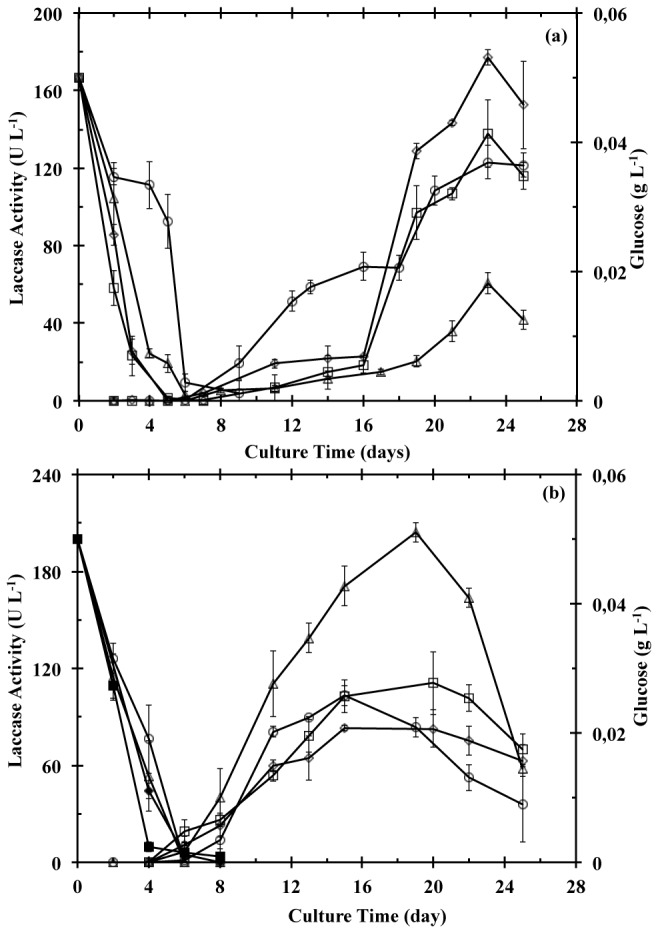
Figure 1. Laccase activity profiles during T . pubescens CBS 696.94 culture under SmC (a) and SSC (b) on coffee husk.
Culture media was enriched with different copper concentrations: 0 (Δ), 0.5 (□), 2 (○) and 5 (◊) mM, and laccase activity was determined by using syringaldazine as substrate. Filled symbols refer to the glucose concentration at the respective copper concentration. All the assays were performed in triplicate.
Figure 2
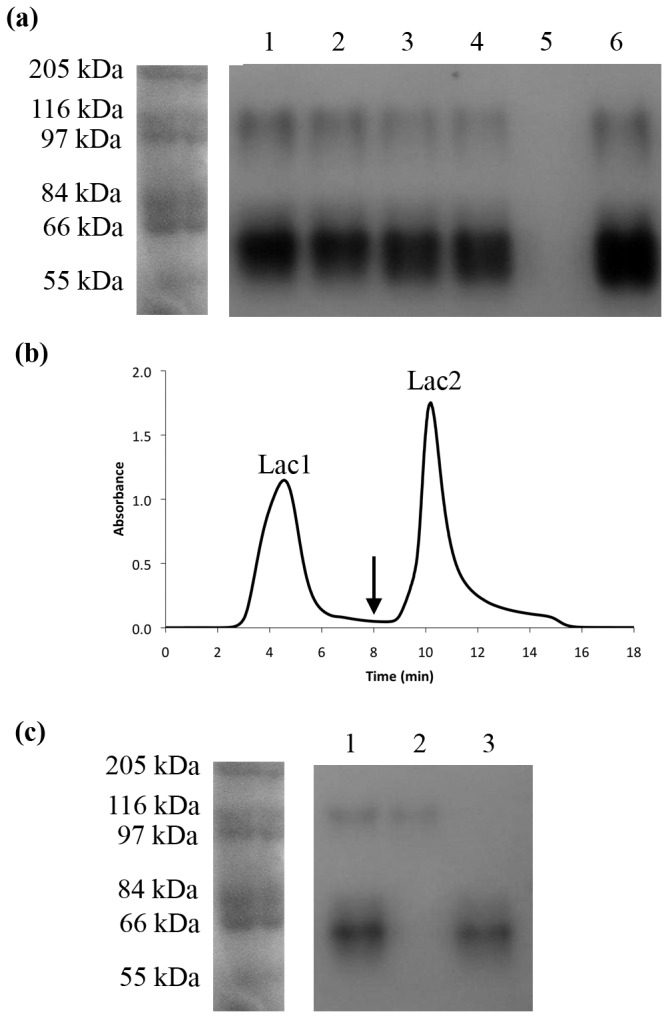
Figure 2. Purification of lacasses produced by submerged culture of T . pubescens using coffee husk as substrate.
All samples were analyzed by SDS-PAGE under non-reducing conditions and stained with ABTS. No heat denaturation of the samples was conducted. (a) The crude extract (1) was centrifuged and filtered through a Whatman No. 1 filter (2), 0.45 µM membrane (3) 0.22 µm membrane (4), and ultrafiltrated through a 10 kDa cut-off membrane, permeate (5) and retentate (6). (b) UF retentate was purified by anionic exchange chromatography. Lac1 represent the unbound fraction, while Lac2 represent the eluted fraction. The arrow shows the point when protein elution was started. (c) Purified fractions (1) crude extract, (2) Lac1 and (3) Lac2. MW: Molecular Weight. Similar results were observed for crude extracts produced by using soybean pod husk and cedar sawdust.
Figure 3
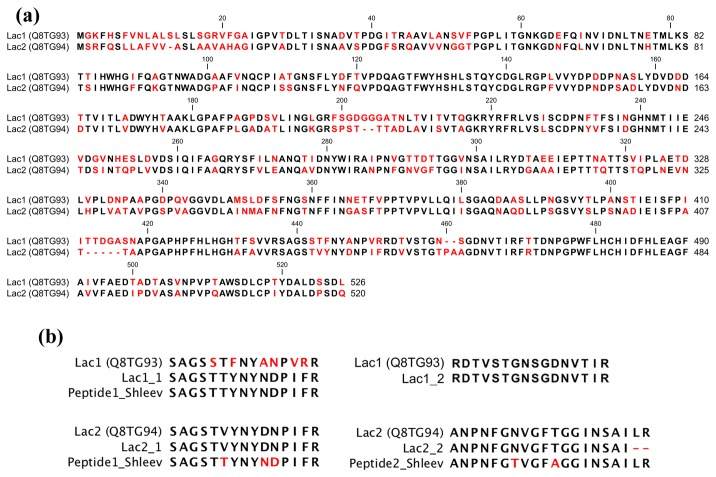
Figure 3. Aligment of reported lacasses sequences and Lac1 and Lac2 peptides.
(a) Alignment of Lap1 (UniProtKB/Swiss-Prot Q8TG93) and Lap2 (UniProtKB/Swiss-Prot Q8TG94) from T . pubescens CBS 696.94. (b) Alignment of Lac1 and Lac2 peptides with Lap1 and Lap2, respectively, and tryptic peptides described by Shleev et al 2007. Alignments were carried out using Clustal Omega and figures were using CLC Sequence Viewer. Different residues are colored in red.
Figure 4
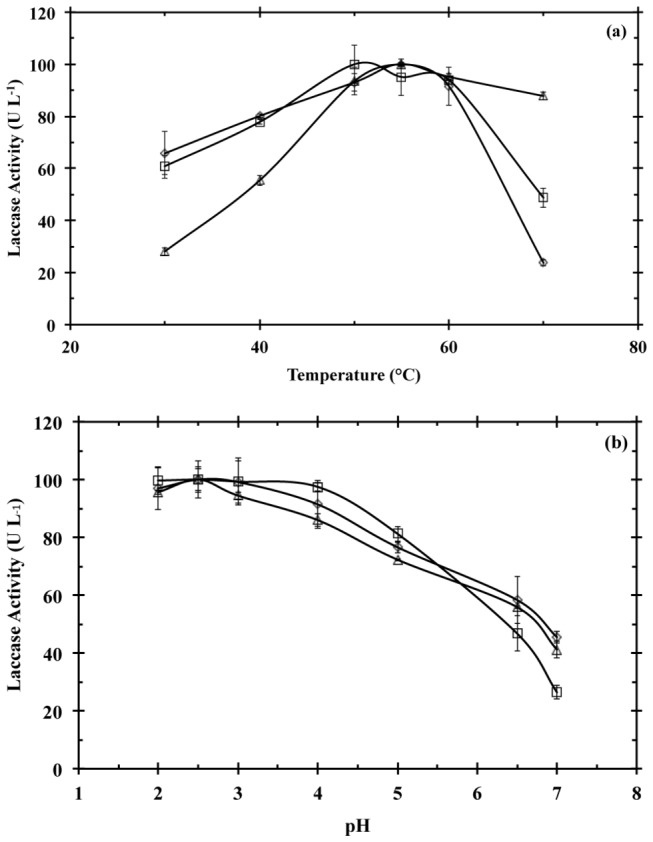
Figure 4. Effect of temperature (a) and pH (b) on laccase activity for the UF retentate obtained by semisolid culture of T . pubescens on coffee husk (□), soybean pod husk (◊), and cedar sawdust (Δ).
Laccase stability was evaluated by using ABTS. All the assays were performed in triplicate.
Figure 5
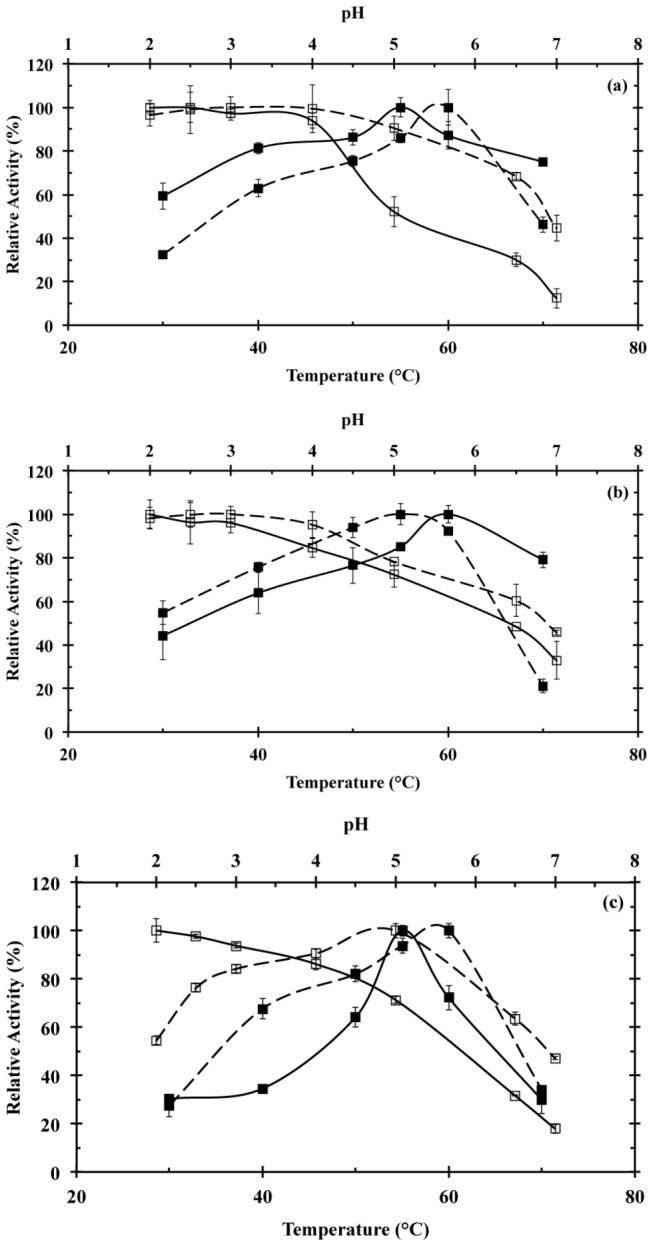
Figure 5. Effect of temperature (■) and pH (□) on enzyme activity for Lac1 (solid line) and Lac2 (dashed line), obtained after the purification of the enzymatic crude extract produced by semisolid culture of T . pubescens on coffee husk (a), soybean pod husk (b) and cedar sawdust (c).
Laccase stability was evaluated by using ABTS. All the assays were performed in triplicate.
Figure 6
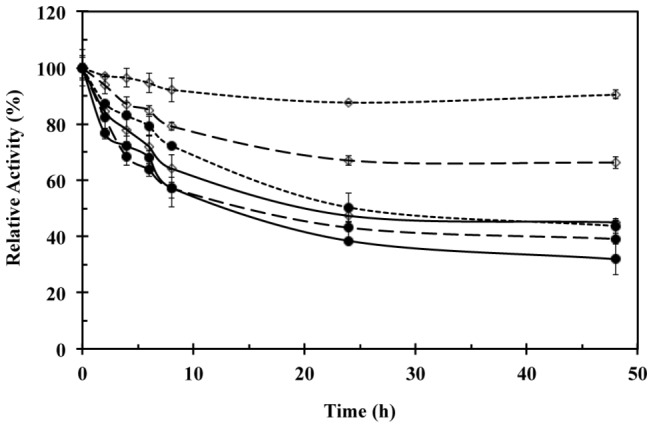
Figure 6. Laccase stability profiles at optimal pH and temperature conditions for crude extracts (solid line), Lac1 (dashed line), and Lac2 (spotted line) obtained from semisolid culture of T . pubescens on coffee husk (◊) and cedar sawdust (•).
Laccase stability was evaluated by using ABTS. All the assays were performed in triplicate.
Figure 7
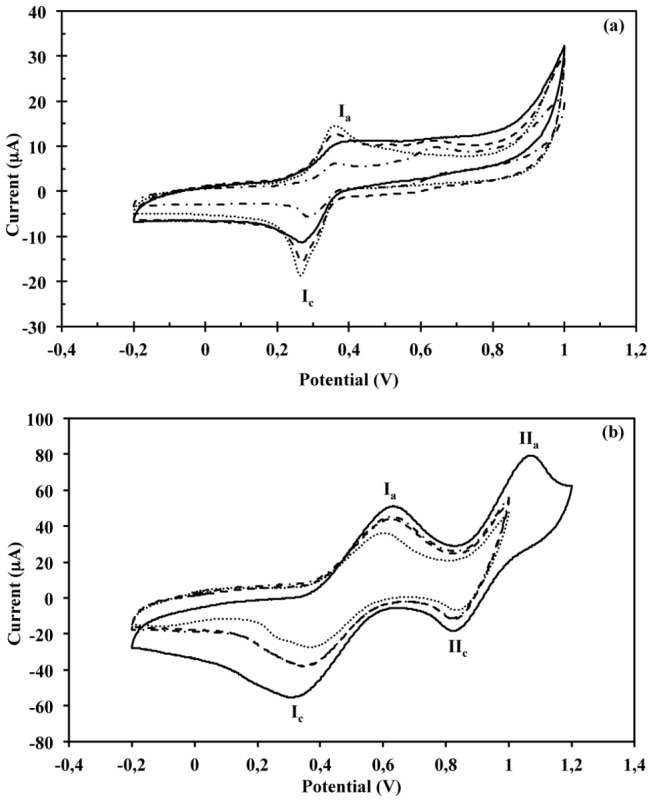
Figure 7. Cyclic voltammograms of (a) syringaldazine at pH 5.0 using the crude extract and purified laccase fractions from semisolid culture of T . pubescens on coffee husk, or (b) ABTS at pH 3.0 using the crude extract and purified laccase fractions from semisolid culture of T . pubescens on soybean pod husk.
Nomenclature: only mediator (dotted line), crude extract (solid line), Lac1 fraction (dashed line), and Lac2 fraction (dashed and dotted line).

References

    1. Vandamme EJ (2009) Agro-industrial residue utilization for industrial biotechnology products. In: Nigam P, Pandey A. Biotechnology for Agro-Industrial Residues Utilisation. Netherlands: Springer Verlag; pp. 3-11.
    1. Martínez AT, Speranza M, Ruiz-Dueñas FJ, Ferreira P, Camarero S et al. (2005) Biodegradation of lignocellulosics: microbial, chemical, and enzymatic aspects of the fungal attack of lignin. Int Microbiol 8: 195-204. PubMed: 16200498. - PubMed
    1. Sánchez O, Sierra R, Alméciga-Díaz CJ (2011) Delignification process of agro-industrial aastes an alternative to obtain fermentable carbohydrates for producing fuel. In: Manzanera M. Alternative Fuel. Intech: 111-154.
    1. Wesenberg D, Kyriakides I, Agathos SN (2003) White-rot fungi and their enzymes for the treatment of industrial dye effluents. Biotechnol Adv 22: 161-187. doi:10.1016/j.biotechadv.2003.08.011. PubMed: 14623049. - DOI - PubMed
    1. Morozova OV, Shumakovich GP, Shleev SV, Yaropolov YI (2007) Laccase-mediator systems and their applications: A review. Appl Biochem Microbiol 43: 523-535. doi:10.1134/S0003683807050055. - DOI - PubMed

Publication types

LinkOut - more resources