


Dipyridamole analogs as pharmacological inhibitors of equilibrative nucleoside transporters. Identification of novel potent and selective inhibitors of the adenosine transporter function of human equilibrative nucleoside transporter 4 (hENT4)
- PMID: 24021350
- PMCID: PMC3866046
- DOI: 10.1016/j.bcp.2013.08.063
Dipyridamole analogs as pharmacological inhibitors of equilibrative nucleoside transporters. Identification of novel potent and selective inhibitors of the adenosine transporter function of human equilibrative nucleoside transporter 4 (hENT4)
Abstract
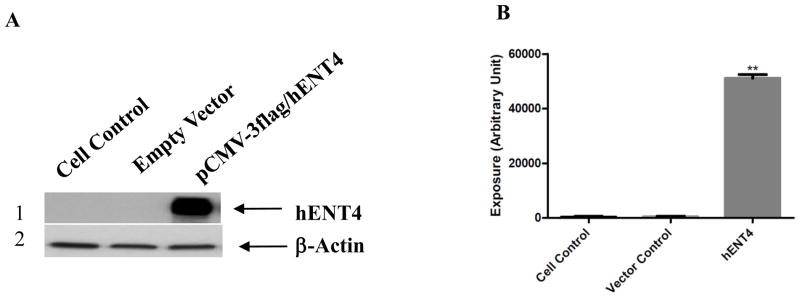
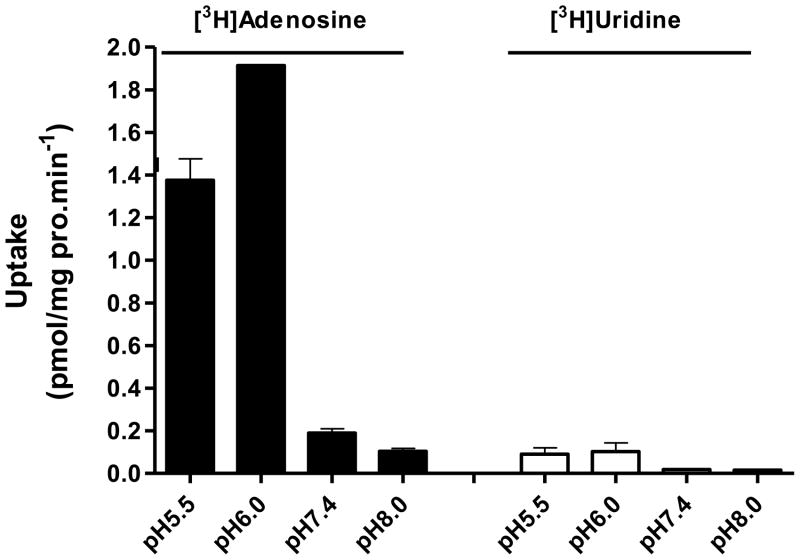
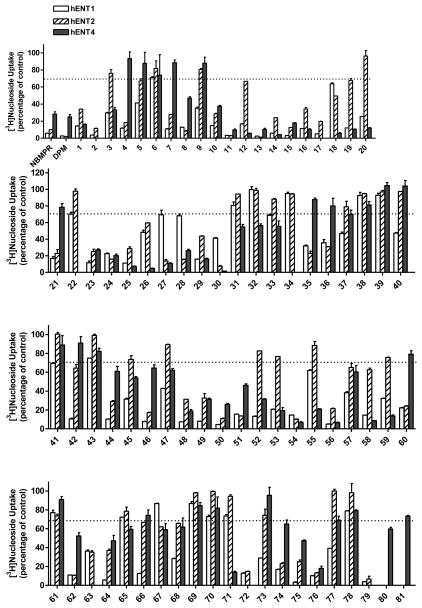
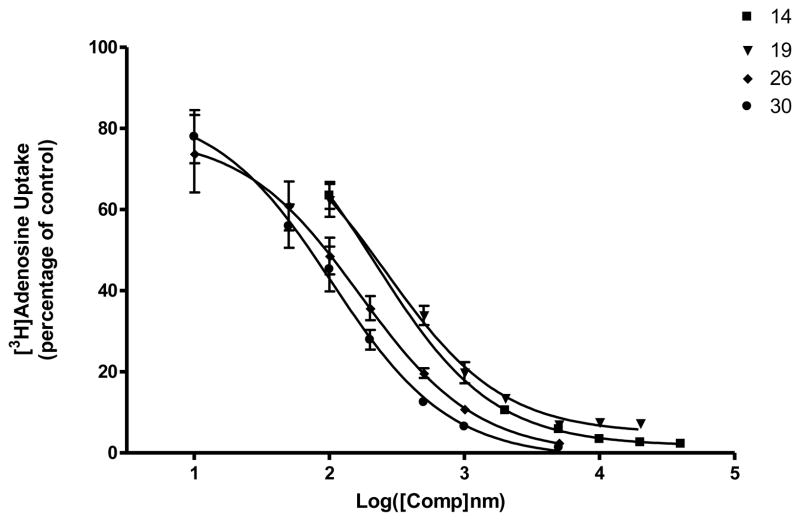
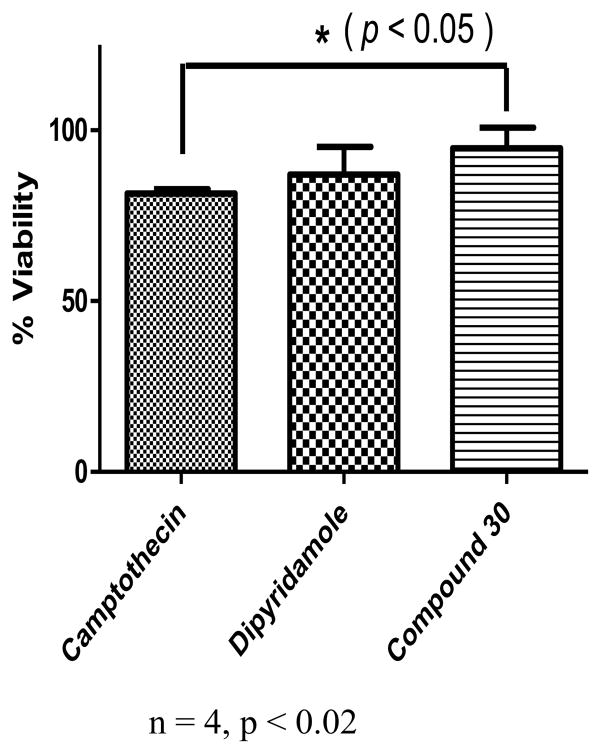
To identify needed human equilibrative nucleoside transporter 4 (hENT4) inhibitors, we cloned and stably expressed the recombinant protein in PK15NTD (nucleoside transporter deficient) cells, and, investigated its interaction with a series of dipyridamole analogs synthesized in our laboratory. Compounds were tested in this newly established hENT4 expressing system as well in previous stably expressed hENT1 and hENT2 expressing systems. Of the dipyridamole analogs evaluated, about one fourth of the compounds inhibited hENT4 with higher potencies than dipyridamole. The most potent of them, Compound 30 displayed an IC₅₀ of 74.4 nM, making it about 38 times more potent than dipyridamole (IC₅₀=2.8 μM), and selectivities of about 80-fold and 20-fold relative to ENT1 and ENT2, respectively. Structure-activity relationship showed nitrogen-containing monocyclic rings and noncyclic substituents at the 4- and 8-positions of the pyrimido[5,4-d]pyrimidine were important for the inhibitory activity against hENT4. The most potent and selective hENT4 inhibitors tended to have a 2,6-di(N-monohydroxyethyl) substitution on the pyrimidopyrimidine ring system. The inhibitors of hENT4 identified in this study are the most selective and potent inhibitors of hENT4 adenosine transporter function to date, and should serve as useful pharmacological/biochemical tools and/or potential leads for ENT4-based therapeutics. Also, the new hENT4-expressing PK15 cell line established will serve as a useful screening tool for the discovery and design of hENT4 ligands.
Keywords: Dipyridamole analogs; Equilibrative nucleoside transporters; Human equilibrative nucleoside transporter 4; Structure–activity relationships.
Copyright © 2013 Elsevier Inc. All rights reserved.
Figures
References
-
- Cass CE, Young JD, Baldwin SA. Recent advances in the molecular biology of nucleoside transporters of mammalian cells. Biochem Cell Biol. 1998;76:761–70. - PubMed
-
- Balimane PV, Sinko PJ. Involvement of multiple transporters in the oral absorption of nuceoside analogues. Adv Drug Deliv Rev. 1999;39:183–209. - PubMed
-
- Young JD, Yao SY, Baldwin JM, Cass CE, Baldwin SA. The human concentrative and equilibrative nucleoside transporter families, SLC28 and SLC29. Mol Aspects Med. 2013;34(2–3):529–47. - PubMed
-
- Baldwin SA, Beal PR, Yao SYM, King AE, Cass CE, Young JD. The equilibrative nucleoside transporter family, SLC29. Pflug Arch Eur J Phy. 2004;447:735–43. - PubMed
-
- Yao SY, Ng AM, Muzyka WR, Griffiths M, Cass CE, Baldwin SA, et al. Molecular cloning and functional characterization of nitrobenzylthioinosine (NBMPR)-sensitive (es) and NBMPR-insensitive (ei) equilibrative nucleoside transporter proteins (rENT1 and rENT2) from rat tissues. J Biol Chem. 1997;272:28423–30. - PubMed
Publication types
MeSH terms
Substances
Grants and funding
LinkOut - more resources
Full Text Sources
Other Literature Sources
Molecular Biology Databases
