


Identification and survey of a novel avian coronavirus in ducks
- PMID: 24023656
- PMCID: PMC3758261
- DOI: 10.1371/journal.pone.0072918
Identification and survey of a novel avian coronavirus in ducks
Abstract
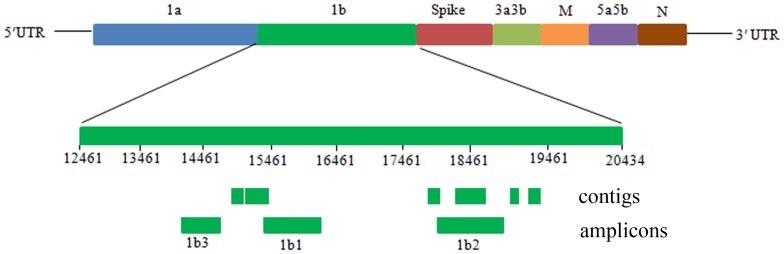
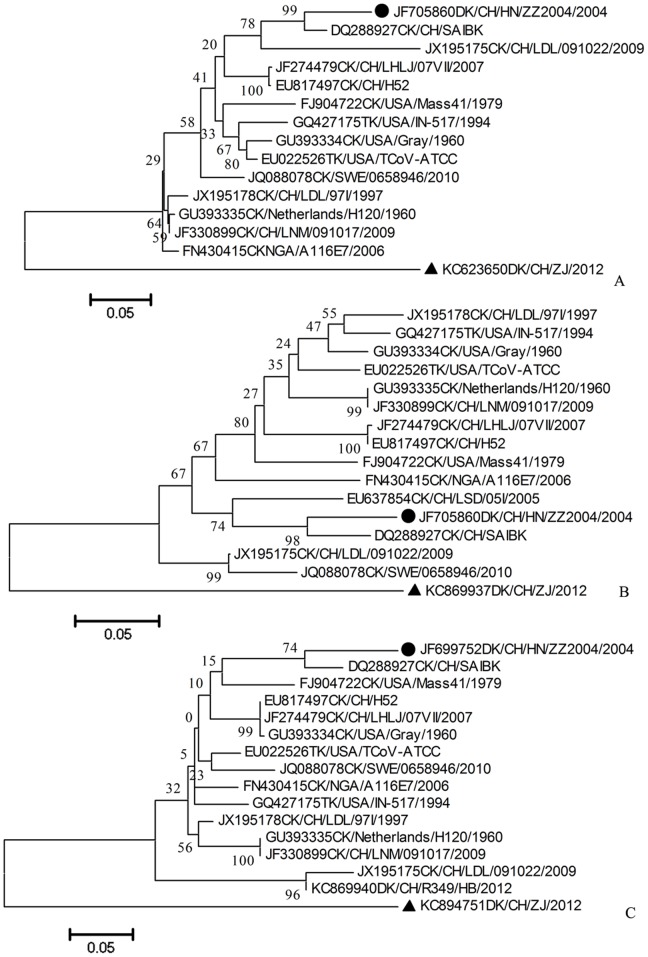
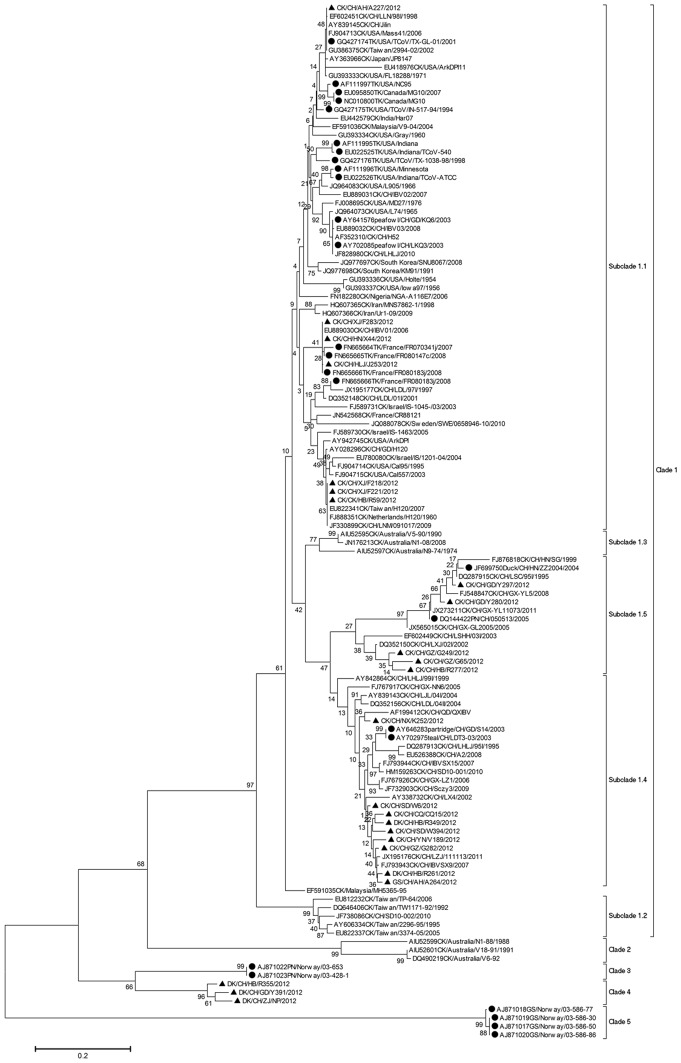
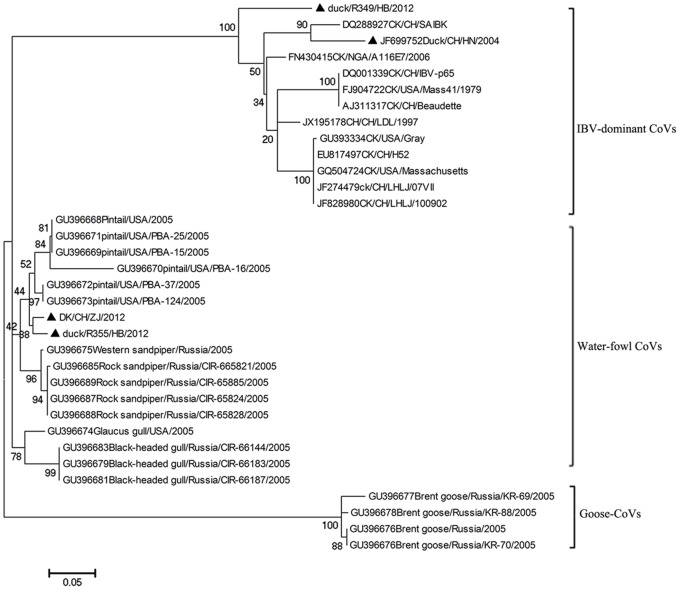
The rapid discovery of novel viruses using next generation sequencing (NGS) technologies including DNA-Seq and RNA-Seq, has greatly expanded our understanding of viral diversity in recent years. The timely identification of novel viruses using NGS technologies is also important for us to control emerging infectious diseases caused by novel viruses. In this study, we identified a novel duck coronavirus (CoV), distinct with chicken infectious bronchitis virus (IBV), using RNA-Seq. The novel duck-specific CoV was a potential novel species within the genus Gammacoronavirus, as indicated by sequences of three regions in the viral 1b gene. We also performed a survey of CoVs in domestic fowls in China using reverse-transcription polymerase chain reaction (RT-PCR), targeting the viral nucleocapsid (N) gene. A total of 102 CoV positives were identified through the survey. Phylogenetic analysis of the viral N sequences suggested that CoVs in domestic fowls have diverged into several region-specific or host-specific clades or subclades in the world, and IBVs can infect ducks, geese and pigeons, although they mainly circulate in chickens. Moreover, this study provided novel data supporting the notion that some host-specific CoVs other than IBVs circulate in ducks, geese and pigeons, and indicated that the novel duck-specific CoV identified through RNA-Seq in this study is genetically closer to some CoVs circulating in wild water fowls. Taken together, this study shed new insight into the diversity, distribution, evolution and control of avian CoVs.
Conflict of interest statement
Figures

References
-
- King AMQ, Adams MJ, Carstens EB, Lefkowitz EJ (2012) Virus taxonomy: ninth report of the International Committee on Taxonomy of Viruses. San Diego: Academic Press.
-
- Cook JK, Jackwood M, Jones RC (2012) The long view: 40 years of infectious bronchitis research. Avian Pathol 41: 239–250. - PubMed
-
- Borderia AV, Stapleford KA, Vignuzzi M (2011) RNA virus population diversity: implications for inter-species transmission. Curr Opin Virol 1: 643–648. - PubMed
-
- Marra MA, Jones SJ, Astell CR, Holt RA, Brooks-Wilson A, et al. (2003) The Genome sequence of the SARS-associated coronavirus. Science 300: 1399–1404. - PubMed
-
- Rota PA, Oberste MS, Monroe SS, Nix WA, Campagnoli R, et al. (2003) Characterization of a novel coronavirus associated with severe acute respiratory syndrome. Science 300: 1394–1399. - PubMed
Publication types
MeSH terms
Associated data
- Actions
- Actions
- Actions
- Actions
- Actions
- Actions
- Actions
- Actions
- Actions
- Actions
- Actions
- Actions
- Actions
- Actions
- Actions
- Actions
- Actions
- Actions
- Actions
- Actions
- Actions
- Actions
- Actions
- Actions
- Actions
- Actions
- Actions
- Actions
- Actions
- Actions
- Actions
- Actions
- Actions
- Actions
- Actions
- Actions
- Actions
- Actions
- Actions
- Actions
- Actions
- Actions
- Actions
- Actions
- Actions
- Actions
- Actions
- Actions
- Actions
- Actions
- Actions
- Actions
- Actions
- Actions
- Actions
- Actions
- Actions
- Actions
- Actions
- Actions
- Actions
- Actions
- Actions
- Actions
- Actions
- Actions
- Actions
- Actions
- Actions
- Actions
- Actions
- Actions
- Actions
- Actions
- Actions
- Actions
- Actions
- Actions
- Actions
- Actions
- Actions
- Actions
- Actions
- Actions
- Actions
- Actions
- Actions
- Actions
- Actions
Grants and funding
LinkOut - more resources
Full Text Sources
Other Literature Sources
