


The power of the claw
- PMID: 24023906
- PMCID: PMC3762731
- DOI: 10.1371/journal.pone.0073811
The power of the claw
Abstract
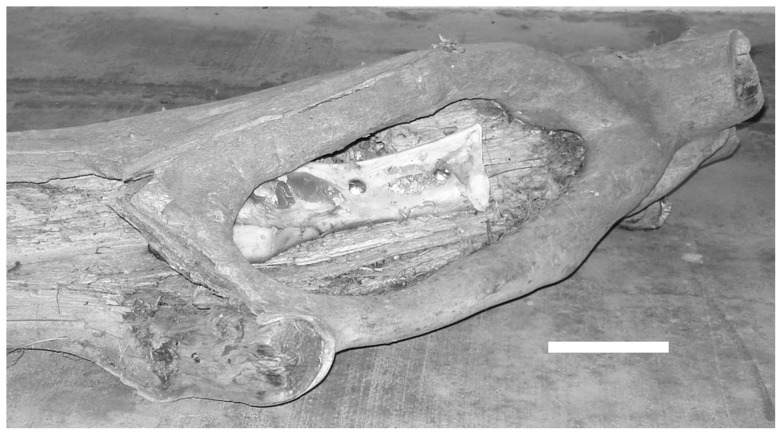
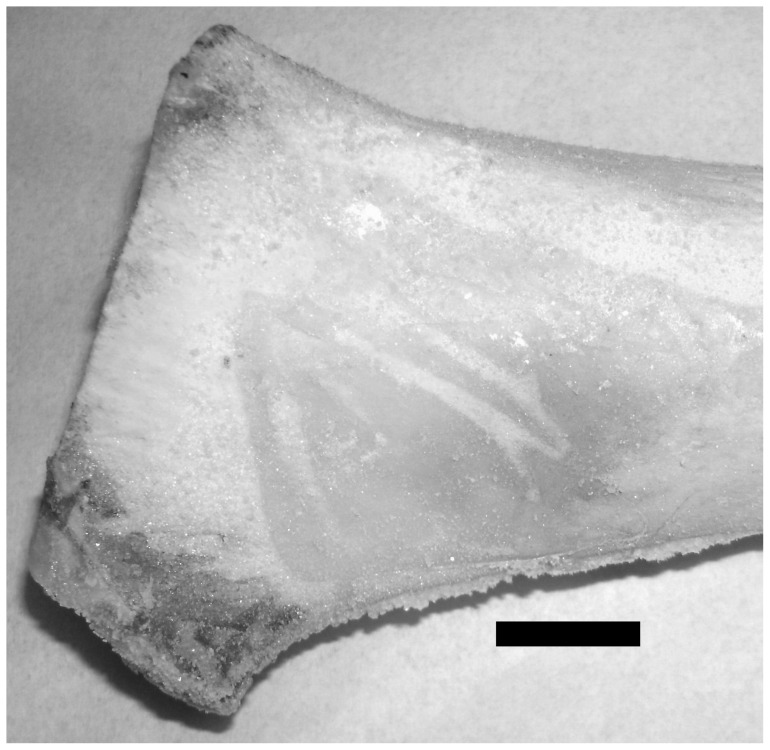
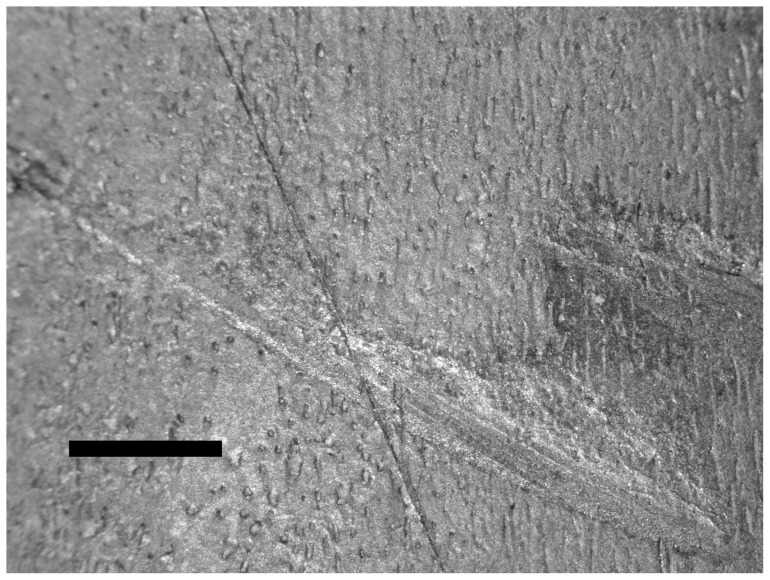
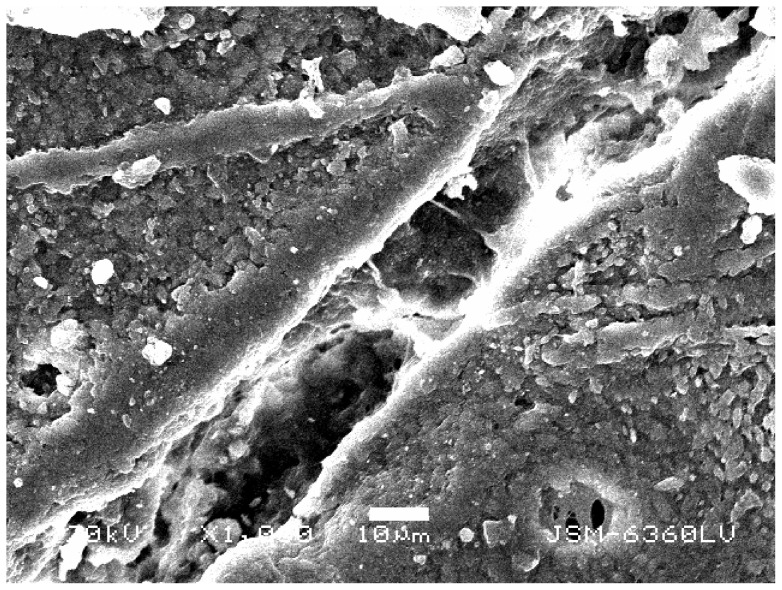
Scratches on bones have routinely been attributed to tooth marks (a predominantly untested speculation), ignoring the effects of claws, perhaps because of the general assumption that claws are too soft to damage bone. However, some pathologies appears to be more compatible with claw rather than tooth impacts. Therefore, it is critical to determine if the claws of any animal are capable of scratching into the surface of any bone--a test and proof of concept. A tiger enrichment program was used to document actual bone damage unequivocally caused by claws, by assuring that the tiger had access to bones only by using its paws (claws). The spectrum of mechanisms causing bone damage was expanded by evidentiary analysis of claw-induced pathology. While static studies suggested that nails/claws could not disrupt bone, specific tiger enrichment activities documented that bones were susceptible to damage from the kinetic energy effect of the striking claw. This documents an expanded differential consideration for scratch marks on bone and evidences the power of the claw.
Conflict of interest statement
Figures
References
-
- Sutcliffe A (1971) Similarity of bones and antlers gnawed by deer to human artifacts. Nature 246: 428–430. - PubMed
-
- Bonnichsen R (1973) Some operational aspects of human and animal bone alteration. In: Gilbert M, editor. Mammalian Osteo-Archaeology: North America. Columbia, Missouri: Missouri Archeol Soc. 9–24.
-
- Haynes G (1980) Prey bones and predators: Potential ecologic information from analysis of bone sites. Ossa (1980): 775–797.
-
- Haynes G (1982) Utilization and skeletal disturbances of North American Prey carcasses. Arctic 35: 226–281.
-
- Haynes G (1983) A guide for differentiating mammalian carnivore taxa responsible for gnaw damage to herbivore limb bones. Paleobiol 9: 164–172.
MeSH terms
LinkOut - more resources
Full Text Sources
Other Literature Sources
