


Evaluating detection limits of next-generation sequencing for the surveillance and monitoring of international marine pests
- PMID: 24023913
- PMCID: PMC3762713
- DOI: 10.1371/journal.pone.0073935
Evaluating detection limits of next-generation sequencing for the surveillance and monitoring of international marine pests
Abstract
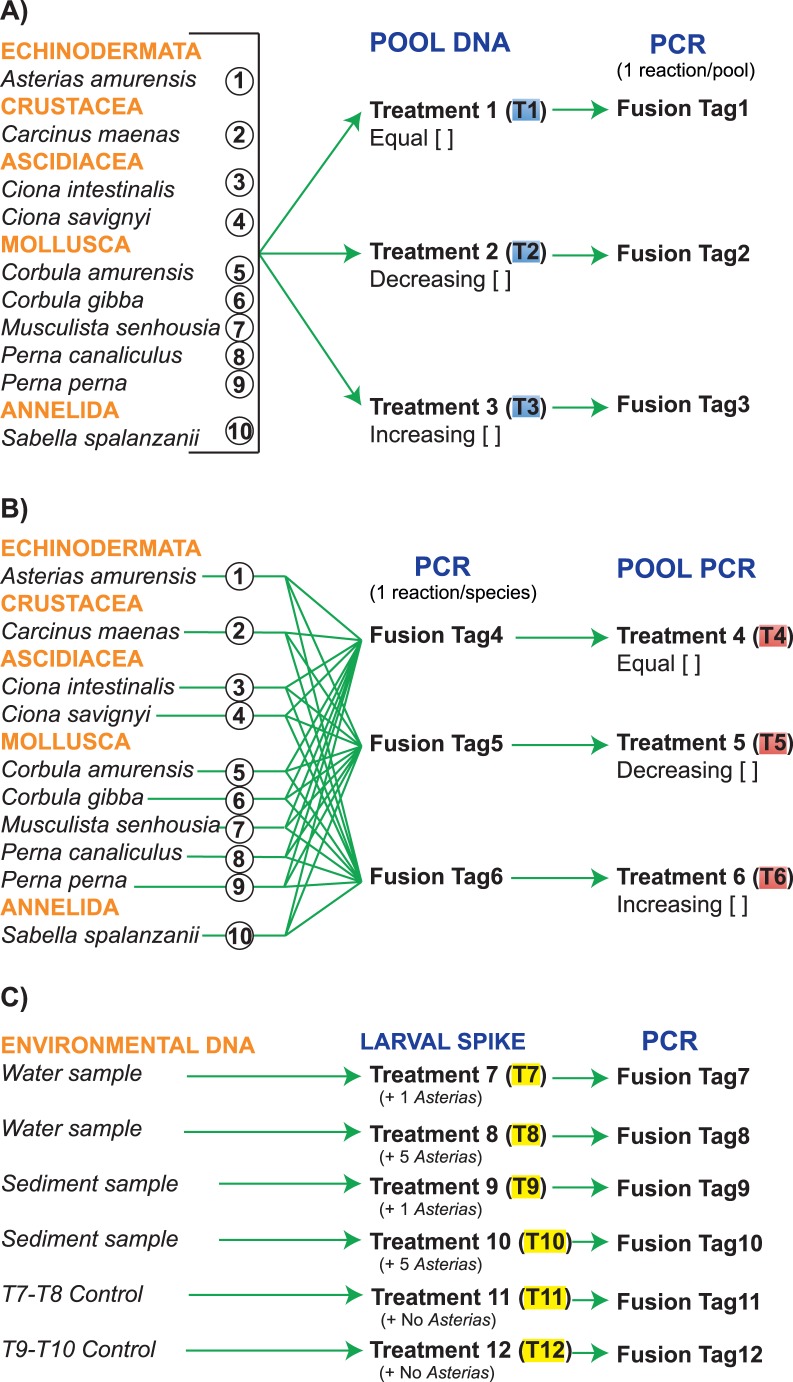
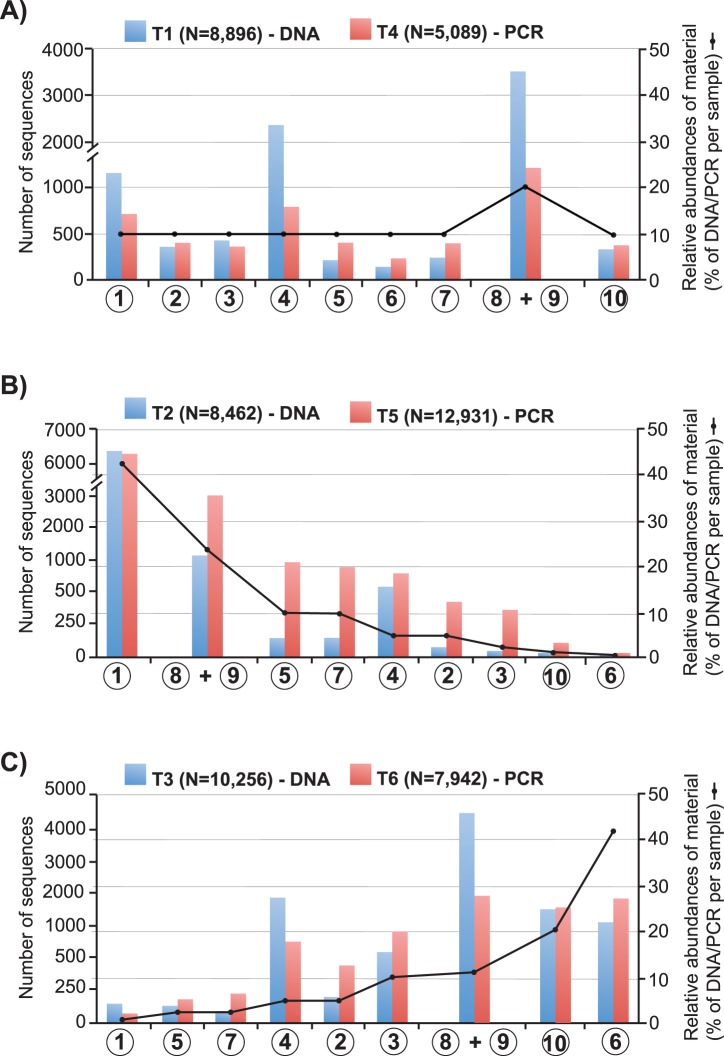
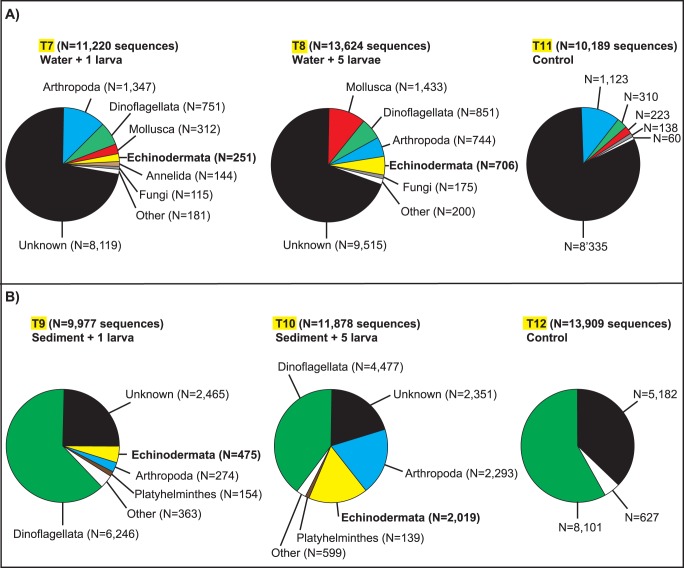
Most surveillance programmes for marine invasive species (MIS) require considerable taxonomic expertise, are laborious, and are unable to identify species at larval or juvenile stages. Therefore, marine pests may go undetected at the initial stages of incursions when population densities are low. In this study, we evaluated the ability of the benchtop GS Junior™ 454 pyrosequencing system to detect the presence of MIS in complex sample matrices. An initial in-silico evaluation of the mitochondrial cytochrome c oxidase subunit I (COI) and the nuclear small subunit ribosomal DNA (SSU) genes, found that multiple primer sets (targeting a ca. 400 base pair region) would be required to obtain species level identification within the COI gene. In contrast a single universal primer set was designed to target the V1-V3 region of SSU, allowing simultaneous PCR amplification of a wide taxonomic range of MIS. To evaluate the limits of detection of this method, artificial contrived communities (10 species from 5 taxonomic groups) were created using varying concentrations of known DNA samples and PCR products. Environmental samples (water and sediment) spiked with one or five 160 hr old Asterias amurensis larvae were also examined. Pyrosequencing was able to recover DNA/PCR products of individual species present at greater than 0.64% abundance from all tested contrived communities. Additionally, single A. amurensis larvae were detected from both water and sediment samples despite the co-occurrence of a large array of environmental eukaryotes, indicating an equivalent sensitivity to quantitative PCR. NGS technology has tremendous potential for the early detection of marine invasive species worldwide.
Conflict of interest statement
Figures
References
-
- Galil BS (2007) Loss or gain? Invasive aliens and biodiversity in the Mediterranean Sea. Mar Poll Bull 55: 314–322. - PubMed
-
- Wallentinus I, Nyberg CD (2007) Introduced marine organisms as habitat modifiers. Mar Poll Bull 55: 323–332. - PubMed
-
- Sousa R, Gutiérrez J, Aldridge D (2009) Non-indigenous invasive bivalves as ecosystem engineers. Biol Invasions 11: 2367–2385.
-
- Ehrenfeld JG (2010) Ecosystem consequences of biological invasions. Annu Rev Ecol Evol S 41: 59–80.
-
- Hayes KR, Sliwa C (2003) Identifying potential marine pests - a deductive approach applied to Australia. Mar Poll Bull 46: 91–98. - PubMed
Publication types
MeSH terms
Substances
LinkOut - more resources
Full Text Sources
Other Literature Sources
Molecular Biology Databases
Miscellaneous
