. 2013 Sep 4;8(9):e74444.
doi: 10.1371/journal.pone.0074444. eCollection 2013.

The effect of pstS and phoB on quorum sensing and swarming motility in Pseudomonas aeruginosa

Affiliations

The effect of pstS and phoB on quorum sensing and swarming motility in Pseudomonas aeruginosa

Inna Blus-Kadosh et al. PLoS One. .

Abstract

Pseudomonas aeruginosa is an opportunistic pathogen that can cause a wide range of infections and inflammations in a variety of hosts, such as chronic biofilm associated lung infections in Cystic Fibrosis patients. Phosphate, an essential nutrient, has been recognized as an important signal that affects virulence in P. aeruginosa. In the current study we examined the connection between phosphate regulation and surface motility in P. aeruginosa. We focused on two important genes, pstS, which is involved in phosphate uptake, and phoB, a central regulator that responds to phosphate starvation. We found that a mutant lacking pstS is constantly starved for phosphate and has a hyper swarming phenotype. Phosphate starvation also induced swarming in the wild type. The phoB mutant, on the other hand, did not express phosphate starvation even when phosphate was limited and showed no swarming. A double mutant lacking both genes (pstS and phoB) showed a similar phenotype to the phoB mutant (i.e. no swarming). This highlights the role of phoB in controlling swarming motility under phosphate-depleted conditions. Finally, we were able to demonstrate that PhoB controls swarming by up-regulating the Rhl quorum sensing system in P. aeruginosa, which resulted in hyper production of rhamonlipids: biosurfactants that are known to induce swarming motility.


Conflict of interest statement

Competing Interests: The authors have declared that no competing interests exist.

Figures

Figure 1
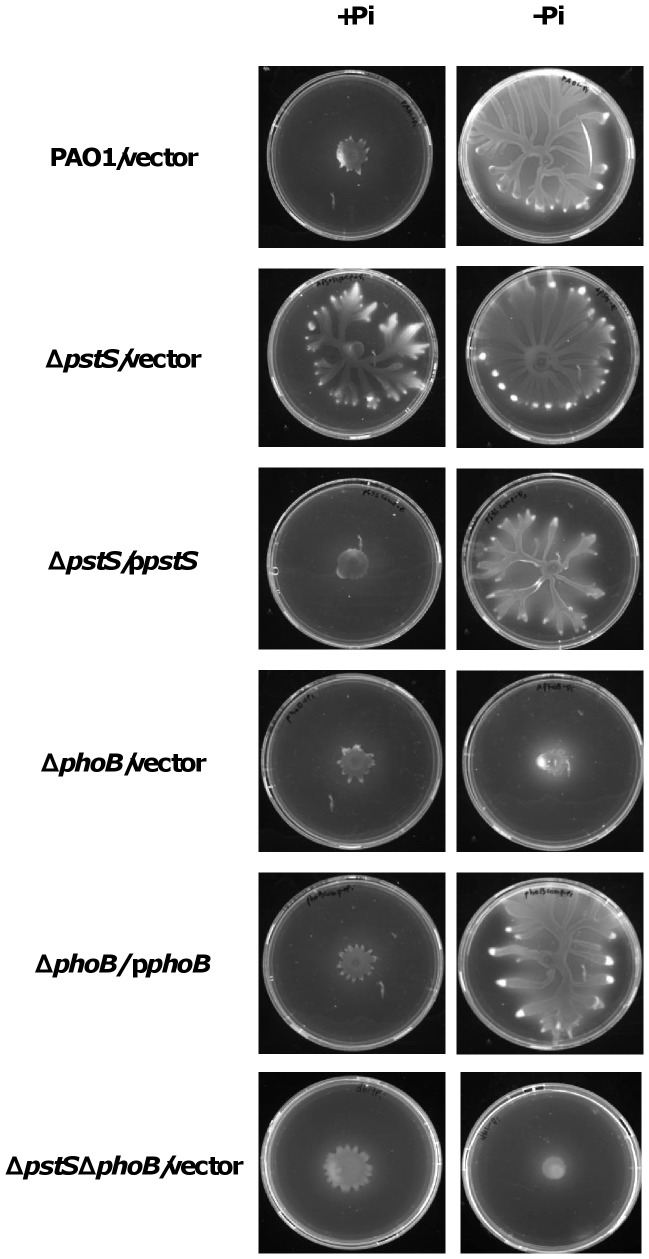
Figure 1. Influence of pstS and phoB deletion on swarming motility.
PAO1, ΔpstS, ΔphoB and ΔpstSΔphoB carrying an empty vector (pUCP18Ap) or a complementation plasmid (ppstS and pphoB) were grown for 24 hours at 37°C on swarming plates containing M9 (20 mM) or phosphate-depleted M9 (0.2 mM) as described in Materials and Methods.
Figure 2
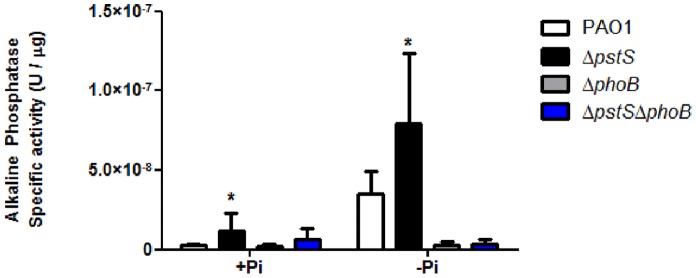
Figure 2. The effect of pstS and phoB deletion on phosphate starvation in P.aeruginosa.
PAO1, ΔpstS, ΔphoB and ΔpstSΔphoB were grown for 24 hours at 37°C on swarming plates containing M9 or phosphate-depleted M9. After 24 hours, bacteria were scraped off the plates and Alkaline Phosphatase activity was measured using p-Nitrophenyl Phosphate as described in Materials and Methods. Results were normalized to each samples’ total protein concentration using Bradford assay. Results shown represent mean+standard deviation of six different experiments. Each experiment was performed in triplicate. Asterisks represent the significant rise in AP activity compared to the WT (p<0.05, student’s t-test).
Figure 3
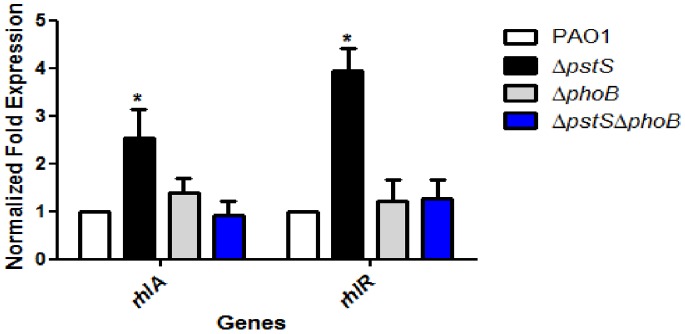
Figure 3. pstS knockout results in elevated rhlA and rhlR expression.
PAO1, ΔpstS, ΔphoB and ΔpstSΔphoB were grown for 48 hours at 37°C with shaking in M9 medium. Levels of rhlA and rhlR were measured by Real-Time PCR as described in Materials and Methods. Values were normalized to the expression of PA1769. The results shown are relative to PAO1 and represent mean+standard deviation of nine different experiments. Each experiment was performed in triplicate. Asterisks represent the significant elevation in rhlA and rhlR transcription compared to the WT (p<0.05, student’s t-test).
Figure 4
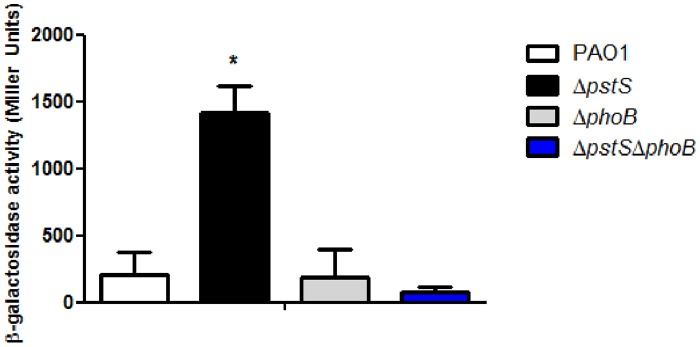
Figure 4. Phosphate starvation promotes C4-HSL production.
PAO1, ΔpstS, ΔphoB and ΔpstSΔphoB were grown for 48 hours at 37°C with shaking in M9 medium. C4-HSL in each strain was extracted and measured as described in Materials and Methods. β-galactosidade activity (Miller Units) represent C4-HSL levels. Results represent mean+standard deviation of three different experiments. Each experiment was performed in triplicate. Asterisks represent the significant elevation in C4-HSL production in ΔpstS as opposed to all other strains (p<0.05, Turkey’s post hoc test).
Figure 5
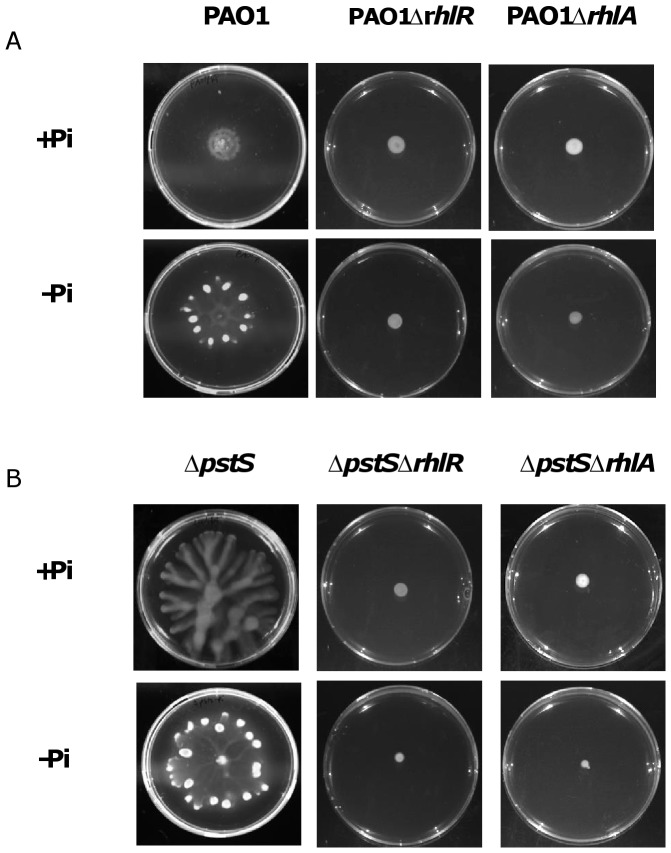
Figure 5. rhlA and rhlR deletion cause loss of swarming motility.
A. PAO1, PAO1ΔrhlA and PAO1ΔrhlR were grown for 24 hours at 37°C on swarming plates containing M9 or phosphate-depleted M9. B. ΔpstS, ΔpstSΔrhlA and ΔpstSΔrhlR were grown for 24 hours at 37°C on swarming plates containing M9 or phosphate-depleted M9.
Figure 6
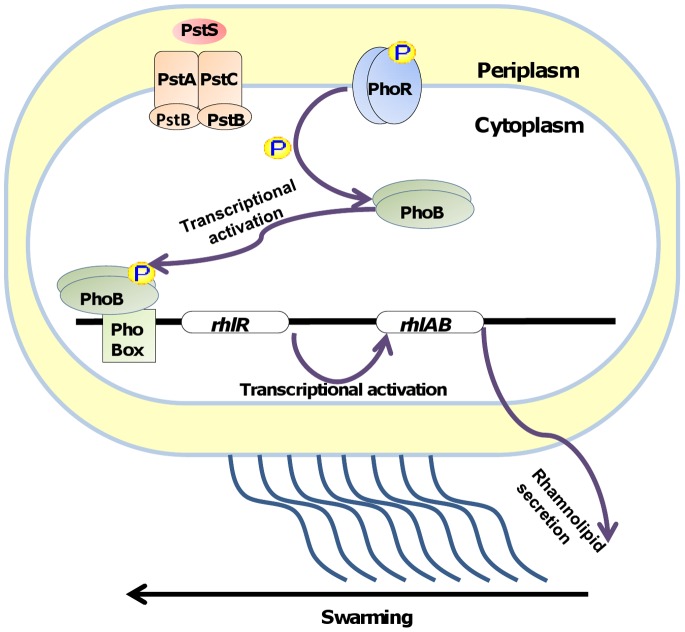
Figure 6. Model of the regulatory pathway leading to swarming under phosphate depletion.

References

    1. tover CK, Pham XQ, Erwin AL, Mizoguchi SD, Warrener P, et al. (2000) Complete genome sequence of Pseudomonas aeruginosa PAO1, an opportunistic pathogen. Nature 406: 959–964. - PubMed
    1. Kirov SM, Webb JS, O’May C Y, Reid DW, Woo JK, et al. (2007) Biofilm differentiation and dispersal in mucoid Pseudomonas aeruginosa isolates from patients with cystic fibrosis. Microbiology 153: 3264–3274. - PubMed
    1. Mittal R, Aggarwal S, Sharma S, Chhibber S, Harjai K (2009) Urinary tract infections caused by Pseudomonas aeruginosa: a minireview. J Infect Public Health 2: 101–111. - PubMed
    1. Church D, Elsayed S, Reid O, Winston B, Lindsay R (2006) Burn wound infections. Clin Microbiol Rev 19: 403–434. - PMC - PubMed
    1. Hazlett LD (2004) Corneal response to Pseudomonas aeruginosa infection. Prog Retin Eye Res 23: 1–30. - PubMed

Publication types

LinkOut - more resources